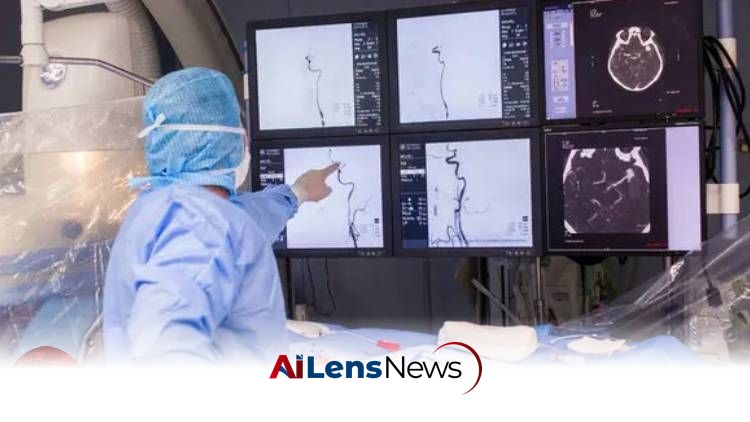


A groundbreaking AI-based device is transforming the treatment of stroke patients, enabling them to regain mobility and independence.
Islamabad, Pakistan Jul 11, 2026 ALN: Stroke patients often face significant challenges in regaining mobility due to temporary paralysis or blockages in brain vessels. Stroke, which occurs when blood flow to a part of the brain is interrupted or reduced, can lead to lasting disabilities that severely impact a person's quality of life. Thousands of individuals currently live constrained lives, unable to walk or move freely. Traditional treatments, such as physical therapy and medication, have struggled to fully restore mobility, but recent advancements in artificial intelligence are changing the narrative.
Innovative solutions are emerging to address the challenges posed by brain vessel blockages and paralysis. Researchers have developed a revolutionary AI-based device designed to record brain signals and convert them into movements, effectively allowing affected body parts to function again. This technology represents a beacon of hope for those who have been rendered immobile due to blockages in brain vessels. The implications of such a device extend beyond mere mobility; they touch on the fundamental aspects of independence and self-sufficiency for many patients.
The device works by reading and processing brain signals. Specialized sensors implanted in the patient’s brain capture signals from the nervous system. These sensors, which are often small and biocompatible, can detect electrical impulses generated by neurons as they communicate with one another. The AI interprets these signals and translates them into commands that assist in moving physical limbs. This process aims to restore the broken connection between the brain and affected muscles, which is often disrupted due to the damage caused by a stroke.
In practical terms, this means that a patient who has suffered a stroke and lost the ability to move their arm could potentially regain some level of control over that limb through the use of this device. The AI learns from the patient's brain activity, adapting over time to improve the accuracy and effectiveness of the movements it facilitates. This personalized approach is a significant advancement over traditional rehabilitation methods, which often follow a one-size-fits-all model.
This device has the potential to significantly enhance the quality of life for disabled individuals. For patients who are unable to walk and cannot even move their legs, this technology could enable them to regain the ability to walk. The psychological impact of regaining mobility cannot be understated; the ability to move independently can lead to increased confidence, reduced feelings of helplessness, and overall improved mental health. Not only does it aim to restore physical function, but it also has the potential to improve mental well-being, making it a dual-benefit solution for stroke survivors.
Experts believe that this device will not only benefit paralyzed patients but could also be utilized in the future for neurological diseases such as Parkinson’s and multiple sclerosis. These conditions also involve disruptions in motor control and can lead to severe mobility issues. The adaptability of AI technology means that it could be fine-tuned to meet the specific needs of patients suffering from various neurological disorders, thus broadening its applicability and impact.
Despite its revolutionary potential, the costs associated with this technology cannot be overlooked, as not every patient can afford the device. The development and implementation of such advanced technology often come with significant research and production costs, which can translate into high prices for consumers. However, as this technology becomes more widespread, it is expected that prices will decrease, making it accessible to a larger number of patients. This could lead to a shift in how rehabilitation is approached in healthcare settings, with AI devices becoming a standard part of recovery protocols for stroke and other neurological patients.
The ethical considerations surrounding the use of AI in healthcare are also worth noting. As with any new technology, there are concerns regarding data privacy, consent, and the long-term implications of relying on AI for critical health functions. Ensuring that patients' data is protected and that they are fully informed about how their information will be used is paramount. Additionally, the integration of such devices into existing healthcare systems will require careful planning and training for medical professionals.
Moreover, the societal implications of this technology could be profound. If successful, it could lead to a paradigm shift in how society views individuals with disabilities. The ability to regain mobility could foster greater inclusion and participation in community activities, potentially reducing stigma and promoting a more equitable society. It could also impact employment opportunities for those who have been previously limited by their disabilities, allowing them to contribute more fully to the workforce.
To understand the significance of this technology, it is important to consider the statistics surrounding strokes and their impact on individuals and families. According to health organizations, strokes are one of the leading causes of long-term disability worldwide. Many survivors face challenges not only in physical mobility but also in emotional and social aspects of their lives. The introduction of AI devices that can help restore movement could alleviate some of these burdens, offering renewed hope and possibilities for a better quality of life.
The development of this AI device is not an isolated innovation. It is part of a broader trend in healthcare where technology and artificial intelligence are increasingly being integrated into treatment protocols. From telemedicine to robotic surgery, the healthcare landscape is evolving rapidly, and the introduction of AI-driven solutions for rehabilitation is a testament to that progress. As researchers continue to explore the potential of AI in various medical fields, the future may hold even more groundbreaking advancements that could further enhance patient care and outcomes.
Furthermore, the collaboration between engineers, neuroscientists, and healthcare professionals is crucial in bringing such technologies to fruition. The interdisciplinary approach ensures that the devices developed are not only technologically advanced but also clinically relevant and safe for patients. This collaboration is essential in addressing the complexities of the human brain and the challenges that come with neurological rehabilitation.
In conclusion, the development of this revolutionary AI device is a promising advancement in the field of rehabilitation for stroke patients and those suffering from other neurological conditions. By leveraging cutting-edge technology to bridge the gap between brain signals and physical movement, this device has the potential to transform lives, offering new hope and possibilities for independence. As research continues and the technology evolves, it will be essential to address the challenges of accessibility, ethical concerns, and societal implications to ensure that all patients can benefit from these advancements in healthcare. The journey towards widespread adoption of such technology will require collaboration, innovation, and a commitment to improving the lives of those affected by strokes and other debilitating conditions.
To learn more about the latest developments in Medical Innovations, stay updated with our exclusive reports and analyses on AiLensNews.

