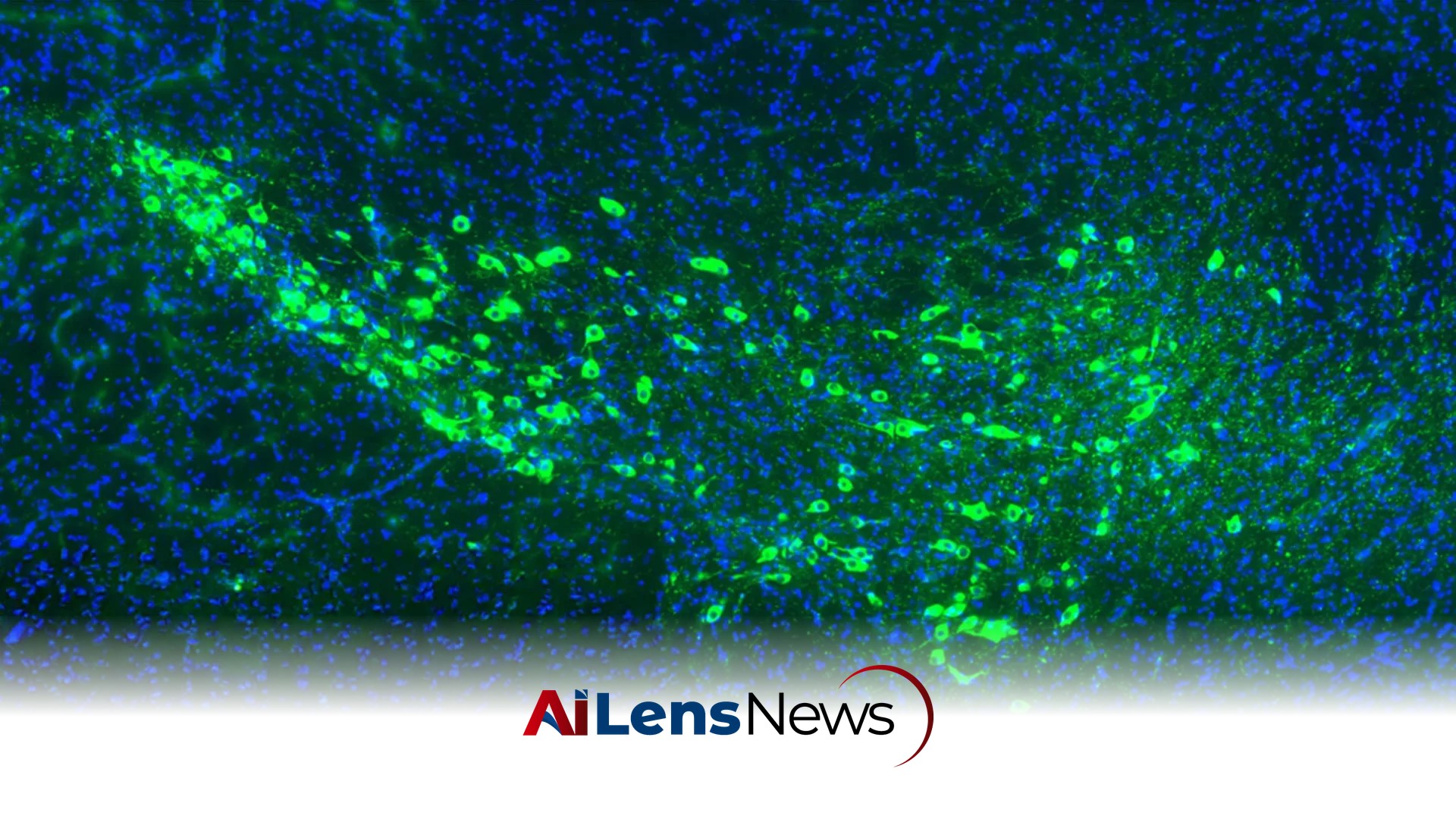


New findings from Yale School of Medicine reveal two proteins that facilitate the spread of toxic proteins in Parkinson's disease, paving the way for potential therapies.
New Delhi, India Jul 12, 2026 ALN: Parkinson's disease may spread through the brain with the help of two proteins found on the surface of motor neurons, according to new research from Yale School of Medicine (YSM). The discovery could open the door to treatments designed to slow or even stop the disease instead of only managing its symptoms.
Parkinson's disease is a progressive neurological disorder in which brain cells gradually become damaged and die. A key feature of the disease is the buildup of a misfolded protein called α-synuclein. As this toxic protein moves from one neuron to another, it contributes to the worsening of symptoms over time.
Until now, scientists have not fully understood how α-synuclein enters neurons after escaping from dying ones. A new study published in Nature Communications points to two membrane proteins, mGluR4 and NPDC1, as critical transporters that help carry the misfolded protein into brain cells.
Senior author Stephen Strittmatter, MD, PhD, Vincent Coates Professor of Neurology and chair of the Department of Neuroscience at YSM, says the findings could lead to more effective ways to combat Parkinson's disease.
Misfolded α-synuclein is "the pathologic hallmark of Parkinson's disease," he says. "If we understood how it gets into neurons, we could perhaps block or slow down the progression of the disease," he adds. But to do that, "we need to understand the molecular mechanism of how it spreads."
Neurodegenerative disorders such as Parkinson's and Alzheimer's disease are becoming an increasingly significant public challenge in the United States. According to the Parkinson's Foundation, about 1.1 million Americans are living with Parkinson's disease, and nearly 90,000 new cases are diagnosed each year.
The disease commonly causes movement-related symptoms including tremors, impaired balance, and slower movement. These problems develop as misfolded α-synuclein accumulates in motor neurons. As the protein spreads to additional neurons, the disease continues to progress.
Researchers suspected that α-synuclein might gain entry into cells by attaching to proteins on the cell surface. To investigate, Strittmatter and his team produced 4,400 groups of cells, each engineered to display a different surface protein. They then tested whether misfolded α-synuclein would bind to any of them.
The vast majority showed no interaction. However, 16 surface proteins did bind to the toxic protein. Among them were mGluR4 and NPDC1, two proteins found on dopamine-producing neurons in the substantia nigra, the brain region most heavily affected by Parkinson's disease. The team discovered that these proteins transported misfolded α-synuclein into the cells.
The researchers next explored whether these proteins were responsible for helping α-synuclein move from neuron to neuron. They genetically engineered mice so that either mGluR4 or NPDC1 no longer functioned, then exposed the animals to misfolded α-synuclein.
Normal mice developed accumulations of the toxic protein in their brains and went on to show Parkinson's-like symptoms. In contrast, mice lacking functional mGluR4 or NPDC1 did not. In a separate mouse model of Parkinson's disease, removing the genes for either protein also reduced symptom progression and lowered the risk of death.
Together, the findings indicate that mGluR4 and NPDC1 work as partners to transport misfolded α-synuclein into neurons, at least in mice.
Strittmatter says this mechanism represents a promising target for future therapies. Existing treatments mainly help manage symptoms and do not significantly slow the underlying disease. Blocking the spread of α-synuclein between neurons could provide a way to slow or even halt Parkinson's progression.
The need for disease-slowing therapies is expected to become even greater in the years ahead. Parkinson's disease and other neurodegenerative disorders primarily affect older adults, and the number of Americans over age 65 is projected to rise substantially over the coming decades, increasing the population at risk.
According to the U.S. Census Bureau, the number of individuals aged 65 and older is expected to reach 95 million by 2060, representing nearly a quarter of the total U.S. population. This demographic shift will likely lead to a significant increase in the prevalence of Parkinson's disease, as age is one of the most significant risk factors for developing the disorder.
As the population ages, care systems will face mounting pressure to provide adequate care and treatment for neurodegenerative diseases. The costs associated with managing Parkinson's disease are significant, both for individuals and the care system as a whole. In addition to the direct medical expenses, there are also indirect costs related to lost productivity and the need for long-term care.
"We have an aging population. How we can stop or slow neurons from dying is an enormous problem," says Strittmatter. "This is really the time to make some inroads into figuring out how to slow it down." The urgency of this research is underscored by the fact that many patients with Parkinson's disease experience a gradual decline in their quality of life, requiring increasing levels of care and support as the disease progresses.
Furthermore, the implications of this research extend beyond just Parkinson's disease. Understanding the mechanisms of protein misfolding and propagation could provide insights into other neurodegenerative disorders, such as Alzheimer's disease, Huntington's disease, and amyotrophic lateral sclerosis (ALS). These conditions share similar pathological features, including the accumulation of misfolded proteins and progressive neuronal degeneration.
As research continues, the hope is that targeting the pathways involved in the spread of α-synuclein will lead to novel therapeutic strategies that can be applied across various neurodegenerative diseases. Developing treatments that can effectively halt or slow the progression of these disorders would not only improve the quality of life for millions of patients but also alleviate the burden on care systems worldwide.
In conclusion, the discovery of the role of mGluR4 and NPDC1 in the transport of misfolded α-synuclein into neurons represents a significant advancement in our understanding of Parkinson's disease. As researchers continue to explore this mechanism, there is hope that new therapies can be developed that will change the course of the disease and improve outcomes for those affected.
To learn more about the latest developments in Health News, stay updated with our exclusive reports and analyses on AiLensNews.

