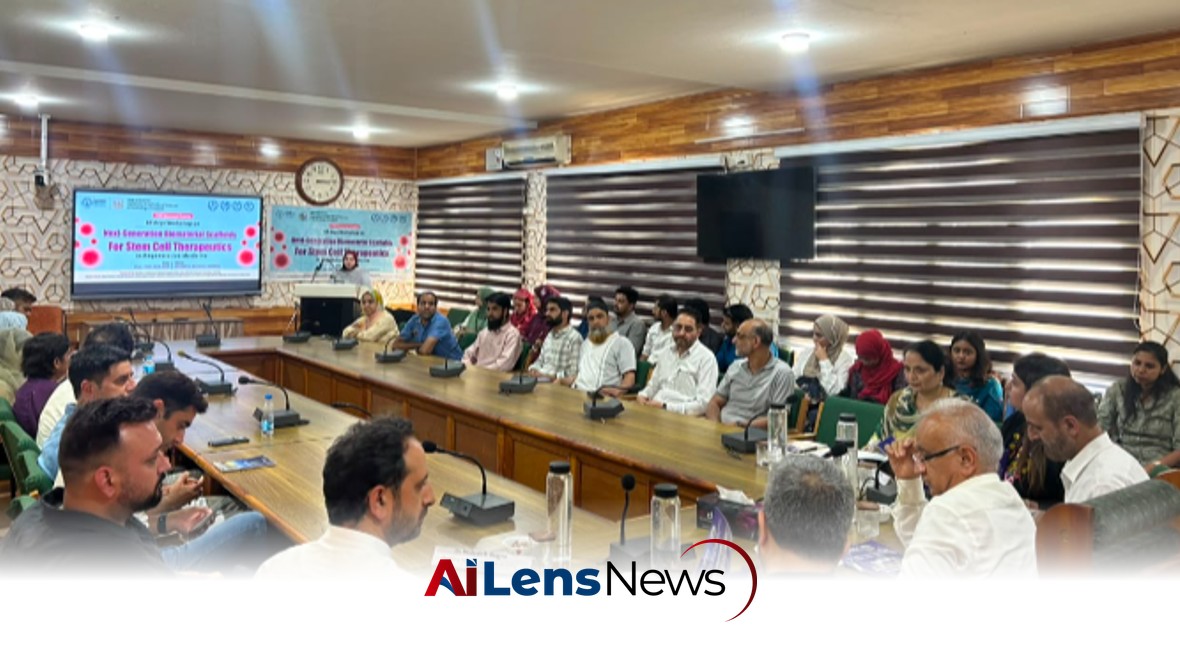


The 10-day national workshop on regenerative medicine at SKUAST-K concluded, featuring extensive training and expert interactions in stem cell therapeutics.
New Delhi, India Jul 12, 2026 ALN: The 10-day DHR–ICMR Sponsored National Workshop on “Next-Generation Biomaterial Scaffolds for Stem Cell Therapeutics in Regenerative Medicine” concluded at the Faculty Outreach Centre, Faculty of Veterinary Sciences & Animal Husbandry, SKUAST-K, after ten days of intensive scientific deliberations, practical training, and interdisciplinary interactions in regenerative medicine.
The Valedictory Function was graced by Prof. Mohd Altaf Bhat, Director Education, SKUAST-K, as the Chief Guest, while Prof. Azmat Alam Khan, Registrar, SKUAST-K; Prof. Riaz Ahmad Shah, Dean, FVSc & AH; and Dr. Geetanjali Sageena, Scientist and Program Officer, Division of Human Resource Development, DHR-ICMR, Government of India, New Delhi, attended as the Guests of Honour. Faculty members, scientists, researchers, clinicians, and participants were also present.
Welcoming the gathering, Dr. Amatul Muhee, Professor & Head, Veterinary Clinical Complex, expressed gratitude to DHR-ICMR for supporting the workshop and reiterated SKUAST-K’s commitment to promoting excellence in regenerative medicine through advanced training and collaborative research.
Presenting the workshop report, Dr. Mudasir Bashir Gugjoo, Organizing Secretary, highlighted that the programme provided comprehensive theoretical and hands-on training in stem cell biology, stem cell isolation, culture and characterization, exosome therapeutics, biomaterials, additive manufacturing technologies including 3D printing and electrospinning, preclinical evaluation, translational research, and clinical applications in human and veterinary medicine.
He also highlighted the successful conduct of the Industry-Academia-Policy Dialogue, which deliberated on opportunities, challenges, regulatory perspectives, and the future roadmap for regenerative medicine in India. This dialogue is particularly crucial as regenerative medicine is an evolving field that presents both significant opportunities for innovation and challenges related to regulation, funding, and ethical considerations.
The workshop brought together internationally renowned experts from leading institutions across the globe, enabling participants to gain real-world insights into cutting-edge regenerative medicine and the complete translational continuum from laboratory research to clinical application. This aspect of the workshop is vital, as it encourages the exchange of ideas and fosters collaborations that can lead to breakthroughs in medical science.
Such workshops provide exposure to research across multiple levels while simultaneously serving as a catalyst for meaningful collaborations. The interdisciplinary nature of regenerative medicine requires cooperation among various fields, including biology, engineering, and clinical practice, making such workshops essential for fostering a collaborative environment.
During the feedback session, participants highly appreciated the workshop for its practical orientation, extensive hands-on training, and interactions with internationally reputed experts. They described it as a unique learning platform that significantly enhanced their technical skills, research perspectives, and understanding of translational regenerative medicine. This feedback underscores the importance of practical training in scientific education, where theoretical knowledge can be complemented with hands-on experience.
Addressing the gathering, Prof. Riaz Ahmad Shah and Prof. Azmat Alam Khan congratulated the organizers for successfully conducting a technically intensive programme and expressed satisfaction that participants had been exposed to high-end research methodologies and emerging technologies in regenerative medicine. Their acknowledgment highlights the growing recognition of the need for specialized training in this field, which is crucial for the advancement of medical practices and patient care.
Speaking on the occasion, Dr. Geetanjali Sageena appreciated the scientific quality of the workshop and emphasized the pivotal role of DHR-ICMR in strengthening research capacity by supporting need-based training programmes that provide exposure to advanced biomedical research and emerging technologies. This support is essential for the development of a robust research ecosystem in India, which can compete on a global scale.
In his valedictory address, Prof. Mohd Altaf Bhat lauded the organizing committee for successfully conducting a workshop of national significance. He expressed satisfaction that SKUAST-K is not only undertaking research in advanced areas such as regenerative medicine but is also providing a national platform for nurturing the next generation of scientists and researchers through interactions with globally renowned experts. This commitment to education and research is vital for the future of medical science, as it ensures that new generations are well-equipped to tackle the challenges of tomorrow.
The programme concluded with the distribution of certificates to the participants and a vote of thanks from Dr. Shahid Hussain Dar, Associate Professor, Veterinary Clinical Complex, reaffirming SKUAST-K’s commitment to advancing regenerative medicine through research excellence, innovation, capacity building, and national and international collaborations. This conclusion not only celebrates the achievements of the participants but also sets the stage for future initiatives and collaborations that can further enhance the field of regenerative medicine.
Regenerative medicine, which includes stem cell therapy, tissue engineering, and gene therapy, is an area of medicine that holds the promise of repairing or replacing damaged tissues and organs. It has the potential to revolutionize the treatment of various diseases, including neurodegenerative disorders, cardiovascular diseases, and orthopedic injuries. The knowledge and skills acquired during this workshop will empower participants to contribute to this rapidly evolving field.
The implications of such workshops extend beyond the immediate training of participants. By fostering a community of researchers and practitioners in regenerative medicine, these initiatives can lead to significant advancements in healthcare, improved patient outcomes, and the development of innovative therapies that address unmet medical needs. As the field continues to grow, the importance of education and collaboration will be paramount in driving forward the boundaries of what is possible in medicine.
In conclusion, the successful completion of the DHR–ICMR Sponsored National Workshop at SKUAST-K marks a significant step towards enhancing the capabilities of researchers and practitioners in the field of regenerative medicine. The collaborative efforts between academia, industry, and policy makers will be crucial in shaping the future landscape of this promising field, ensuring that India remains at the forefront of biomedical research and innovation.
To learn more about the latest developments in Medical Innovations, stay updated with our exclusive reports and analyses on AiLensNews.

