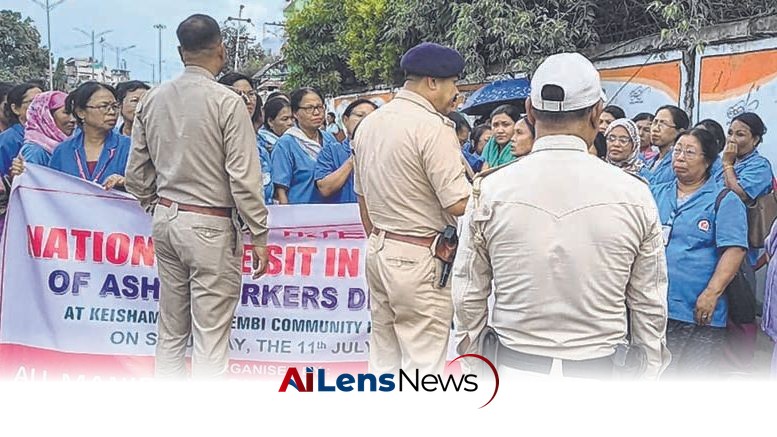


ASHA workers in Imphal protested for an increase in their monthly honorarium to Rs 26,000, highlighting their crucial role in healthcare.
Imphal, India Jul 12, 2026 ALN: In a significant demonstration reflecting the concerns of healthcare workers across India, ASHA (Accredited Social Health Activist) workers in Imphal staged a protest at the Keishampat Lairembi Community Hall on July 11. The workers are demanding an increase in their monthly honorarium to Rs 26,000, which they believe is essential for their livelihood and recognition of their contributions to the healthcare system.
ASHA workers play a vital role in the Indian healthcare landscape, serving as a bridge between the community and the health services. They are responsible for a variety of tasks, including promoting maternal and child health, ensuring immunization, and facilitating access to healthcare services for underserved populations. Their work is particularly crucial in rural areas where healthcare infrastructure is often lacking, and they are often the first point of contact for families seeking medical assistance.
The protest in Imphal is part of a larger movement across the country, where ASHA workers are advocating for better pay and working conditions. Many of these workers have expressed frustration over the inadequate honorarium they receive, which often does not reflect the demanding nature of their work. Despite being pivotal in implementing government health programs, ASHA workers frequently find themselves underappreciated and overburdened.
Historically, ASHA workers have been compensated on a per-task basis rather than receiving a stable monthly salary, which has contributed to their financial insecurity. The honorarium they currently receive varies by state, but many report that it is insufficient to meet their basic needs. This disparity has led to widespread dissatisfaction among ASHA workers, prompting organized protests and demands for reform.
ASHA workers are crucial in implementing various health programs, especially in rural and underserved areas. Their efforts have significantly contributed to improving health indicators in India, including maternal and child health outcomes. For instance, ASHA workers have played a key role in increasing the rates of institutional deliveries and immunization coverage, which are vital for reducing maternal and infant mortality rates.
However, despite their contributions, the lack of adequate financial compensation has led to dissatisfaction and calls for reform. Many ASHA workers report working long hours, often extending beyond the typical workday, without corresponding pay. This situation has led to burnout and has hindered their ability to provide consistent care and support to their communities.
The protest has garnered support from various community members and organizations, who recognize the invaluable services provided by ASHA workers. Many believe that increasing their honorarium is not just a matter of fair compensation but also a step towards strengthening the healthcare system as a whole. Community leaders, health advocates, and local NGOs have joined the call for better pay and conditions for ASHA workers, emphasizing that their well-being directly impacts public health outcomes.
Furthermore, the support from the community highlights a growing awareness of the challenges faced by frontline health workers. Many community members have begun to advocate for policy changes, demanding that local and national governments prioritize the needs of ASHA workers in healthcare planning and funding.
The ongoing protests by ASHA workers in Imphal and across the country highlight the urgent need for policy changes to ensure fair compensation for these essential healthcare providers. In response to the protests, some state governments have initiated discussions about increasing the honorarium and improving working conditions. However, these discussions have often been slow, and concrete actions have yet to materialize in many regions.
Experts argue that addressing the concerns of ASHA workers is critical for the overall health system in India. By investing in these workers, the government can enhance the quality of healthcare delivery, particularly in rural areas where access to medical facilities is limited. Improved compensation and support for ASHA workers could lead to better health outcomes, as they are often the ones driving health initiatives at the grassroots level.
Additionally, the recognition of ASHA workers as integral components of the healthcare system could foster a more equitable approach to public health. As the country grapples with various health challenges, including communicable diseases and maternal and child health issues, empowering ASHA workers may prove essential for achieving national health goals.
The ongoing protests by ASHA workers in Imphal and across the country highlight the urgent need for policy changes to ensure fair compensation for these essential healthcare providers. As they continue to advocate for their rights, the hope is that their demands will be met, leading to improved conditions for ASHA workers and better health outcomes for the communities they serve. The situation presents an opportunity for the government to reassess its commitment to frontline health workers and take meaningful steps towards reforming the healthcare system to be more inclusive and supportive of those who are the backbone of public health in India.
To learn more about the latest developments in Public Health, stay updated with our exclusive reports and analyses on AiLensNews.

