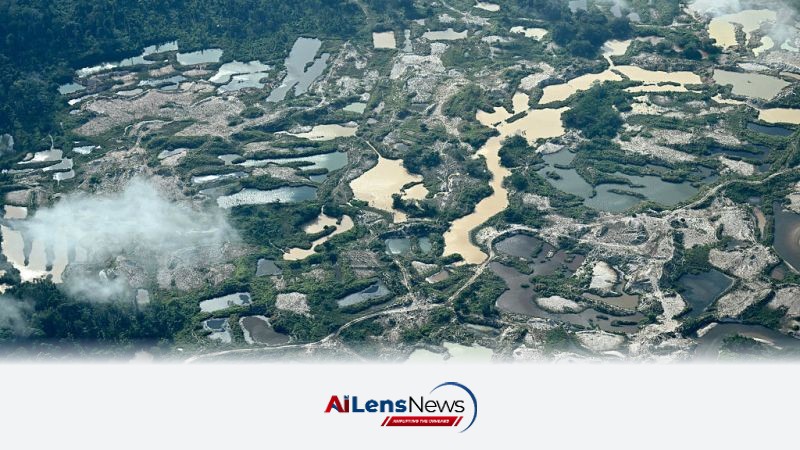



The Amazon rainforest plays a crucial role in South America's climate by releasing billions of tons of water vapor, known as 'flying rivers', essential for rain across the continent. Protecting this ecosystem is vital.
Washington DC, United States Aug 26, 2026 ALN: Every day, the Amazon rainforest releases billions of tons of water into the atmosphere, which are carried by winds toward other regions of South America. These vast flows of moisture, known as "flying rivers," play a crucial role in delivering the rains that supply forests, cities, crops, and power generation far beyond the rainforest itself. The significance of these flying rivers cannot be overstated, as they are integral to the hydrological cycle that sustains life across the continent.
However, for this natural process to continue functioning effectively, the Amazon ecosystem must remain connected. The forest that produces and transports this moisture must be safeguarded against deforestation, climate change, and other human-induced threats. The interconnectedness of the forest's health and the well-being of distant regions highlights the importance of preserving the Amazon not just for local communities but for broader ecological stability.
For decades, the Gaia Amazonas Foundation has been at the forefront of efforts to protect this vital ecosystem. The foundation collaborates with Indigenous communities and governments to strengthen the management of their territories. This partnership aims to empower Indigenous peoples by giving them a greater voice in decision-making processes regarding the forest. By incorporating traditional knowledge into contemporary conservation policies and strategies, Gaia Amazonas seeks to ensure that the preservation of the flying rivers is aligned with the cultural and ecological heritage of the Amazon.
Francisco von Hildebrand, the director of Gaia Amazonas, emphasizes that conserving the forest requires maintaining a connectivity that is not only biological but also cultural and social. This holistic approach recognizes the leadership role of Indigenous peoples in environmental stewardship. Von Hildebrand states, "That role of Indigenous peoples as bearers of ancestral knowledge for the care of ecosystems and territory is what underlies the historic stewardship they have had with the Amazon." This perspective underscores the value of Indigenous knowledge systems, which have evolved over millennia and are often more attuned to the complexities of local ecosystems than modern scientific approaches.
The cultural connectivity mentioned by von Hildebrand also extends to the need for aligning various stakeholders who impact the territory, including economic and financial sectors. This alignment is crucial for creating sustainable development models that respect Indigenous rights while also addressing the demands of economic growth. In practice, Gaia Amazonas works closely with Indigenous leaders to bolster their governments and enhance the recognition of their territories as political-administrative entities. This recognition is vital for ensuring that Indigenous communities have the authority to manage their resources and protect their environments effectively.
Furthermore, Gaia Amazonas supports forums aimed at increasing the political participation of Indigenous women in decision-making processes related to forest management and protection. Empowering women in these roles is essential for fostering inclusive governance and ensuring that diverse perspectives are integrated into conservation strategies. Women's leadership can bring unique insights and approaches to environmental stewardship, which is critical for addressing the multifaceted challenges faced by the Amazon.
The Amazon rainforest's capacity to move water across the region begins with a fundamental process occurring in the forest every day. For years, it has been said that the Amazon is the lungs of the planet, but it is also aptly described as the heart of the planet, as it pumps the rains that irrigate much of the continent. This metaphor captures the dual role of the Amazon in both producing oxygen and facilitating precipitation.
Germán Poveda, a hydrologist at the National University of Colombia, describes this phenomenon as "a daily heartbeat of the Amazon’s hydroclimate." During the day, plants engage in photosynthesis, converting sunlight into energy while simultaneously releasing vast quantities of water vapor through a process known as "evapotranspiration." This released moisture, combined with vapor arriving from the Atlantic Ocean, is transported by winds into the interior of the continent, resulting in rainfall that nourishes not only the Amazon but also regions such as the Orinoco basin, the Andes, and even areas further afield.
This intricate hydrological cycle is vital for sustaining ecosystems and human populations alike. Cities such as Quito in Ecuador, Lima in Peru, and La Paz in Bolivia rely on this rainfall, which is largely influenced by the moisture generated in the Amazon. The water that nourishes the high Andes, and subsequently these urban areas, is carried by winds originating from the rainforest, illustrating the far-reaching impact of the Amazon's ecological processes.
As climate change continues to threaten ecosystems worldwide, the preservation of the Amazon and its flying rivers becomes even more critical. Deforestation, agriculture, and urbanization are encroaching on the rainforest, disrupting the delicate balance of its hydrological systems. The loss of forest cover not only diminishes the Amazon's ability to produce moisture but also affects weather patterns across South America, leading to droughts and other extreme weather events.
In conclusion, the preservation of the Amazon's flying rivers is essential not only for maintaining the ecological integrity of the rainforest but also for ensuring the sustainability of water resources across South America. Collaborative efforts between Indigenous communities, environmental organizations, and governments are vital in this endeavor. By recognizing and valuing the traditional knowledge of Indigenous peoples and integrating it into conservation strategies, there is hope for a more sustainable future for the Amazon and the regions that depend on its life-giving waters. The Amazon is not just a forest; it is a lifeline for millions, and its preservation is a shared responsibility that must be embraced by all stakeholders involved.
To learn more about the latest developments in Conservation, stay updated with our exclusive reports and analyses on AILensNews.

