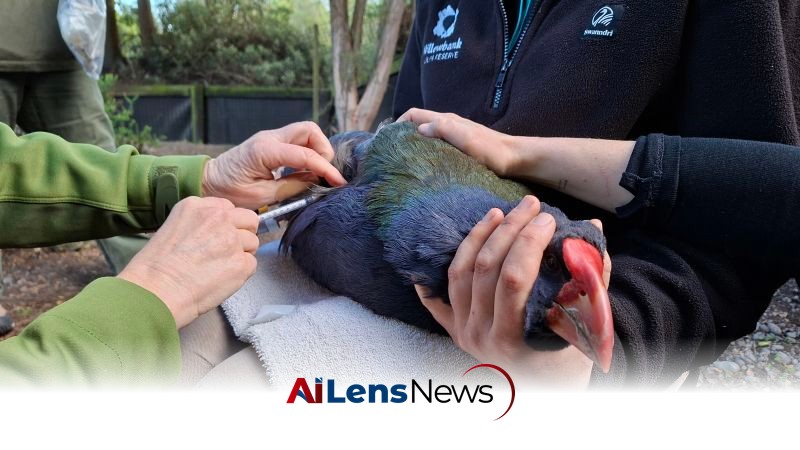


In a historic move, New Zealand is vaccinating 300 breeding pairs of its most endangered native birds to combat the threat of H5N1 bird flu.
Washington DC, United States Jul 22, 2026 ALN: New Zealand's deep connection to its avian population is reflected in its cultural practices and national identity. The country has a rich ornithological heritage, with its citizens affectionately referring to themselves as Kiwis, after the iconic flightless bird native to the region. Birdsong is a cherished morning ritual, heralding the start of the day on public radio, and the annual Bird of the Year competition draws enthusiastic participation and attention from the public. This intrinsic bond with birds underscores the urgency and significance of the recent discovery of two birds infected with the H5N1 strain of bird flu, which has sent shockwaves through the conservation community and bird enthusiasts alike.
The H5N1 strain of bird flu has proven to be a relentless and lethal pathogen, responsible for the death of millions of birds globally since it first emerged in Europe in 2020. Its impact has not been limited to avian populations; mammals, including foxes, polar bears, tigers, and sea lions, have also been infected, with rare cases of transmission to humans. The potential threat posed by this virus to New Zealand's unique bird species is particularly alarming, given that the country is home to several endemic species that are already critically endangered. The fear is that a widespread outbreak could lead to catastrophic losses, further endangering species that are already on the brink of extinction.
New Zealand's geographical isolation has historically provided a sanctuary for its native wildlife, enabling the evolution of unique and diverse bird species. For millions of years, the absence of predatory mammals allowed birds like the kākāpō, a nocturnal parrot unable to fly, and the takahē, a large, colorful ground bird, to thrive. However, the arrival of humans and the introduction of invasive species have drastically altered this balance. Over the past 700 years, more than a fifth of New Zealand's native bird species have been lost, including notable extinctions such as the Haast Eagle and the South Island Giant Moa, a flightless bird that once stood nearly 3.6 meters tall.
In response to the recent H5N1 outbreak, New Zealand is taking proactive measures to safeguard its remaining bird populations. The government has launched an ambitious vaccination campaign aimed at immunizing 300 breeding pairs of five critically endangered species. This initiative marks a rare and significant step, as few countries have undertaken such extensive vaccination efforts for wildlife. Biosecurity Minister Andrew Hoggard emphasized the importance of protecting these unique species, stating, "These birds are only found in New Zealand; they’re not found anywhere else in the world, so it’s important to us." The vaccination program is a critical component of New Zealand's broader biosecurity strategy, which has been in place for years to monitor and mitigate the risks posed by avian influenza.
Despite the urgency of the situation, the full impact of a potential H5N1 outbreak on New Zealand's native birds remains uncertain. Some species may exhibit resilience, while others could suffer devastating losses. Mary van Andel, the chief veterinary officer at the primary industries ministry, highlighted the unpredictability of the virus's effects on different species, stating, "Some species might not notice it at all, and some will die in large numbers." The complexities of avian health and the ecological interdependencies within New Zealand's unique ecosystem necessitate a cautious and measured approach to vaccination and disease management.
In anticipation of the virus's arrival, New Zealand has been conducting routine testing of thousands of birds over the past year. While only two infected birds have been discovered thus far, both of which are alive, the country is taking no chances. Poultry producers have begun locking up free-range hens to prevent potential exposure, while the nation's oldest zoo has suspended close-encounter experiences with penguins. Public health officials have also issued warnings advising the public to refrain from touching or moving dead wildlife, as this could exacerbate the spread of the virus.
The emergence of H5N1 in Oceania is particularly concerning, as it was previously the only region free from this deadly strain until the discovery of an infected seabird on a beach in Western Australia last month. The initial cases in both New Zealand and Australia were linked to the brown skua, a scavenging seabird known for its aggressive behavior. This connection highlights the interconnectedness of wildlife health across borders and the need for collaborative efforts in monitoring and managing disease outbreaks.
New Zealand's unique evolutionary history has resulted in a rich tapestry of avian life, with many species exhibiting fascinating adaptations to their environment. The absence of predatory mammals allowed birds to occupy ecological niches that would typically be filled by mammals in other parts of the world. Species like the kiwi, kākāpō, and takahē have evolved to thrive in this predator-free environment, leading to their distinctive behaviors and characteristics. However, the introduction of non-native species, such as rats and stoats, has drastically altered the landscape for these birds, leading to increased competition for resources and predation.
As of a 2017 government report, more than half of New Zealand's remaining 93 endemic bird species are considered to be in serious trouble, facing an uncertain future as their habitats diminish and threats from invasive species and diseases escalate. The plight of the kākāpō is particularly dire, as the majority of the population—numbering just 235 individuals—resides on a small island sanctuary off the coast of Rakiura/Stewart Island. This concentrated population makes the kākāpō especially vulnerable to disease outbreaks, as any introduction of pathogens could have catastrophic consequences for their survival.
The primary mode of transmission for the H5N1 virus is through the droppings and saliva of infected birds, which poses a significant risk to species that congregate in large groups. Scavengers like eagles and hawks, which feed on carrion, are also at heightened risk. This underscores the importance of monitoring bird populations and implementing biosecurity measures to protect both wild and domesticated birds from potential outbreaks.
Interestingly, the kiwi, New Zealand's iconic national bird, is notably absent from the current vaccination list. This decision is based on the relatively larger population of around 70,000 kiwis that inhabit the wild, along with their solitary nature that reduces the likelihood of large gatherings. However, two of the rarest kiwi breeds—the rowi and the Haast tokoeka—are expected to be included in the next phase of the vaccination program, reflecting the ongoing commitment to preserving New Zealand's unique avian biodiversity.
As New Zealand races against time to protect its avian treasures from the looming threat of H5N1, the situation serves as a stark reminder of the delicate balance between human activities and wildlife conservation. The challenges posed by invasive species, habitat loss, and emerging diseases necessitate a multifaceted approach to conservation that prioritizes the health and resilience of native ecosystems. The vaccination efforts represent a crucial step in safeguarding the future of New Zealand's endangered bird species, but they also highlight the broader implications of global biosecurity in an increasingly interconnected world.
To learn more about the latest developments in Conservation, stay updated with our exclusive reports and analyses on AiLensNews.

