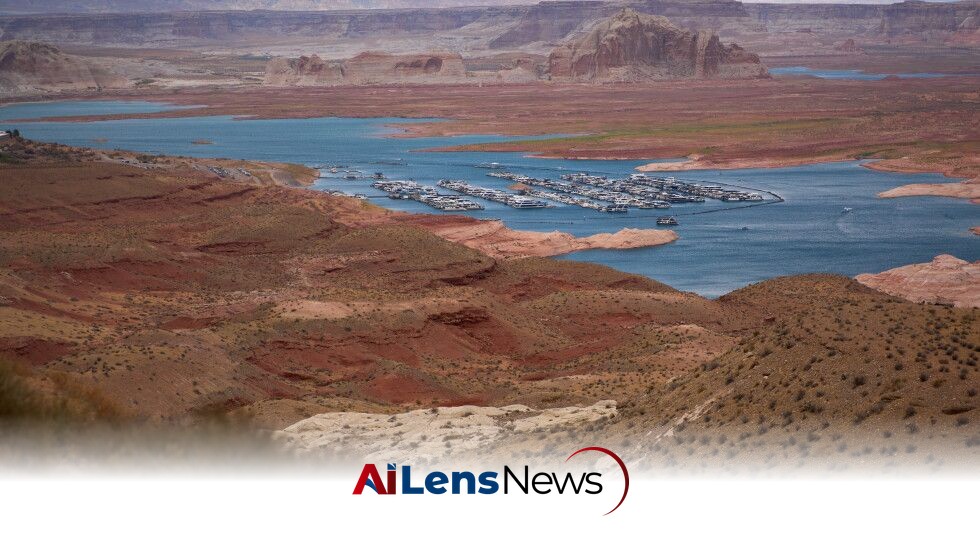


Lake Powell's water level has reached a historic low, posing significant risks to water and electricity supplies for millions reliant on the Colorado River.
Washington DC, United States Aug 17, 2026 ALN: Lake Powell, a crucial reservoir along the Colorado River, has recently hit a record low water level, raising alarms about the potential impact on water and electricity supplies for millions of people. This development is part of a broader crisis affecting the region, which has been grappling with severe drought conditions. The situation at Lake Powell is indicative of a larger environmental issue facing the American Southwest, where prolonged dry spells and climate change are reshaping the landscape and threatening the livelihoods of many.
The declining water levels at Lake Powell threaten the availability of water for agricultural, residential, and industrial use. As one of the largest reservoirs in the United States, it plays a vital role in supplying water to several states, including Arizona, California, and Nevada. The Colorado River system, which includes Lake Powell, is a primary water source for over 40 million people across the southwestern United States, making its health crucial for the region's future.
With the current situation, agricultural sectors are particularly vulnerable. Farmers rely heavily on the water supplied by Lake Powell for irrigation, and reduced water availability could lead to lower crop yields, higher food prices, and economic instability in farming communities. Additionally, urban areas that depend on this reservoir for drinking water face similar threats, with potential restrictions on water usage looming if conditions do not improve.
The current situation underscores the urgent need for water conservation measures and sustainable management practices. Many experts advocate for a reevaluation of water allocation policies, emphasizing that equitable distribution and conservation strategies must be prioritized to ensure that all users have access to this vital resource. The importance of implementing efficient water use practices in both urban and agricultural settings cannot be overstated, as every drop counts in times of scarcity.
In addition to water supply issues, the low water levels also jeopardize electricity generation. Lake Powell is home to the Glen Canyon Dam, which generates hydroelectric power for millions. Reduced water flow could lead to decreased electricity production, impacting energy availability and prices in the region. As hydroelectric power is a significant source of renewable energy, the implications of reduced output could also hinder efforts to transition to cleaner energy sources amid growing concerns about climate change.
Electricity prices may rise in response to diminished supply, putting additional financial pressure on households and businesses. Furthermore, as demand for electricity continues to grow, especially during peak summer months when air conditioning usage spikes, the situation could lead to energy shortages or rolling blackouts if alternative energy sources cannot compensate for the lost hydroelectric production.
This record low is not an isolated incident but part of a troubling trend. Over the past two decades, the Colorado River basin has experienced significant reductions in water flow due to climate change, prolonged drought, and increased demand. According to scientists, the region is facing one of the worst droughts in over a millennium, which has been exacerbated by rising temperatures that increase evaporation rates and alter precipitation patterns.
Experts warn that without substantial changes in water management and conservation efforts, the situation is likely to worsen. Historical data indicates that the Colorado River has seen a decline in flow by nearly 20% since the year 2000, a trend that could continue if current practices are maintained. This alarming reality has prompted calls for regional cooperation among states to develop comprehensive water management strategies that can adapt to changing climate conditions.
Local communities and governments are beginning to respond to this crisis. Initiatives aimed at promoting water conservation, improving irrigation efficiency, and exploring alternative water sources are being discussed. For instance, some cities are investing in advanced technology to recycle wastewater, while others are implementing programs to incentivize residents to reduce water usage.
Additionally, public awareness campaigns are being launched to educate residents about the importance of water conservation. These campaigns aim to inform the public about simple yet effective practices, such as fixing leaks, using drought-resistant landscaping, and adopting more efficient appliances. Community engagement is crucial, as collective action can lead to significant reductions in water consumption.
Furthermore, interstate agreements and collaborations are being revisited to ensure that water-sharing agreements are equitable and sustainable in light of current conditions. Stakeholders from various sectors, including agriculture, urban development, and environmental advocacy, are increasingly recognizing the need for a unified approach to address the challenges posed by dwindling water resources.
The record low water levels at Lake Powell serve as a stark reminder of the ongoing challenges facing the Colorado River system. As millions depend on this vital resource, it is imperative that concerted efforts are made to address the underlying issues contributing to this crisis. The future of water and electricity supplies in the region hangs in the balance, making immediate action essential.
In summary, the situation at Lake Powell is not just a localized issue; it reflects broader environmental challenges that require urgent attention and action. As climate change continues to impact weather patterns and water availability, the need for sustainable practices and collaborative solutions becomes increasingly critical. The choices made today will have lasting implications for future generations, emphasizing the importance of proactive measures in safeguarding water and energy resources.
To learn more about the latest developments in Water & Oceans, stay updated with our exclusive reports and analyses on AiLensNews.

