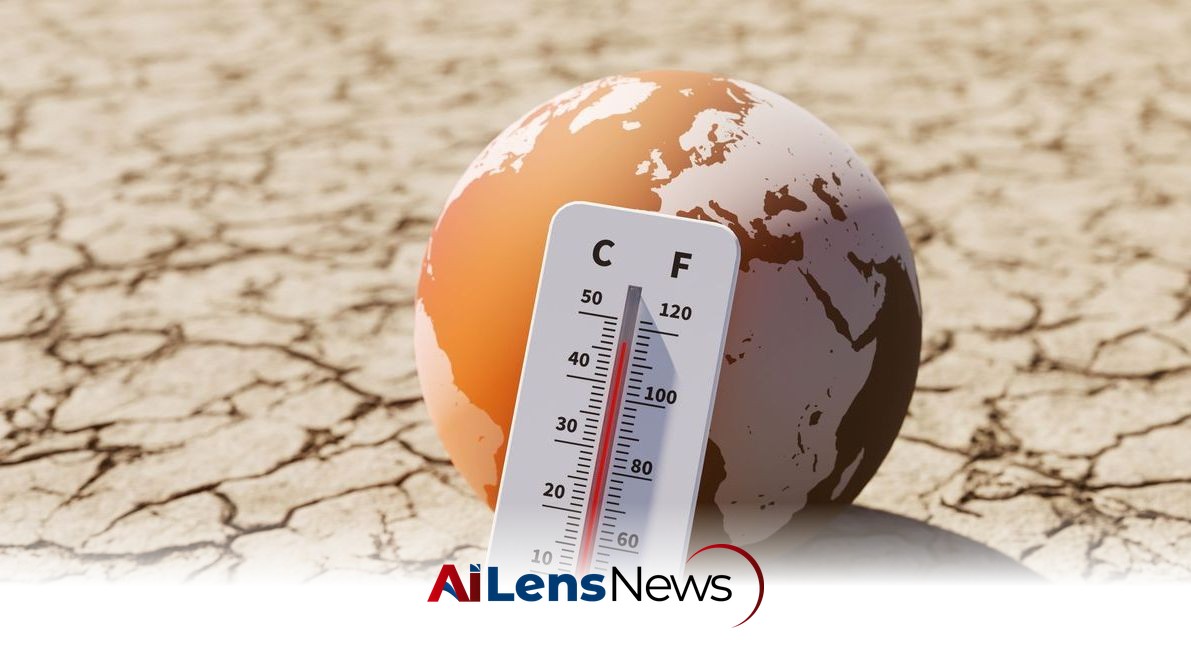


The 2026 El Niño is projected to be the strongest on record, potentially leading to extreme weather and significant economic impacts globally.
Washington DC, United States Jul 25, 2026 ALN: The world could face the strongest El Niño since recordkeeping began, increasing the likelihood of extreme weather events and significant, long-term economic impacts globally. The El Niño phenomenon, which takes place in the Pacific Ocean, has far-reaching effects on climate patterns, agriculture, fisheries, and economies across the globe. Understanding the implications of a record-breaking El Niño is crucial for governments, businesses, and communities as they prepare for the potential impacts.
A new analysis by Berkeley Earth climate scientist Zeke Hausfather paints a worrying picture of the climate phenomenon developing in the Pacific Ocean. Models have consistently forecast that this year's El Niño—characterized by hotter than normal waters in the eastern tropical Pacific—could be among the strongest on records. Hausfather's analysis using the El Niño forecast based on 14 climate models through July indicates that “this year’s El Niño is not only very likely to be the strongest event since reliable records began—it may end up the strongest by a truly mind-blowing margin.”
Climate researchers measure the strength of El Niño by looking at the temperatures in a region of the Pacific known as Niño 3.4, which covers the eastern and central part of the ocean basin. This area is critical because fluctuations in its temperature can significantly alter weather patterns not just locally, but globally. The new analysis relies on 667 simulations and compares them with historical records of the most intense El Niño events since 1877. It also disentangles El Niño's intensity from the background warming driven by fossil fuels, making it easier to draw comparisons between super El Niños.
The model average shows that heat in the Niño 3.4 region could peak at 3.6 degrees Celsius (6.5 degrees Fahrenheit) above normal levels. This figure would exceed the previous record—set during the 2015-2016 El Niño episode—by approximately 0.8 degrees Celsius. It's rare for records to fall by such a wide spread, indicating a significant shift in climate dynamics. Such a sharp increase in temperature could have cascading effects, leading to more extreme weather events and altering precipitation patterns around the globe.
“For context, the gap between the strongest and the fifth strongest El Niño of the past 150 years is only about 0.5C. The models are forecasting something outside the envelope of anything we have ever observed,” Hausfather writes. This statement underscores the unprecedented nature of the current forecasts and the potential for extraordinary climate events that could arise from this El Niño.
Of course, what happens in the tropical Pacific doesn't stay in the tropical Pacific. El Niño rearranges the atmosphere, changing weather patterns around the world. The more intense the El Niño, the more intense the impacts (usually). For instance, regions that typically experience drought may face increased rainfall, while areas accustomed to wet conditions may see prolonged dry spells. Such shifts can have dire consequences for agriculture, water supply, and disaster preparedness in affected regions.
Record-breaking ocean heat in the Pacific combined with warming driven by carbon emissions could send the global temperature to new highs. However, it takes time for the extra heat released by El Niño to work its way through the vast climate system, meaning that next year is when we'll see the full impact of this year's Pacific heat wave on the global average temperature. According to his projections, global temperatures in 2027 could reach up to 1.7 degrees Celsius above the preindustrial average, well above the 1.5 degrees Celsius threshold that's been dubbed a relatively safe level of global warming. This potential increase raises alarms among climate scientists and policymakers, as exceeding this threshold could lead to catastrophic climate impacts.
But the world won't have to wait until 2027 to feel the heat of El Niño. A separate analysis by Carbon Brief shows that the odds are increasing for 2026 to set an annual heat record, with the likelihood up from 19 percent in April to 35 percent as of July. This increase in likelihood suggests that the effects of the current El Niño are already being felt and could intensify over the coming months. Forecasters are expecting extreme weather associated with El Niño to impact various parts of the globe in the coming months. In fact, some impacts are already here: Fisheries in the eastern Pacific are seeing lower catches, with the Peruvian government setting up a ban for catching anchovies this spring. Such decisions reflect the immediate economic implications of El Niño, as fishing communities face reduced income and food security challenges.
Hausfather's analysis also revealed that the phenomenon is developing faster than usual. According to the comparison, this year’s El Niño is intensifying more rapidly than the 1997-1998 event, another super El Niño. The 1997-1998 event is often cited as one of the most impactful El Niños in history, causing widespread droughts, floods, and economic turmoil across various regions. It also differs significantly from the 2015 event, which began when the ocean was already showing signs of prior warming—in other words, it had a running start. That's particularly striking because this year began with La Niña, the cooler-than-normal cousin of El Niño, so it had a bit of work to do before it even got going. This rapid development raises questions about the mechanisms driving these changes and the implications for future climate predictions.
The research findings were presented this week during a briefing organized by Berkeley Earth, during which researchers talked about other impacts associated with El Niño. That includes economic losses caused by the uptick in extreme weather. A study by Justin Mankin, a climate scientist at Dartmouth College, found that damages from the 1997-1998 El Niño event reduced global economic growth by approximately $5.7 trillion in the years that followed. If current projections are accurate, the episode currently unfolding could result in cumulative economic losses of around $10 trillion by 2032. This staggering figure highlights the importance of climate adaptation strategies and the need for global cooperation in addressing the challenges posed by climate change.
One challenge with forecasting an exceptionally strong El Niño, though, is the lack of historic analogues. Models are fed historic data, so it remains to be seen just how accurate their record-breaking projections are. The unprecedented nature of the current forecasts means that scientists must tread carefully, as they navigate the uncertainties inherent in climate modeling. But, Hausfather notes, the models appear to be converging around the 3.6 degrees Celsius average, giving forecasters confidence that the world is in for some serious consequences. As the world grapples with the implications of a record-breaking El Niño, the need for proactive measures to mitigate its effects becomes increasingly urgent.
To learn more about the latest developments in Climate Change, stay updated with our exclusive reports and analyses on AiLensNews.

