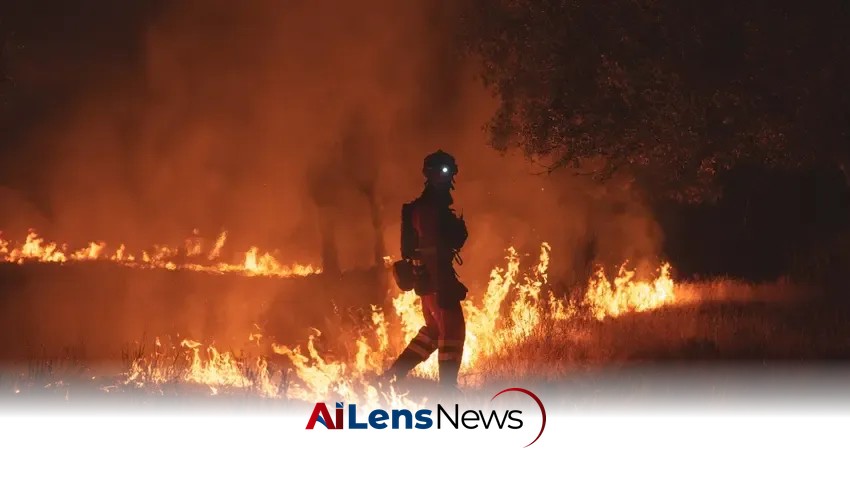


Two significant wildfires merged west of Madrid, leading to the evacuation of 63,000 people as authorities battle the worst blazes in the region's history.
London, United Kingdom Jul 25, 2026 ALN: Two major wildfires merged west of Madrid on Friday, where some residents could smell smoke drifting in from blazes burning out of control near the Spanish capital. The merging of these wildfires has raised significant alarms, prompting emergency responses and evacuation measures affecting tens of thousands of residents in the region.
Strong winds were expected to hamper efforts to contain the wildfires, which authorities said were the worst in the region's history and had forced the evacuation and confinement of 63,000 people so far. The situation has been exacerbated by the ongoing heatwave that has been affecting Spain, which has seen temperatures soar and humidity levels drop, creating an ideal environment for the rapid spread of wildfires.
In the face of this natural disaster, local residents have expressed their fear and concern. "The smoke was incredibly thick. You couldn't breathe," José Cobos, who fled his home with his wife and three dogs, told private broadcaster Antena 3. His experience reflects the anxiety many are feeling as smoke from the fires fills the air, affecting not only those in immediate danger but also individuals in surrounding areas.
Only emergency vehicles were allowed on roads near the blaze, while police set up checkpoints to prevent unauthorized access, according to an AFP reporter at the scene. This measure is part of a broader strategy to ensure the safety of residents and facilitate the movement of emergency services. The merging of two of the three wind-fueled wildfires into a single blaze has made containment efforts even more challenging, with regional emergency services emphasizing the critical need to prevent further convergence of the fires.
From the Temple of Debod park, on the western edge of central Madrid overlooking the city's outskirts, a thick plume of grey smoke could be seen rising above the horizon as wildfires burnt about 60 kilometers (40 miles) away. This visibility of the fires from such a distance underscores the scale of the disaster. Despite the proximity of the smoke, some residents, like Dora Fernández, a 57-year-old nurse walking her dog in the park, have tried to maintain a sense of calm. "It's far from here," she said, adding firefighters "know how to stop it". Her sentiments reflect a mix of hope and trust in the capabilities of local authorities to manage the crisis.
Interior Minister Fernando Grande-Marlaska told reporters that strong winds, low humidity, and high temperatures were complicating the fight against the flames. These weather conditions have created a perfect storm for firefighters, severely limiting their ability to control the blazes. Carlos Novillo, the Madrid regional government's emergency management chief, noted that weather conditions were "expected to improve" overnight, with cooler temperatures and higher humidity forecast for Saturday. This anticipated change in weather could provide a much-needed reprieve for firefighters and emergency crews working tirelessly to combat the flames.
In response to the escalating situation, Spain's government declared a national emergency in the Madrid region and neighboring Avila province late Thursday. This declaration allows additional resources to be deployed more quickly and places the Military Emergency Unit (UME) in charge of coordinating the response. Such measures are crucial in ensuring that the firefighting efforts are adequately supported and that affected residents receive the assistance they need.
At least 19,000 people in the Madrid region have been evacuated or ordered to remain indoors due to wildfires that have become the worst in the region's history, according to regional president Isabel Díaz Ayuso. "The situation is completely unusual and catastrophic," she told reporters, emphasizing the urgency of the situation and the need to prioritize safety. The evacuations have included a significant number of vulnerable individuals, with more than 430 elderly people and people with disabilities from five care homes among those evacuated, as stated by the regional government of Madrid.
Television images showed Guardia Civil police officers wearing face masks helping elderly residents in wheelchairs board buses as care homes were evacuated. This visual representation of the evacuation efforts highlights the challenges faced by emergency responders in ensuring the safety of those who may be less able to evacuate on their own. The largest evacuation operation took place in San Martín de Valdeiglesias, where most of the 178 residents at the private López Rumayor care home were evacuated to the municipal sports hall, showcasing the coordinated efforts of local authorities to safeguard lives.
Spain has seen a series of blazes in recent days as a heatwave and dry conditions have heightened the risk of fast-moving fires, particularly in scrubland areas where dry vegetation has fueled the flames. This trend of increasingly severe wildfires is not unique to Spain; many countries around the Mediterranean have reported similar issues, raising concerns about climate change and its impact on weather patterns and natural disasters.
The country's largest active wildfire is burning in the province of Guadalajara, around 100 kilometers north of Madrid, where it has scorched about 32,000 hectares over the past week. This wildfire has become a focal point for firefighting efforts, with resources being diverted to contain its spread. The scale of this blaze has led to it being described as Spain's second biggest wildfire in the last century, highlighting the severity of the current situation.
Prime Minister Pedro Sánchez commented on the crisis, stating, "We are living through a dramatic situation, not only in various Spanish provinces but also in regions of neighboring countries." His remarks underline the broader implications of the wildfires, which are not just a local issue but part of a larger pattern of climate-related disasters affecting the region. The government has been proactive in deploying all available resources to combat the wildfires, signaling the seriousness with which they are approaching the crisis.
Spain recorded its worst wildfire season in recent history in 2025, when more than 393,000 hectares were destroyed by fire, according to the European Forest Fire Information System (EFFIS). This past experience highlights the growing frequency and intensity of wildfires in Spain, raising questions about the effectiveness of current firefighting strategies and the need for long-term solutions to mitigate the impact of climate change on fire risk.
The ongoing wildfires in central Spain serve as a stark reminder of the challenges posed by climate change, with experts warning that such extreme weather events are likely to become more common in the future. As authorities continue to battle the flames, the implications of these wildfires extend beyond immediate safety concerns, prompting discussions about environmental policy, land management, and community preparedness in the face of natural disasters.
To learn more about the latest developments in Environmental Policy, stay updated with our exclusive reports and analyses on AiLensNews.

