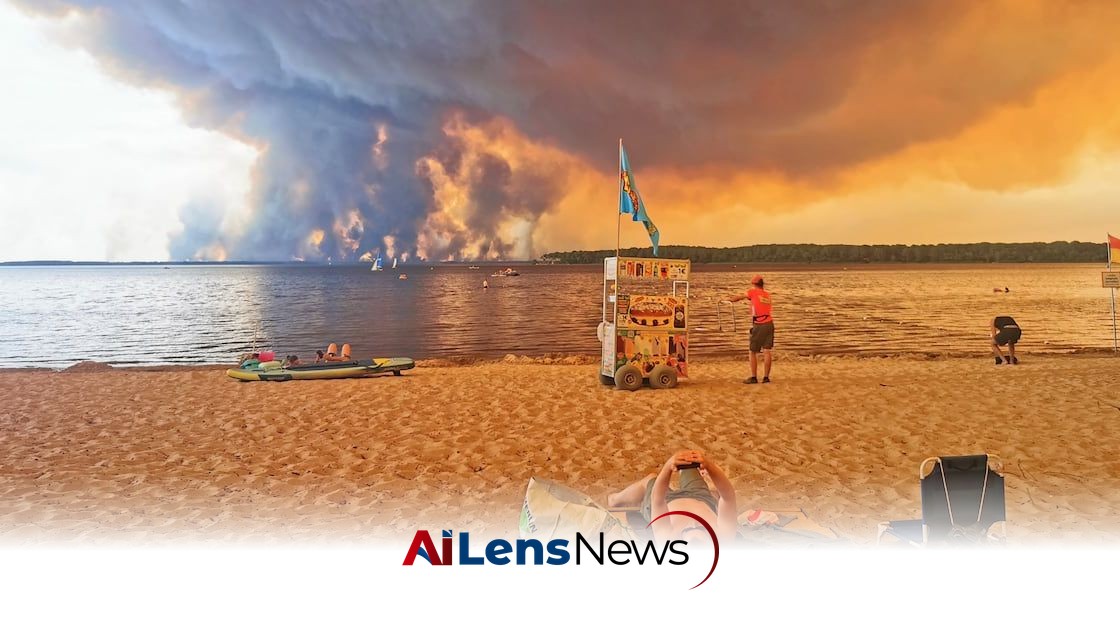


Uncontrolled wildfires have forced the evacuation of over 250,000 residents in Spain and France, threatening major metropolitan areas.
London, United Kingdom Jul 25, 2026 ALN: More than 250,000 people fled towns and villages in Spain and France into the weekend as uncontrolled wildfires moved ever closer to Madrid and Bordeaux, metropolitan areas that are home to more than eight million people combined. These wildfires have been exacerbated by a combination of extreme heat, drought conditions, and strong winds, leading to a situation that has prompted urgent evacuations and has raised concerns about the safety and well-being of residents in the affected regions.
Authorities ordered the immediate evacuation of some western suburbs of Bordeaux, a city in southwestern France famed for its wines, in an area that includes the regional airport. This evacuation was part of a broader response to the escalating threat posed by the wildfires, which have been fueled by a prolonged period of dry weather and high temperatures. The fires have not only posed a risk to life and property but have also threatened critical infrastructure, including transportation routes and emergency services.
About 197,000 people were evacuated in the Gironde and surrounding areas, as confirmed by Interior Minister Laurent Nunez during a press conference in Paris. He reported that as of Saturday, almost 98,000 hectares (242,000 acres) of land have been scorched in the blazes, marking a record in France. This unprecedented scale of destruction highlights the growing intensity and frequency of wildfires across Europe, a trend that has been linked to changing climate patterns.
While increased humidity overnight means the conflagration in Gironde is no longer convective, or generating its own winds, the effort to get it under control “will be long and very difficult,” Nunez said, indicating that the situation remains precarious. Firefighters have been working tirelessly to contain the flames, but the combination of dry vegetation and unpredictable winds has made their task increasingly challenging.
In response to the crisis, the French government ordered more than 1,000 military personnel to support firefighters, illustrating the seriousness of the situation. Nunez also added that an Airbus A400M military transport plane will join Canadairs and other aircraft in the effort to contain the fires in the coming hours. The deployment of military resources underscores the scale of the emergency and the need for coordinated action to protect lives and property.
Evacuees have in many cases been taken to municipal sports centres as a precautionary measure, mostly to avoid exposure to heavy smoke, which travels faster than flames. The health risks associated with smoke inhalation are significant, particularly for vulnerable populations such as children, the elderly, and those with pre-existing respiratory conditions. Authorities have been working to ensure that evacuees have access to necessary resources, including food, medical care, and psychological support during this traumatic time.
In Spain, another 30,000 people were evacuated across Ávila province and the region west of Madrid, after 63,000 were evacuated or told to stay indoors as of Friday night. The Spanish authorities have been closely monitoring the situation, with expectations that two separate fires raging in the region could merge at some point, potentially exacerbating the crisis. The Madrid municipal government has taken precautionary measures by closing off parts of the city’s main parks, advising residents to keep away from trees as strong winds were forecast. No casualties have been reported so far, but the authorities remain vigilant.
“Our priority, our thinking, our aim, is for your lives, to save your lives and protect inhabited areas,” Spanish Prime Minister Pedro Sánchez stated at a press conference in the village of Cenicientos, located about 80 kilometers from the capital. He acknowledged the unpredictable winds that could complicate firefighting efforts, indicating that “we’re going to have a challenging few hours.” The government’s focus on public safety has been paramount, and officials are working to ensure that effective communication and support systems are in place for those affected.
Madrid’s air-quality monitoring system recorded a sharp deterioration in the city’s west on Saturday morning, with the smell of smoke hanging in the air near the Royal Palace in central Madrid. This deterioration in air quality poses additional health risks for residents, prompting health officials to issue warnings and advisories. The impact of wildfires on air quality can have far-reaching consequences, not only affecting those in the immediate vicinity but also leading to broader public health concerns as smoke can travel long distances.
France and Spain have been at the epicentre of Europe’s wildfire season, which started earlier than normal and accelerated in recent weeks as successive heatwaves baked vegetation, making it easier for flames to spread rapidly. The summer of 2023 has seen an alarming increase in wildfire activity across the continent, with fires having burned more than 329,000 hectares across Europe before the weekend, destroying crops and disrupting transport. The economic implications of such widespread destruction can be significant, affecting local economies and agricultural production.
Fires that have ravaged the southwestern corner of the Madrid region, burning more than 9,000 hectares in their path, remained active and uncontrolled on Saturday, as officials reported. After reaching their most intense point on Friday afternoon, what had been three separate fronts merged into a single blaze that continued to spread in what regional authorities described as “beyond control capacity.” This merging of fire fronts highlights the unpredictable nature of wildfires and the challenges faced by firefighting efforts.
Fires in Spain have so far passed through a NASA complex in Robledo de Chavela – one of three NASA Deep Space Network sites in the world – and a 12th-century monastery in Pelayos de la Presa, next to where one of the fires originated. The blaze is now heading toward the towns of El Escorial and San Lorenzo de El Escorial, home to about 36,000 people and El Escorial, a 16th-century palace that’s the world’s largest Renaissance building. The potential loss of such historic sites would represent not only a cultural tragedy but also a significant loss to the region’s heritage and tourism industry.
On Friday, French authorities had ordered the evacuation of 110,000 residents and tourists after wildfires threatened to reach Cap Ferret, a popular tourist area west of Bordeaux. The evacuations were part of a broader strategy to ensure public safety and minimize the risk of casualties, as the fires approached areas with high populations and significant tourist activity. The blazes have burned about 30,000 hectares and engulfed a number of houses in the Gironde department, according to local officials. In Landes department, further south, wildfires torched 2,600 hectares, leading to the evacuation of more than 23,000 people. The scale of the evacuations reflects the urgent need to protect lives in the face of rapidly advancing wildfires.
Last week was the worst for wildfires across Spain this year, according to the European Forest Fire Information System. A total of about 140,000 hectares have burnt in the country so far in 2023, more than three times the average for the past two decades. This alarming statistic underscores the growing frequency and intensity of wildfires in the region, raising concerns about the long-term implications for ecosystems, biodiversity, and climate resilience.
Climate change is intensifying periods of extreme heat in Europe, the fastest-warming continent. Record-breaking heat and drought have fueled the worst start ever to the global wildfire season, with climate scientists warning that a developing El Niño could bring even harsher conditions later this summer. The interplay between climate change and wildfire activity is a critical area of research, as understanding these dynamics is essential for developing effective strategies to mitigate future risks. As Europe grapples with the immediate challenges posed by wildfires, there is a growing recognition of the need for comprehensive climate action to address the root causes of these increasingly severe weather events.
To learn more about the latest developments in Natural Disasters, stay updated with our exclusive reports and analyses on AiLensNews.

