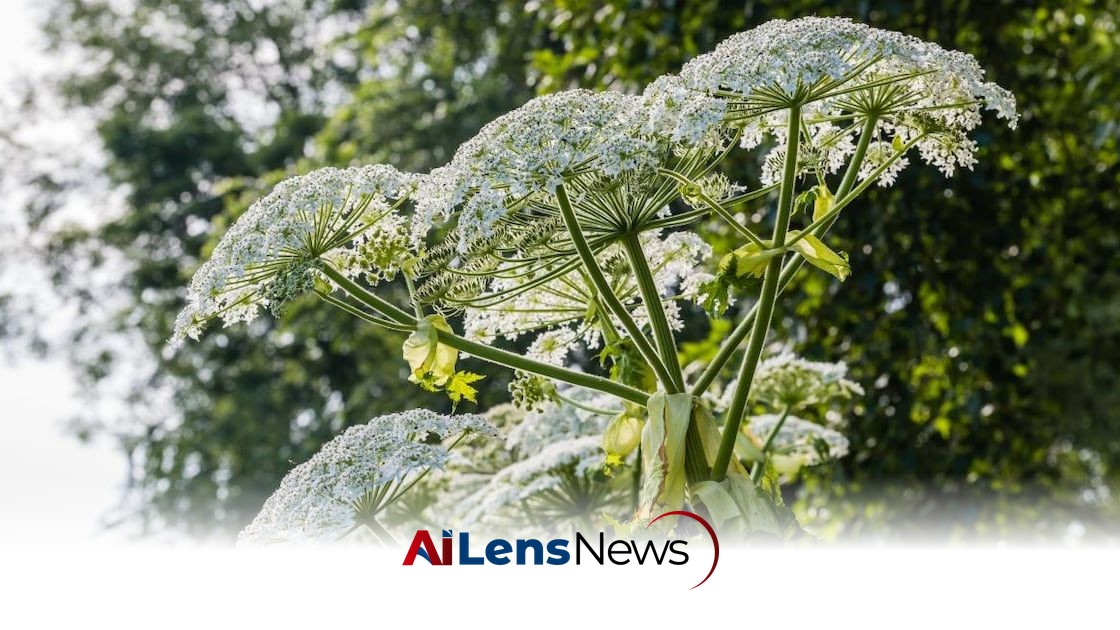


The invasive giant hogweed is causing severe burns in children and taking over gardens across Northern Ireland, prompting urgent public warnings.
London, United Kingdom Jul 25, 2026 ALN: The scale of the giant hogweed menace in Northern Ireland has led to children being burned and the dangerous invasive plant flowering in “abundance” and “taking over” areas, according to environmental data. This alarming situation has prompted concern from both parents and environmentalists alike, as the plant continues to thrive in various locations across the region.
In a summer that has seen it flourish thanks to a damp June and high temperatures, details have emerged of the prevalence of the plant across the north, through reports made by members of the public online. The public's engagement in reporting sightings of giant hogweed is crucial, as it helps authorities understand the extent of the problem and take necessary actions. Hundreds of reports have been made in recent years to the Centre for Environmental Data and Recording (CEDaR), which gathers and manages information on flora and fauna in the north.
Reports seen by the Irish News include the highly toxic plant growing “rampant” and huge clusters like a “field,” with a sighting noting specimens growing over six feet tall and almost reaching a tree canopy. This rapid growth and spread of giant hogweed pose a significant risk to the health and safety of the local population, particularly children who may unknowingly come into contact with the plant while playing outdoors.
Giant hogweed’s danger comes from its sap, which when it makes contact with human skin reduces its ability to safely absorb the sun’s UV rays, a condition known as phytotoxicity. This unique characteristic of the plant makes it particularly hazardous during the summer months when people are more likely to be outdoors. Even a slight brush against the plant can lead to severe burns within minutes in sunlight, and in some cases, the affected skin can remain at risk of painful blistering for many years after exposure, potentially leading to permanent scarring.
Contact with the eyes can cause blindness, and people are advised to thoroughly avoid the plant, which is easily recognizable due to its white, domed flower heads, its thick, purple-splattered stem with hairs, and its jagged-edged leaves. The plant's striking appearance, which initially attracted Victorian botanists, now serves as a warning sign for the dangers it poses to human health.
Native to the Caucasus region where Europe meets Asia, the plant was brought to Ireland and the UK by Victorian botanists charmed by its striking appearance. Initially planted in private gardens, giant hogweed soon spread to become one of the most recognizable invasive species, and is now a common sight in the spring and summer months near rivers, ditches, and roadsides. This historical context highlights the unintended consequences of introducing non-native species into new environments, as they can often outcompete local flora and disrupt ecosystems.
CEDaR is jointly managed by the NI Environment Agency and National Museums NI and has revealed to the Irish News over 300 reports made since 2021. Although dates of the reports have been redacted by CEDaR for data protection, they cover all NI counties and include details of children being injured by giant hogweed. This statistic underscores the urgency of addressing the giant hogweed crisis, as the number of incidents involving human contact with the plant continues to rise.
One logged report has details of an incident in Drumahoe outside Derry. “A member of the public reported that their child received burns on their legs from what appeared to be giant hogweed, which had a large bulb head that had not flowered yet,” it states, adding that the contact occurred when the child walked through an “overgrown grass path to walk along the banks of the River Faughan.” This incident illustrates the dangers posed by the plant in areas where children play, often in proximity to water bodies.
A separate report from a mother states there was “a lot” of the plant along the River Faughan. “My son has burns from the plant. It has not reached full height or flowered,” they wrote. It is not stated if this was the same incident of a child being burned, but it highlights the pervasive nature of giant hogweed in the area.
Another report states a stretch of the Route 92 Foyle Valley cycle route, built on an old railway line, has “lots” of giant hogweed, adding: “It’s rampant.” This proliferation of the plant along popular recreational pathways poses a significant risk to cyclists and pedestrians alike, as they may inadvertently come into contact with the hazardous plant.
A patch was reported “next to a busy walkway” outside the city, while describing the Bamboo River Walk pathway in Castlecaufield, Co Tyrone, a report describes the plant as “taking over.” This situation raises questions about the management of public spaces and the need for proactive measures to control invasive species that threaten public safety.
At a road junction on the Garvaghy Road outside Ballymena, the plants were reported as at least four feet in height, with some over six feet, with its leaves – also dangerous to touch – spanning two feet. “The weeds are now also spreading to the verges on the Garvaghy Road and some are close to touching the above tree canopy,” the report states. “I live close to the area and worry greatly about the risk that this weed presents to both health and the environment.” This concern reflects a growing awareness of the ecological implications of invasive species, as they can disrupt local ecosystems and outcompete native flora.
In Coleraine, a report has a large “clump” on the Ulster University campus, while another report describes the dangerous plants as “like a mini forest” close to the Asda supermarket car park in Portadown. The presence of giant hogweed in urban areas raises further concerns about public safety and the need for effective management strategies to mitigate risks.
In Limavady’s Drenagh Estate, which hosts weddings and offers accommodation, a report described giant hogweed as “hugely abundant” and “absolutely everywhere.” Prolific growth was also reported close to the Dunnes Stores car park in south Belfast’s Annadale Embankment area. Not far from there in the riverside area of Stranmillis in south Belfast, popular with walkers, a report marks “likely hundreds of individual flowering stems.” This widespread distribution of giant hogweed in various settings highlights the need for increased public awareness and education on the dangers of this invasive species.
In Newry, where the Irish News reported this month that the plant was growing within arm's reach of city centre pavements, over 12 reports describe growth along the Clanrye River and Newry Canal as a “large amount,” “heavy,” and “abundant.” This situation emphasizes the importance of monitoring and managing invasive species in urban settings, where human interaction is more likely.
A house in Belfast’s Dundonald area was described in a report as having the toxic invader growing “all through (the) property, front and rear gardens – seeded over many years.” This example highlights the challenges faced by homeowners in managing invasive species on their properties, as well as the potential for these plants to spread to neighboring areas.
Another report on a domestic property, from Ballykelly in Co Derry, has a worried householder warn of “at least 10 full grown in close area of neighbour’s garden.” This concern reflects the interconnected nature of invasive species management, as the actions of one property owner can impact the surrounding community.
A spokesperson for the Department for Agriculture, Environment and Rural Affairs stated that along with its dangers to humans, giant hogweed “can form dense colonies which suppress the growth of native plants including grasses, displacing species and negatively impacting ecologically sensitive and vulnerable habitats.” This ecological perspective is vital for understanding the broader implications of giant hogweed proliferation, as it can lead to a decline in biodiversity and disrupt local ecosystems.
They added: “If you think you have seen giant hogweed, please report via CEDaR or the iRecord App, but do not approach or try to remove it unless you are wearing full protective clothing.” This advice underscores the importance of public engagement in addressing the giant hogweed crisis, as well as the need for proper protective measures when dealing with this hazardous plant. As awareness of the dangers of giant hogweed continues to grow, it is imperative that communities come together to address this crisis and protect both public health and the environment.
To learn more about the latest developments in Pollution & Waste, stay updated with our exclusive reports and analyses on AiLensNews.

