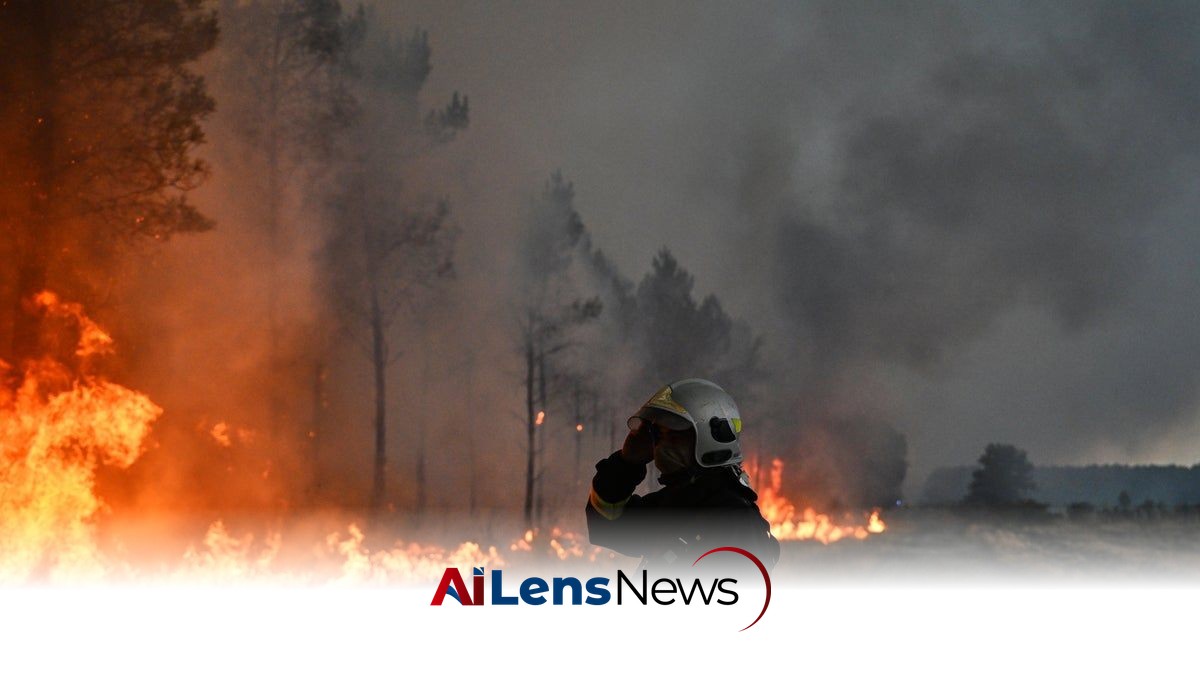


As France grapples with an intense heatwave and raging wildfires, authorities have ordered more evacuations near Bordeaux, with temperatures soaring to 44°C.
London, United Kingdom Jul 29, 2026 ALN: France is currently grappling with a severe heatwave that is expected to reach its peak today, coinciding with widespread evacuations as wildfires rage near Bordeaux. The extreme weather conditions have led to alarming temperatures, with forecasts predicting highs of up to 44°C in certain regions. This heatwave is not isolated to France; neighboring Spain is also experiencing similar conditions, with meteorologists indicating that the heat is set to persist until Sunday.
In response to the escalating threat posed by wildfires, French authorities have ordered the evacuation of an additional 4,000 individuals from tourist areas along the Atlantic coast. This decision marks what could be the largest peacetime evacuation in French history, as a massive wildfire west of Bordeaux continues to consume vast expanses of land. The Gironde fire has already devastated an area four times larger than Paris, forcing approximately 220,000 residents to abandon their homes.
The situation has become increasingly precarious for firefighters who are battling to contain the blaze amidst the renewed heatwave. Local officials have reported the emergence of new flames near Grand Crohot, a popular beach destination on the Lège-Cap-Ferret peninsula, further complicating efforts to manage the fire. President Emmanuel Macron has characterized the current crisis as the most challenging France has faced since World War II, urging fire crews to maintain their strength and resolve as they confront these unprecedented conditions.
Across the border, Spain is also reeling from the impact of wildfires, with authorities reporting that more than 63,000 people have been evacuated from areas near Madrid. The scale of these evacuations underscores the severity of the situation, as both countries contend with the dual challenges of extreme heat and rampant wildfires. Spanish Prime Minister Pedro Sánchez has expressed cautious optimism, stating that Spain is beginning to see "light at the end of the tunnel" in its battle against the wildfires, although he also emphasized that the next few hours remain critical.
The European Union's approach to combating wildfires is under scrutiny, with calls for increased funding, improved forest management practices, and enhanced public education regarding fire risks. Hadja Lahbib, the EU's Crisis Management Commissioner, has stated that the response to wildfires must evolve in tandem with the accelerating impacts of climate change. With wildfires forcing unprecedented evacuations of tens of thousands of people across both France and Spain, the urgency for a comprehensive strategy to mitigate fire risks has never been greater.
Lahbib highlighted that merely acquiring more firefighting equipment is insufficient; countries must invest in sustainable forest management practices that can help reduce the likelihood of wildfires. Additionally, public education campaigns are essential to inform citizens about behaviors that can inadvertently contribute to fire risks. It is estimated that around 90 percent of wildfires are ignited by human activities, including campfires and discarded cigarettes, underscoring the need for greater awareness and responsibility among the public.
In Spain, the intensity of the wildfires has left seasoned firefighters astonished. Javier García, a firefighter with two decades of experience, remarked that he has never encountered anything resembling the current record blaze near Madrid. His comments reflect the broader sentiment among emergency responders who are grappling with conditions that seem to defy previous experience and understanding.
Despite the ongoing challenges, Prime Minister Sánchez has expressed hope that the situation is improving. Following the lifting of a state of emergency in the central Toledo province, authorities have allowed many residents to return to their homes. However, fires continue to rage in the nearby Madrid region, and Sánchez cautioned that the fight against the wildfires is far from over. His remarks highlight the precarious balance between optimism and caution that defines the current response to the crisis.
One of the most alarming phenomena associated with the Gironde wildfire is the formation of a pyrocumulonimbus cloud, which is a towering thundercloud created by the intense heat of the fire. This cloud has been described as gargantuan and electrified, generating its own lightning and violent winds that can spark new fires beyond the original blaze. This phenomenon has never been recorded in France before, and it illustrates the extraordinary and unpredictable nature of wildfires in the context of climate change.
In addition to the immediate dangers posed by the fires, the national weather service has issued a yellow heat warning for Gironde, predicting inland temperatures between 33°C and 35°C. Such extreme heat exacerbates the already dire situation, making firefighting efforts even more challenging.
The current heatwave and wildfires are part of a broader pattern of climate change that is affecting Europe disproportionately. According to the European Union's Copernicus climate service, Europe is warming at a rate more than twice the global average, with an increase of approximately 2.5°C compared to pre-industrial levels. This rapid warming has resulted in record-breaking temperatures, including the hottest June ever recorded in Western Europe.
Several factors contribute to this accelerated warming, including changing weather patterns, increased solar radiation, reduced air pollution, and geographical considerations. The consequences of this warming trend are profound, as evidenced by the more than 1,160 square kilometers (448 square miles) of land that have burned across France this year alone.
In light of these developments, some firefighters have taken a proactive stance against climate change denial. One Spanish firefighter has invited skeptics to join his crew in battling the blazes, emphasizing the urgent need for collective action in the face of a climate crisis that is becoming increasingly apparent.
In response to concerns about potential burglaries in evacuated areas, the French military has been deployed to patrol communities that have been emptied due to the wildfires. The Gendarmerie Nationale has released footage showing military police conducting checks on abandoned properties in Lege-Cap-Ferret, part of the Gironde region. This measure aims to ensure the safety of properties and provide peace of mind to residents who have been forced to leave their homes in the face of the ongoing crisis.
The situation in France and Spain serves as a stark reminder of the escalating risks posed by climate change and the urgent need for comprehensive strategies to address the growing threat of wildfires. As the impacts of climate change become more pronounced, communities, governments, and international organizations must work collaboratively to develop effective responses that prioritize both immediate disaster management and long-term resilience against future threats.
To learn more about the latest developments in Climate Change, stay updated with our exclusive reports and analyses on AiLensNews.

