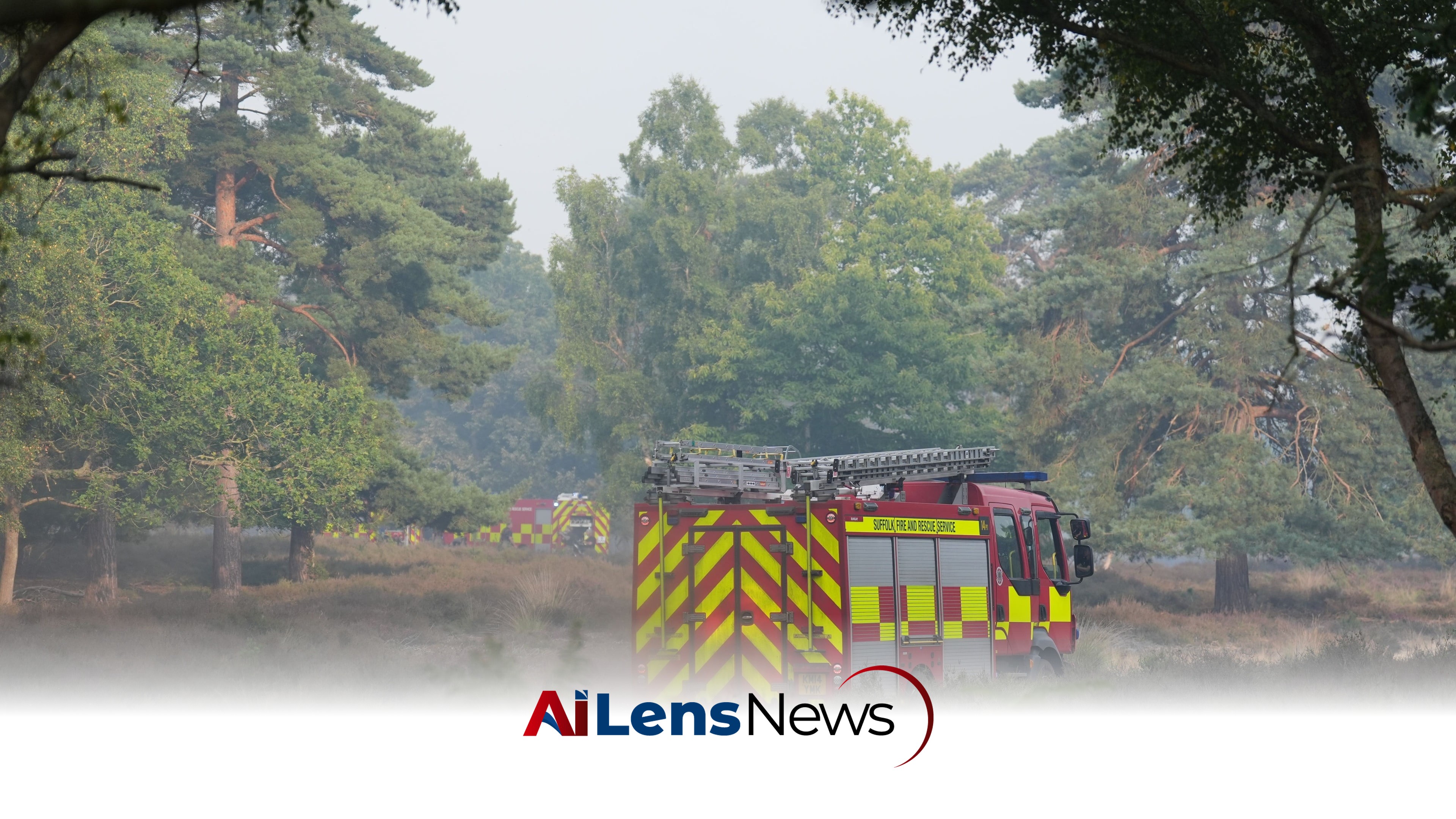


As firefighters continue to combat a wildfire in Suffolk for the third consecutive day, they report improved conditions and increased control over the situation.
London, United Kingdom Jul 31, 2026 ALN: Firefighters battling a wildfire in Suffolk have reported significant progress as they enter the third day of operations. The blaze, which has been challenging due to dry conditions and dense vegetation, has seen crews gain a better position to manage and contain the flames. The wildfire is a stark reminder of the increasing frequency and intensity of wildfires across various regions, often exacerbated by climate change and human activity.
Authorities have stated that cooler temperatures and a slight increase in humidity have aided firefighting efforts. These weather changes are critical in wildfire management, as high temperatures and low humidity levels typically create ideal conditions for wildfires to ignite and spread. Firefighters have been working tirelessly, employing various techniques to suppress the fire and protect nearby communities, highlighting the essential role of both natural weather patterns and human intervention in wildfire management.
The wildfire, which ignited earlier this week, has affected a large area of woodland. Fire crews have been deployed from multiple regions, and additional resources have been brought in to assist with the containment efforts. The priority remains to safeguard residential areas and prevent the fire from spreading further. The rapid response from local and state firefighting agencies underscores the importance of preparedness and coordination in dealing with such emergencies.
Wildfires can have devastating effects not only on the environment but also on local communities. The destruction of habitats, the release of carbon emissions, and the potential for loss of life and property are all significant concerns. Firefighters are not only battling the flames but are also tasked with protecting the ecosystem and ensuring that the damage is minimized. The current wildfire has raised concerns about air quality, as smoke can travel long distances, affecting areas far beyond the immediate vicinity of the fire.
Local residents have been advised to stay vigilant and follow safety protocols. Evacuation plans have been put in place for nearby neighborhoods, although no mandatory evacuations have been issued at this time. The preparation for potential evacuations reflects the seriousness of the situation, as wildfires can change rapidly and unpredictably. Community support has been evident, with many residents offering assistance to firefighters and those affected by the fire. This solidarity among community members is crucial in times of crisis, as it fosters resilience and a collective effort to overcome challenges.
The emotional toll on residents cannot be understated. Even without mandatory evacuations, the threat of fire can lead to significant stress and anxiety among those living in affected areas. Local authorities have been working to provide resources and information to help residents cope with the situation, including setting up information centers and hotlines for those seeking guidance. The psychological impact of such natural disasters can linger long after the flames are extinguished, leading to increased mental health support needs in the community.
Officials continue to monitor the situation closely, providing updates to the public as conditions evolve. The cooperation between various firefighting agencies has been crucial in managing this incident effectively. Collaboration among local, state, and federal agencies ensures that resources are allocated efficiently and that best practices in firefighting are shared across jurisdictions. This collective approach not only enhances the immediate response but also contributes to long-term strategies for wildfire management.
As the firefighting efforts continue, authorities remain optimistic about fully containing the wildfire in the coming days. They emphasize the importance of community cooperation and adherence to safety guidelines during this critical time. Public awareness campaigns are likely to be ramped up to ensure that residents understand the risks associated with wildfires and the importance of preparedness. These initiatives may include educational workshops, distribution of informational materials, and community meetings to discuss fire safety.
Firefighters are committed to ensuring the safety of both the environment and the residents of Suffolk as they work diligently to extinguish the flames. The implications of this wildfire extend beyond immediate firefighting efforts; they serve as a reminder of the need for ongoing investment in wildfire prevention and mitigation strategies. This includes better forest management practices, community education about fire safety, and infrastructure improvements to enhance resilience against future wildfires. Furthermore, discussions around climate change adaptation strategies have become increasingly relevant, as communities must adapt to the changing landscape of fire risk.
In conclusion, while significant progress has been made in battling the Suffolk wildfire, the situation remains fluid and requires continuous vigilance. The collaborative efforts of firefighters, local authorities, and community members play a vital role in mitigating the impacts of the blaze, and ongoing support will be essential as the region navigates the challenges posed by wildfires now and in the future. The lessons learned from this incident can inform future responses and lead to improved strategies for managing wildfires, ultimately contributing to greater community resilience and environmental stewardship.
To learn more about the latest developments in Environmental Policy, stay updated with our exclusive reports and analyses on AiLensNews.

