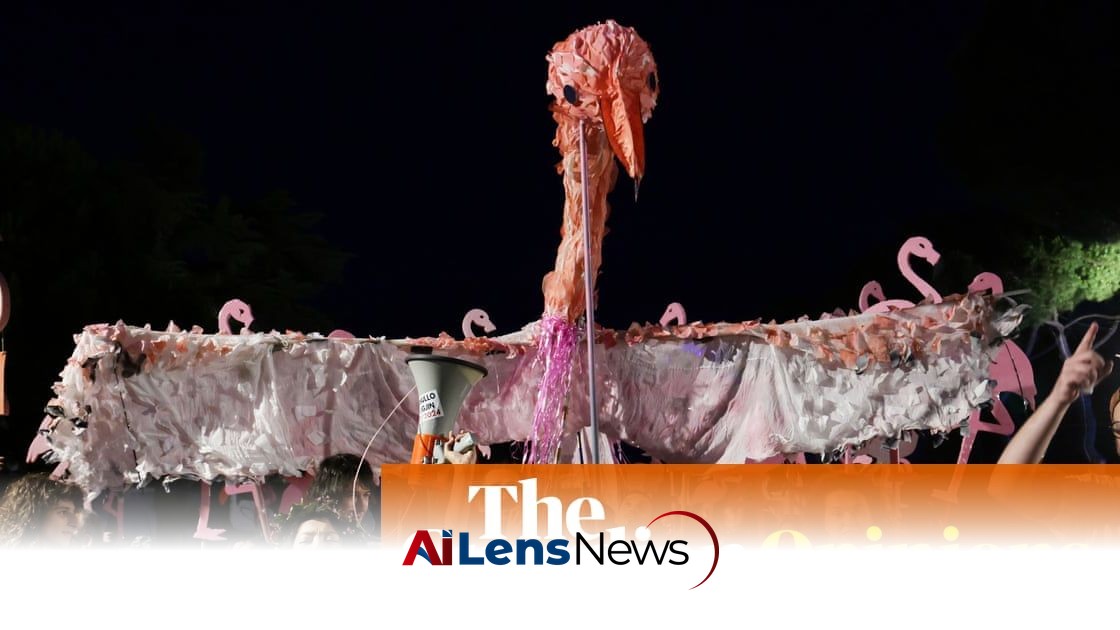


Protests in Albania against luxury developments threaten a nature reserve, sparking a movement questioning government transparency and priorities.
New Delhi, India Jul 8, 2026 ALN: For more than a month, thousands have taken to the streets of Tirana to protest against their government, marking the largest outbreak of unrest in Albania since the collapse of communism over three decades ago. What began as concerns about protecting a nature reserve, which hosts more than 2,500 species, has evolved into what is being called the flamingo revolution, challenging the very direction of the country. This movement is not just a localized protest; it symbolizes a broader struggle for al justice, political accountability, and the rights of citizens in a nation grappling with its post-communist identity.
Albanians are outraged that multibillion-dollar luxury developments, backed by Jared Kushner and Ivanka Trump, threaten one of the last wild areas on the Adriatic—specifically the Zvërnec lagoon and the nearby island of Sazan. The Zvërnec lagoon is not only a habitat for flamingos but also a crucial ecological zone that supports a variety of wildlife and plant species. Protesters are furious at the lack of transparency surrounding these projects. Although the government maintains that deals are not finalized, videos of bulldozers on beaches have triggered widespread protests, igniting a collective rage among citizens who feel their voices are being ignored in favor of corporate interests.
Demonstrators are now calling for the resignation of Prime Minister Edi Rama, who won a fourth term only last year with a voter turnout of just 45%. This low turnout has raised questions about the legitimacy of his mandate and has fueled further discontent among the populace. Rama has insisted that “there is absolutely no chance that the investment will stop as long as I am here.” His unwavering stance exemplifies a broader trend in which political leaders prioritize economic growth over al sustainability and public opinion. The leader of the Socialist Party has actively courted business and foreign investment, arguing that it is essential for one of Europe’s poorest countries to prosper. While many Albanians welcome investment, they do not wish to sell their birthright, especially when the terms of such deals remain unclear.
Critics portray Rama as a leader who is pulling his country into the modern world, yet many at home complain of what they term “bulldozer democracy,” which appears more attractive from a distance. This term reflects a growing sentiment among citizens that development projects are being pushed through without adequate consideration for their long-term impacts on communities and the . Rama has attributed the backlash to anti-Trump sentiment, suggesting that voters across Europe are wary of their leaders compromising national interests out of fear of Donald Trump’s ire. However, the movement is more about discontent with both Rama’s government and the conservative opposition leader, Sali Berisha, a former president who was once banned from the US for alleged corruption. This duality of discontent speaks to a broader crisis of trust in political institutions and the need for a new political paradigm in Albania.
The Zvërnec development is facilitated by a 2024 law amendment that allows construction in nature reserves for five-star developments. This legislative change has been met with outrage, as many view it as a blatant disregard for al protections that were hard-won in the aftermath of communism. For many, this represents a clear example of ordinary citizens being sacrificed for the benefit of the wealthy elite. As one older Albanian protester remarked, “It’s been more than 30 years and still our hospitals are terrible, our education system is inadequate, there are no jobs, and everyone is leaving. We’ve learned from experience that similar projects only ever benefit a wealthy few.” This statement encapsulates the frustration felt by many Albanians who have witnessed a series of unfulfilled promises from their government regarding economic development and social welfare.
Albanians are demanding that politics provide them with something better. There are echoes of the long-running protests in Serbia against cronyism and unaccountability. Notably, a country known for its high levels of emigration has seen young, educated citizens return to participate in these protests. This return of the diaspora is significant as it indicates a shift in the narrative surrounding Albania’s future. Albanians who once felt there was little future in their country are now striving to shape one, fueled by a desire for a more equitable and sustainable development model. The mobilization of youth in these protests also highlights a generational divide, where younger citizens are increasingly unwilling to accept the status quo.
Members of the European Parliament have called for an immediate halt to construction in fragile areas, warning that the resort project jeopardizes Albania’s EU accession plans. This should serve as a sobering message for Prime Minister Rama, who has promised to secure EU membership by 2030. The European Union has set strict al standards that candidate countries must adhere to, and the ongoing protests may complicate Albania's aspirations for deeper integration with Europe. However, it is crucial for Rama to first heed the concerns of his fellow citizens. This struggle is not solely about protecting a vital part of nature, although that is important; it is fundamentally about whether the country can chart a better course than one that prioritizes short-term growth benefiting only a select few through opaque deals.
As the protests continue, the future of Albania hangs in the balance, with citizens demanding accountability and transparency from their leaders while striving to protect their natural heritage. The outcome of this movement could set a precedent for how al issues are handled in the region and may inspire similar uprisings in neighboring countries facing comparable challenges. The flamingo revolution is not just a fight for the protection of one lagoon; it is a manifestation of a deeper yearning for a democratic society where the voices of the people are heard, and their rights are respected. As such, it may very well be positioned as a pivotal moment in Albania’s ongoing journey toward democracy and sustainable development.
To learn more about the latest developments in Conservation, stay updated with our exclusive reports and analyses on AiLensNews.

