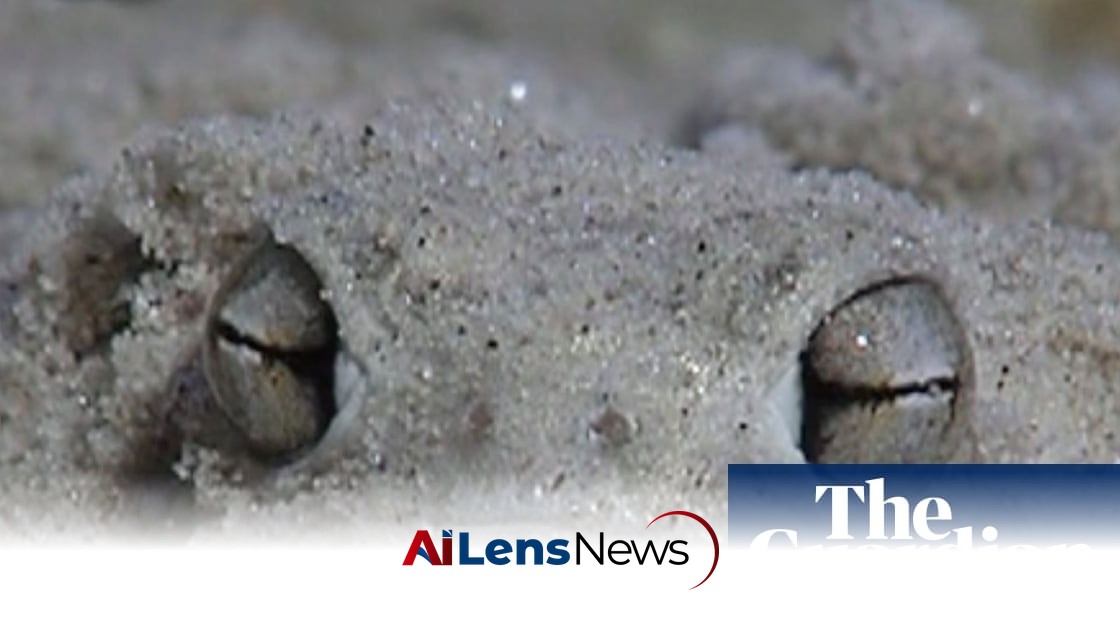


The desert rain frog, native to a narrow coastal strip of south-west Africa, has been classified as vulnerable on the IUCN red list, as its habitat is threatened by mining.
New Delhi, India Jul 10, 2026 ALN: The desert rain frog, scientifically known as Breviceps macrops, stands out as one of the most remarkable amphibians on Earth. With its distinctive rotund body and stumpy legs that are more suited for digging than jumping, this species has adapted to thrive in the harsh, arid conditions of the southern African desert. Unlike most frogs, which prefer moist and tropical s, the desert rain frog has evolved to survive in the unforgiving dunes of a region where water is scarce and conditions are extreme.
This week, the International Union for Conservation of Nature (IUCN) added the desert rain frog to its red list, classifying it as vulnerable and indicating that it is threatened with extinction. The IUCN warns that without significant conservation efforts, the population of this unique amphibian is expected to decline by as much as 20% over the next decade. This alarming prediction underscores the urgent need for protective measures to ensure the survival of this species.
“It’s a completely unique species and it’s just amazing that it has managed to evolve and adapt to this harsh ,” says Dr. Jeanne Tarrant, the executive director of Anura Africa and co-chair of the IUCN Amphibian Specialist Group.
Dr. Tarrant emphasizes the desert rain frog's peculiar adaptations, noting, “It [exhibits] the least typical frog kind of behavior that you can get. Frogs like it where it’s moist and tropical – and this thing is living in the desert.” This adaptability is not only a testament to the resilience of the species but also a reflection of the broader ecological challenges faced by amphibians worldwide.
The desert rain frog's habitat is limited to a narrow strip along the north-west coast of South Africa and in south-western Namibia. This restricted range makes the species particularly vulnerable to al changes and human activities. Experts have noted that the frog cannot be found anywhere else on the planet, heightening the significance of its conservation.
However, the species faces significant threats from various sources. The IUCN highlights that diamond mining and development projects, such as the Boegoebaai port and rail project, are projected to impact a substantial portion of the frog's habitat. Specifically, they estimate that one-third of the frog's range in South Africa and two-thirds of its range in Namibia could be affected over the next two decades. Additionally, increased urbanization in the region poses further risks to the fragile ecosystems that support the desert rain frog.
Another emerging threat is the growing interest in the pet trade. Social media platforms have played a role in popularizing the desert rain frog, particularly due to viral videos showcasing its distinctive high-pitched squeak. This sound, which resembles a dog toy, has charmed many viewers; however, it is important to note that this noise is actually a distress call made in response to potential threats. Dr. Tarrant points out that the cute sound is often elicited by stressful situations, such as being poked or handled improperly. The concern is that the increased visibility of the frog online could lead to a rise in demand for it as a pet, further endangering the species.
Despite the rising interest, conservationists stress that the desert rain frog must remain in its natural habitat. The unique conditions of its make it extremely difficult for pet owners to recreate the necessary living conditions for the frog to thrive. The desert rain frog spends much of its life burrowed in the sand dunes, emerging at night to hunt for insects, primarily termites. This nocturnal behavior is crucial for its survival, as it allows the frog to avoid the extreme heat of the day.
Dr. Tarrant describes the frog's burrowing behavior, stating, “Their back feet are their little shovels and they will burrow down and disappear within seconds.” The frog typically digs backwards into the sand, descending around 30 centimeters until it reaches a damp layer where it can rest and avoid the harsh desiccating conditions of the surface. The duration of time spent underground can vary, with some frogs remaining buried for months, relying on the limited oxygen present in the soil.
When the desert rain frog emerges, it seeks out patches of water formed by condensed fog that drips from nearby plants onto the sand. The frog has a unique adaptation that allows it to absorb moisture through its skin, particularly from a highly vascularized area on its belly that resembles blotting paper. Dr. Louis du Preez, a professor of zoology at North-West University in South Africa, explains that this adaptation is critical for the frog's survival in its arid . He notes, “If the frog had a long, thin body like a snake, this would mean a bigger surface area, increasing the risk of moisture loss through evaporation. This little fat froggy can survive better.”
The diet of the desert rain frog primarily consists of fat-rich termites, which are a vital energy source for the amphibian. Dr. du Preez describes the frog's feeding behavior, stating, “If it’s absolutely at full capacity and there’s another termite walking past, it will go for it.” He adds a humorous observation about the frog’s feeding habits, noting, “Later on, you just see the termite wings sticking out of the mouth. They can’t swallow another one, but will take it regardless.” This behavior highlights the frog's opportunistic feeding strategy, which is essential for its survival in a challenging .
Reproduction in the desert rain frog is equally unique and adapted to its . During mating, the male frog attaches himself to the female, who is too rotund to hold on by herself. Dr. du Preez explains that the male secretes a glue-like substance from his chest and forearms, effectively gluing himself to the female. This unusual mating behavior ensures that the male can fertilize the eggs as the female digs into the soil to create a protective space for her eggs. After fertilization, the female lays unfertilized eggs on top of the fertilized ones. These unfertilized eggs eventually liquefy, creating a foam that traps oxygen for the developing tadpoles. This method of reproduction is particularly fascinating and showcases the evolutionary adaptations of the desert rain frog.
Dr. du Preez emphasizes the importance of conserving the sand dunes that serve as the frog's habitat, stating, “Among all the frogs in the world, this one has got really unique breeding, biology, physical features, morphology.” The desert rain frog's survival is intricately linked to the health of its ecosystem, and protecting its habitat is critical for ensuring the future of this exceptional species. As pressures from mining, urbanization, and the pet trade continue to mount, the call for conservation actions becomes increasingly urgent. Without immediate and effective measures, the desert rain frog may face an uncertain future, highlighting the broader challenges that many amphibian species encounter in a rapidly changing world.
To learn more about the latest developments in Conservation, stay updated with our exclusive reports and analyses on AiLensNews.

