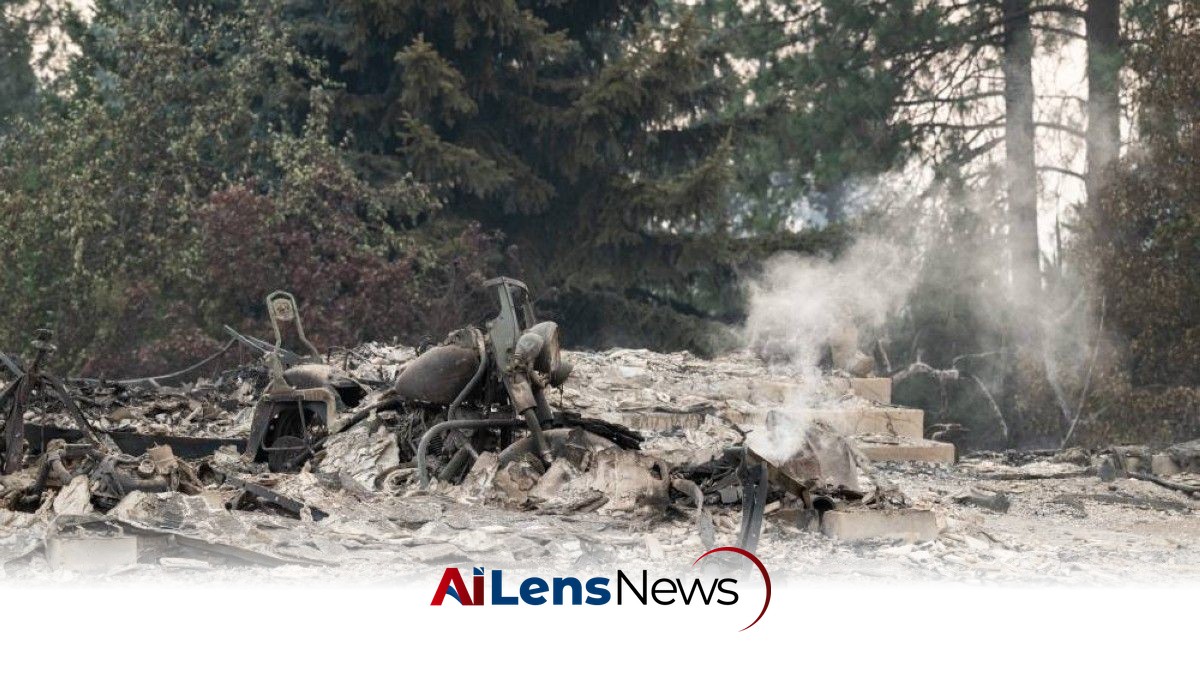


Fast-moving wildfires in Spokane, Washington, have devastated neighborhoods, prompting mass evacuations and raising concerns over the ongoing drought and climate change.
Kuwait City, Kuwait Aug 3, 2026 ALN: SPOKANE, United States: Fast-moving fires left a trail of destruction in the northwestern US city of Spokane on Sunday, with officials reporting hundreds of structures reduced to cinders. Thousands of people were ordered to evacuate their homes Saturday and overnight into Sunday, as three separate fires broke out in and around the city in the east of Washington state.
The National Weather Service (NWS) had warned of "extremely critical fire weather conditions" in the area due to strong winds and exceptional dryness. Video of the aftermath on Sunday showed scores of homes burned to the ground, with only their brick fireplaces and foundations remaining, while other houses nearby escaped practically unscathed.
"Just driving around looking at the homes -- it's just one of the most heartbreaking things I've ever seen in my life," Spokane resident Geoff Beadles told AFP, after evacuating from his home with his fiancée and two dogs.
Mayor Lisa Brown told a press briefing Sunday afternoon: "Hundreds of homes and structures have been lost. We are still assessing the potential for lives to be lost. To the people who are suffering right now in our region from either loss or uncertainty... our hearts go out to you. We are here for you for the long term," she said.
Weather conditions had improved on Sunday, with wind dying down, but the fires were still listed at zero percent contained.
Sheriff John Nowels said no deaths or injuries had so far been reported, but "because of the scale of this and what it takes to... do those kinds of investigations in an active fire scene, that could change." Washington Governor Bob Ferguson, who declared a state of emergency, noted that the state is enduring a fourth consecutive year of drought as climate change creates conditions conducive to destructive wildfires. He told the press conference that he had spoken to federal officials about receiving resources to respond to the disaster, including President Donald Trump, who understood "how dire the situation is."
'Extraordinary wildfire season'
The head of Washington's Department of Natural Resources, David Upthegrove, warned that the fire in Spokane was "one of 15 major fires burning throughout the state of Washington right now."
"This is an extraordinary wildfire season in the Pacific Northwest. It's not a normal season," he said. "A confluence of weather conditions, a confluence of fires throughout the West, are stretching our resources and challenging the individuals in this response."
The biggest of the three fires burning in Spokane, the Old Trails fire, jumped the Spokane River on Saturday afternoon and crossed into the city proper. Another resident, Tena Risley, said she saw flames behind trees near her home, and in a panic, she grabbed her dog and a few things. She got stuck in traffic as she tried to flee as the fast-moving fires blocked routes out of the city.
"There were probably hundreds and hundreds of cars," she told AFP.
Authorities issued the highest-level evacuation alert, "Go Now," for swathes of northern Spokane affecting thousands of people within city limits, according to the government's evacuation map. As of Sunday morning, the three fires had charred a total of 5,390 acres (2,181 hectares), CNN reported. Emergency authorities set up a fire evacuation shelter at the Spokane Convention Center.
The situation in Spokane is part of a broader trend affecting the Pacific Northwest and much of the western United States, where wildfires have become increasingly severe in recent years. These fires are often exacerbated by prolonged periods of drought, rising temperatures, and shifting weather patterns linked to climate change. The region has seen a marked increase in the frequency and intensity of wildfires, prompting officials to rethink strategies for fire prevention and response.
In many cases, wildfires have devastating effects not only on the immediate environment but also on local economies, public health, and community cohesion. The destruction of homes and infrastructure can displace families and disrupt local businesses, leading to long-term economic challenges. Recovery efforts can take years, and the emotional toll on residents can be profound, as they grapple with loss and uncertainty about their future.
As firefighters and emergency responders work tirelessly to contain the blazes, the community of Spokane is rallying together to provide support for those affected. Local organizations and volunteers are stepping up to offer shelter, food, and resources to evacuees. The Spokane Convention Center has become a hub for those seeking refuge from the flames, providing a safe space for families to regroup and access essential services.
Moreover, the fires in Spokane serve as a stark reminder of the ongoing need for comprehensive wildfire management strategies. This includes not only firefighting efforts but also proactive measures such as controlled burns, forest management, and community education on fire safety. Policymakers are increasingly recognizing the importance of investing in infrastructure and resources to mitigate the impact of future wildfires.
In addition to immediate firefighting efforts, discussions are underway at various levels of government about climate resilience and adaptation strategies. As the frequency of extreme weather events increases, there is a growing consensus that communities must be better prepared for the challenges posed by climate change. This includes improving building codes, enhancing emergency response systems, and fostering community awareness about the risks associated with wildfires.
As Spokane continues to battle the flames, the resilience of its residents will be tested. The community’s response to this disaster will shape its recovery and future preparedness. The emotional and physical scars left by such catastrophic events can linger long after the flames are extinguished, making it essential for both local and state officials to prioritize recovery and support for those affected in the aftermath of the fires.
In conclusion, the wildfires sweeping through Spokane are a significant event, reflecting broader environmental challenges faced by many regions across the United States. The impact of these fires extends beyond immediate destruction, highlighting critical issues related to climate change, community resilience, and the need for effective disaster management. As Spokane and its residents navigate this crisis, the lessons learned will be vital for shaping future responses to wildfires and ensuring that communities are better equipped to handle similar challenges in the years to come.
To learn more about the latest developments in Natural Disasters, stay updated with our exclusive reports and analyses on AiLensNews.

