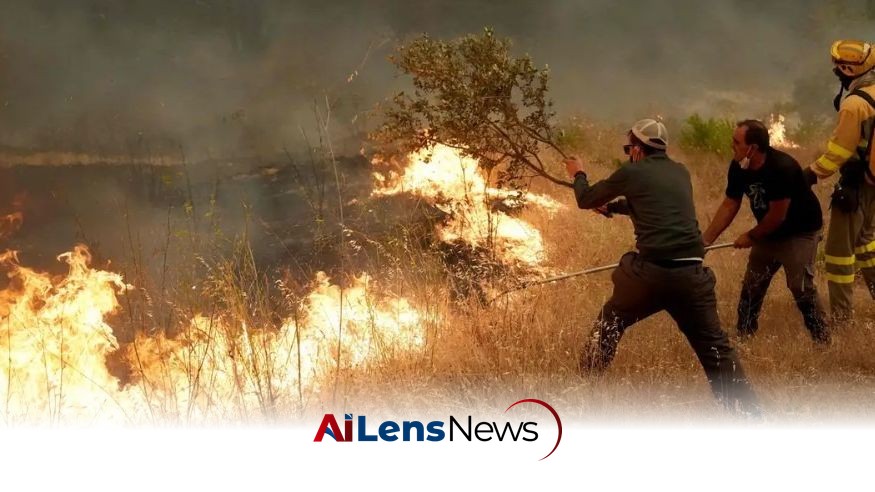


Massive wildfires in Spain and France have led to the evacuation of over 250,000 individuals, with authorities struggling to contain the flames amid extreme conditions.
Kuwait City, Kuwait Jul 26, 2026 ALN: The recent wildfires in Spain and France have reached unprecedented levels, displacing more than 250,000 people and prompting urgent responses from local and national governments as well as international partners. The situation has escalated to a point where authorities are racing against time to protect lives and preserve communities threatened by the advancing flames. This disaster represents not just a local crisis, but a growing concern for Europe as it grapples with the increasing frequency and intensity of wildfires, a trend that many experts attribute to climate change and changing weather patterns.
In Spain, particularly near the capital city of Madrid, several wildfires have merged into a single, uncontrollable blaze. This conflagration has exceeded the current firefighting capacity, leading officials to declare a state of emergency. The merging of fires is a concerning phenomenon as it can create a larger, more intense fire that is harder to manage and predict. Firefighters are facing extreme challenges due to the combination of strong winds and soaring temperatures, which exacerbate the spread of the flames. The Spanish government has mobilized resources to combat these fires, but the sheer scale of the disaster has overwhelmed local capabilities.
Meanwhile, in France’s Gironde region, wildfires have consumed record areas, with flames advancing dangerously close to the city of Bordeaux. The situation has prompted further evacuations as the threat to homes, farmland, and natural habitats increases. Despite the widespread destruction, it is noteworthy that, as of now, there have been no reported human fatalities, which reflects the effectiveness of evacuation measures and emergency preparedness in the affected regions. The French government has been proactive in implementing evacuation protocols, which have been crucial in minimizing loss of life.
French President Emmanuel Macron has characterized the wildfires as “extremely critical,” highlighting the urgency of the situation. In response, European partners have mobilized additional firefighting resources under the European Civil Protection Mechanism, which is designed to provide assistance during natural disasters. This includes the deployment of firefighting aircraft from various countries to aid in the containment of the blazes. Such international cooperation is vital, especially in situations where the scale of disaster exceeds the capabilities of individual nations.
Spain is grappling with a similarly severe crisis, with over 60,000 individuals displaced due to multiple wildfires. Spanish Prime Minister Pedro Sánchez has emphasized that the government’s foremost priority is the protection of lives. He has also warned that the current weather conditions, characterized by strong winds and high temperatures, are making firefighting operations increasingly difficult. The combination of these factors creates a perfect storm for wildfires, leading to rapid spread and complicating containment efforts. The Spanish government has also sought assistance from neighboring countries, showcasing the collaborative spirit that is often necessary in times of crisis.
The European Union has intensified its response to the crisis, sending four firefighting aircraft to Spain and three to France. Additionally, Greece has contributed by deploying two more aircraft to support Spanish authorities. This collaborative effort underscores the importance of international cooperation in addressing natural disasters, as the scale of the wildfires exceeds the capacity of any single nation to effectively manage alone. The solidarity among European nations is a crucial aspect of the response, reflecting a shared understanding of the challenges posed by climate-related disasters.
In the Madrid region, the situation remains dire as two of three major fires have merged into a single blaze that has scorched over 6,000 hectares. This fire is currently out of control, and local authorities are working tirelessly to contain it. The merging of fires poses a significant risk, as it can lead to increased fire intensity and create challenges in managing the response efforts. Firefighters are employing various strategies, including controlled burns and the use of firebreaks, to try and contain the blaze, but the unpredictability of the fire's behavior complicates these efforts.
Authorities have made arrests in connection with the Ávila wildfire, which has already burned around 9,000 hectares. This raises questions about the causes of these wildfires, as many are believed to be linked to human activity, whether through negligence or intentional acts. Investigations into the origins of wildfires are crucial for understanding how to prevent future occurrences and mitigate risks. The need for comprehensive fire management strategies, including public education on fire safety and land-use planning, is more apparent than ever.
Firefighters have reported some progress in containing the larger Guadalajara blaze, which has consumed approximately 32,000 hectares. However, the combination of extreme heat, shifting winds, and multiple fire fronts continues to hinder containment efforts. The scale of destruction is staggering; since the beginning of 2026, wildfires have ravaged nearly 130,000 hectares across Spain, following a record-breaking 393,000 hectares burned during the 2025 fire season. This alarming trend highlights the growing threat of wildfires, exacerbated by climate change and increasingly volatile weather patterns. The increasing frequency of such events poses a serious challenge to emergency services and requires a reevaluation of current firefighting strategies.
The implications of these wildfires extend beyond immediate destruction. The environmental impact is profound, as ecosystems are disrupted and wildlife habitats are destroyed. The loss of vegetation also contributes to soil erosion and diminishes the land's capacity to recover. Furthermore, the displacement of thousands of people raises significant social and economic challenges, as affected communities grapple with the loss of homes and livelihoods. The long-term recovery process will require substantial resources and support, both from national governments and international organizations.
As the situation develops, it is crucial for governments and emergency services to continue to prioritize the safety of affected populations. Long-term strategies must also be implemented to address the underlying causes of wildfires, including land management practices and climate change mitigation efforts. The current crisis serves as a stark reminder of the urgent need for comprehensive policies aimed at preventing such disasters in the future. This includes investing in infrastructure that can withstand extreme weather events and promoting sustainable land use practices that reduce fire risk.
In conclusion, the wildfires in Spain and France represent a significant challenge that requires immediate action and long-term planning. The collaboration among European nations in response to this crisis showcases the importance of solidarity in the face of natural disasters. As the world continues to grapple with the effects of climate change, the lessons learned from this wildfire season will be vital in shaping future strategies for disaster preparedness and response. The need for a coordinated approach to disaster management, encompassing prevention, response, and recovery, is more critical than ever as countries face the increasing threat of wildfires and other climate-related disasters.
To learn more about the latest developments in Natural Disasters, stay updated with our exclusive reports and analyses on AiLensNews.

