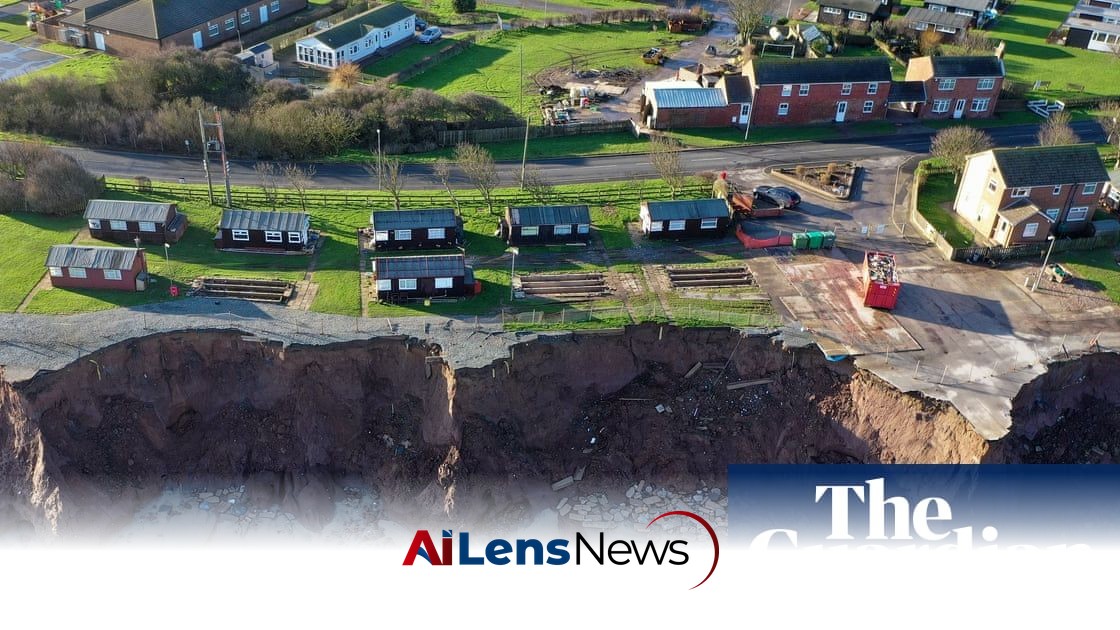


A new study reveals that without immediate climate action, millions in the UK could face severe coastal flooding due to rising sea levels.
New Delhi, India Jul 21, 2026 ALN: Up to 13 million people in the UK face the long-term risk of coastal flooding due to the climate crisis, scientists have warned. A recent study highlights a “reasonable worst-case scenario” that suggests the need for the large-scale movement of populations away from a dramatically reshaped coast. The implications of this research are profound, indicating that the future of coastal living in the UK may be fundamentally altered by al changes driven by human activity.
Even if today’s global pledges to cut carbon pollution are met, about 1.4 million more people will be exposed to coastal floods by the year 2200, and 1.7 million by 2300. This alarming increase is attributed to sea level rise driven by melting ice caps and warming oceans. The potential for such dramatic changes to the landscape raises questions not only about infrastructure and planning but also about the social and economic impacts on communities that have lived by the coast for generations.
While these projections may seem distant, experts emphasize that immediate action is necessary to cut emissions and plan future settlements and flood defenses. Keeping within the Paris Agreement targets could potentially reduce the number of people exposed to flooding in 2300 by 1 million. The Paris Agreement, adopted in 2015, aims to limit global warming to well below 2 degrees Celsius above pre-industrial levels, with the goal of pursuing efforts to limit the temperature increase to 1.5 degrees Celsius. Adhering to these targets is crucial not only for the UK but for global efforts to combat climate change.
Sea levels around the UK have risen by approximately 20 cm over the last century, with acceleration expected to continue. Projections indicate a further rise of 40 cm to 60 cm by 2100, which would place an additional half a million people at risk of flooding, on top of the 2.5 million already in danger near the coasts. Areas such as Lincolnshire and the Humber estuary are identified as particularly vulnerable. These regions, characterized by low-lying topography and extensive coastlines, are at an increased risk of flooding events, which can lead to significant disruptions in local economies, ecosystems, and communities.
Concerns are growing among scientists that the gradual rise in sea levels observed so far could change rapidly if ice sheets begin a runaway collapse into the oceans. In such a scenario, the UK could experience a staggering 15 meters of sea level rise by 2300, inundating large parts of London and other significant areas. The implications of such a scenario would be catastrophic, leading to the displacement of millions and overwhelming the existing infrastructure designed to manage water and flood risks.
“Planners who only consider changes over the coming century may have a false impression of the true risk landscape given the potential for post-2100 acceleration of sea level rise,” the researchers concluded in their study published in the journal Nature Communications.
Prof. Matt Palmer at the University of Bristol, who led the research, stated: “The oceans and ice-covered parts of the world respond very slowly to global warming, which makes sea level rise the ‘sleeping giant’ of climate change. The result is that sea-level rise is locked-in for centuries to come.” The notion of sea level rise as a ‘sleeping giant’ underscores the urgency of addressing climate change now, rather than postponing action to a later date when the consequences may be far more severe.
Dr. Rob Larter from the British Antarctic Survey, who was not involved in the study, described the findings as a sobering analysis. “It shows how the UK is likely to have to adapt to several meters of sea level rise over coming centuries,” he noted. “The higher impact scenarios presented in this study need to be considered as genuine possibilities rather than unlikely scare stories.” This perspective highlights the necessity for policymakers and communities to prepare for a range of potential futures, rather than relying solely on optimistic projections.
This research is the first to quantify the number of people in the UK at risk from coastal flooding under long-term sea level rise. It combined sea level rise projections for the UK with a detailed flood model developed by the Bristol company Fathom. Notably, sea level rise is greater in England and Wales than in Scotland and Northern Ireland, where the land is still rebounding from the last ice age. This geographical variance in sea level rise emphasizes the need for localized strategies in addressing flood risks, as different regions may face unique challenges and require tailored solutions.
The study did not factor in the potential for greater surges from storms intensified by global heating or future changes in population. It also did not consider future modifications to flood defenses, which remain highly uncertain, but instead focused on the level of likely threat in various scenarios. Understanding these limitations is crucial for interpreting the findings and for planning effective responses to the challenges posed by climate change.
Dr. Joanne Williams from the National Oceanography Centre in Southampton emphasized the importance of considering worst-case scenarios. She stated, “It shows how expensive and challenging it will be if we do not act on climate, with very large areas at new risk. Upgrading existing flood defense lines to the levels required by these high-end scenarios would be extremely challenging.” The financial implications of adapting to climate change are significant, as governments and communities may need to invest heavily in infrastructure improvements, emergency response systems, and community education to mitigate risks.
Coastal flooding represents just one aspect of flood risk in the UK. River and flash flooding already affect more people and are worsening as the warming climate leads to more intense rainfall. As the frequency and severity of flooding events increase, the strain on emergency services, local governments, and communities will also escalate, necessitating a comprehensive approach to flood management that encompasses both coastal and inland flooding.
In conclusion, the findings of this study serve as a critical reminder of the urgent need for climate action to mitigate the risks posed by rising sea levels and to protect vulnerable populations across the UK. The potential for millions to be affected by flooding necessitates a proactive approach to climate change, emphasizing the importance of global cooperation, local action, and sustained commitment to reducing carbon emissions. As the situation evolves, continued research and investment in sustainable practices will be vital in safeguarding the future of coastal communities and the ecosystems that support them.
To learn more about the latest developments in Climate Change, stay updated with our exclusive reports and analyses on AiLensNews.

