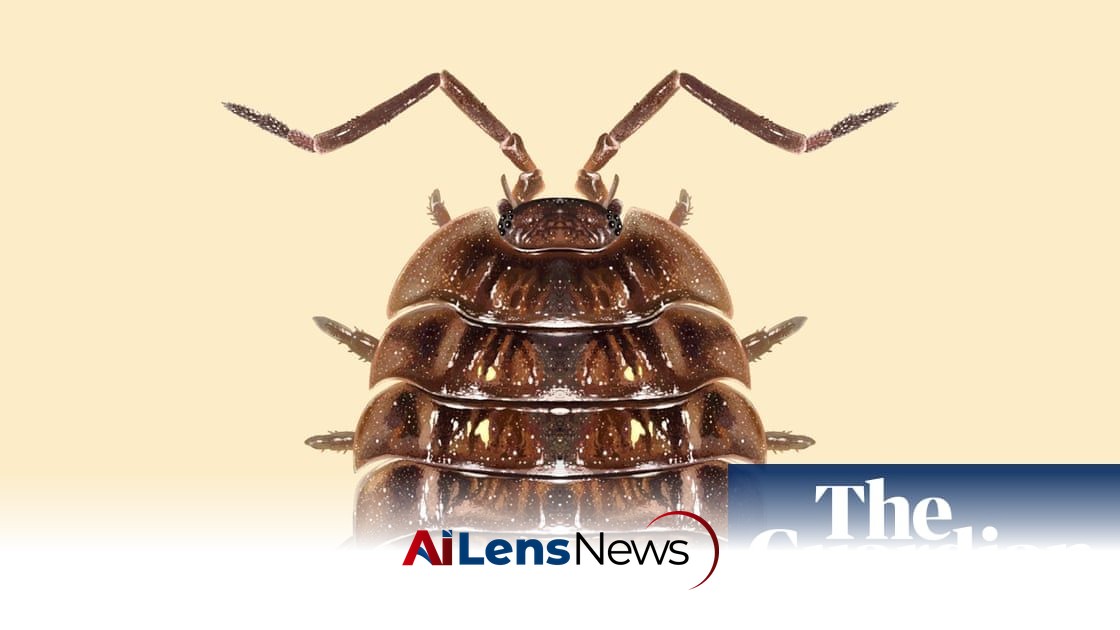


Woodlice, often overlooked, play a crucial role in our ecosystem by recycling nutrients and tolerating pollution, showcasing their surprising adaptability.
New Delhi, India Aug 3, 2026 ALN: Chucky pig. Slater. Monkey pea. Roly-poly. Boat-builder. Butchy boy. Cheeselog. Hobbling Andrew. Wood pig. If there were a prize for the range and joyfulness of a creature’s English-language names, the humble woodlouse would undoubtedly triumph over its million-plus invertebrate rivals. These charming nicknames are a testament to the woodlouse's long-standing relationship with humans, reflecting not only its physical characteristics but also its role in our lives and ecosystems.
Over centuries of easy cohabitation with humans, woodlice have acquired more than 300 regional names in Britain alone, and many more in other languages. For instance, in Welsh, the woodlouse is referred to as Gwrach y Coed, which translates to “witch of the wood.” This name hints at the woodlouse's mysterious and almost magical presence in the natural world, as well as its integral role in the decomposition process.
There are lovely words for woodlouse actions too: an animal rolling its body into a neat ball is known as conglobation, or volvation in zoology. This behavior, which is often seen when woodlice feel threatened, serves as a protective mechanism, allowing them to shield their vulnerable underbellies from potential predators. Such fascinating behaviors contribute to the woodlouse's appeal and highlight its unique adaptations.
Woodlice belong to the order of crustaceans known as isopods, which includes over 5,000 species. The common rough woodlouse, Porcellio scaber, is one of the most widespread species and can be found not just in Europe and the United States, but also in South America and Australia. Unlike some of its relatives, the common woodlouse does not curl up into a ball, but its resilience and adaptability have allowed it to thrive in various s. It is hoped that woodlouse enthusiasts across continents can appreciate the common woodlouse as representative of the entire suborder.
The woodlouse was a trendsetter in the evolutionary timeline, with its ancient ancestors moving onto land approximately 500 million years ago, long before most other terrestrial animals. This early adaptation allowed woodlice to occupy a crucial ecological niche. As a detritivore, the woodlouse feeds on decomposing plant matter, breaking down wood and recycling nutrients back into the soil. This process is vital for maintaining soil health and fertility, demonstrating the woodlouse's importance in the ecosystem.
Sally Roe, one of many readers who have shared their admiration for woodlice, recounts an illustrative experience. After installing biodegradable bamboo kitchen countertops, she used an offcut in her garden to weigh down cardboard suppressing weeds in her pumpkin patch. Following a successful harvest, she discovered a large colony of woodlice underneath the bamboo slab. “The formerly very solid, very heavy slab of bamboo worktop was now a paper-light wood honeycomb,” she explains. “Woodlice demonstrated to me extremely clearly that something being ‘biodegradable’ relies heavily on invertebrates.” This anecdote highlights the interconnectedness of life and the essential role that woodlice play in the decomposition and recycling of organic materials.
In addition to their role in decomposition, woodlice possess remarkable resilience against pollution. Studies have shown that they can withstand toxic substances and even store heavy metals within specialized compartments in their bodies. This ability not only aids their survival in polluted s but also contributes to al health. By stabilizing heavy metals in compost, woodlice help mitigate the harmful effects of contaminants in soil, making them invaluable allies in efforts to restore and maintain ecological balance.
The admiration for woodlice extends beyond their ecological contributions. Many readers have expressed their affection for these creatures, with one referring to them as “detrivore royalty.” Another reader even contemplated getting a woodlouse tattoo, a testament to the creature's charm and significance. Chris Pickard, reflecting on the longevity of woodlice, remarks, “They will undoubtedly be here long after humans have followed dinosaurs and dodos into the extinct category.” This sentiment underscores the resilience of woodlice in the face of al changes and challenges.
For those who find joy in the playful names of woodlice, there is always room for creativity. Peter Gregory has whimsically dubbed them the “bumbling mumbling ombudsmen,” a phrase that encapsulates their gentle demeanor and ecological role. Such affectionate nicknames contribute to the cultural significance of woodlice, fostering a sense of connection between humans and the natural world.
As we reflect on the remarkable contributions of woodlice to our ecosystems, it is essential to celebrate these often-overlooked invertebrates. Whether through educational initiatives, community engagement, or simply sharing stories about their unique qualities, there are many ways to honor the woodlouse. So if you’re looking to celebrate an invertebrate that’s just brilliant company, consider voting for the woodlouse!
In conclusion, the woodlouse serves as a reminder of the intricate connections within our ecosystems. Its roles as a detritivore, a pollution survivor, and a beloved creature with a plethora of names illustrate the importance of biodiversity and the need to protect the habitats that support such remarkable life forms. As we continue to learn more about these creatures, we deepen our understanding of the natural world and our place within it.
To learn more about the latest developments in Conservation, stay updated with our exclusive reports and analyses on AiLensNews.

