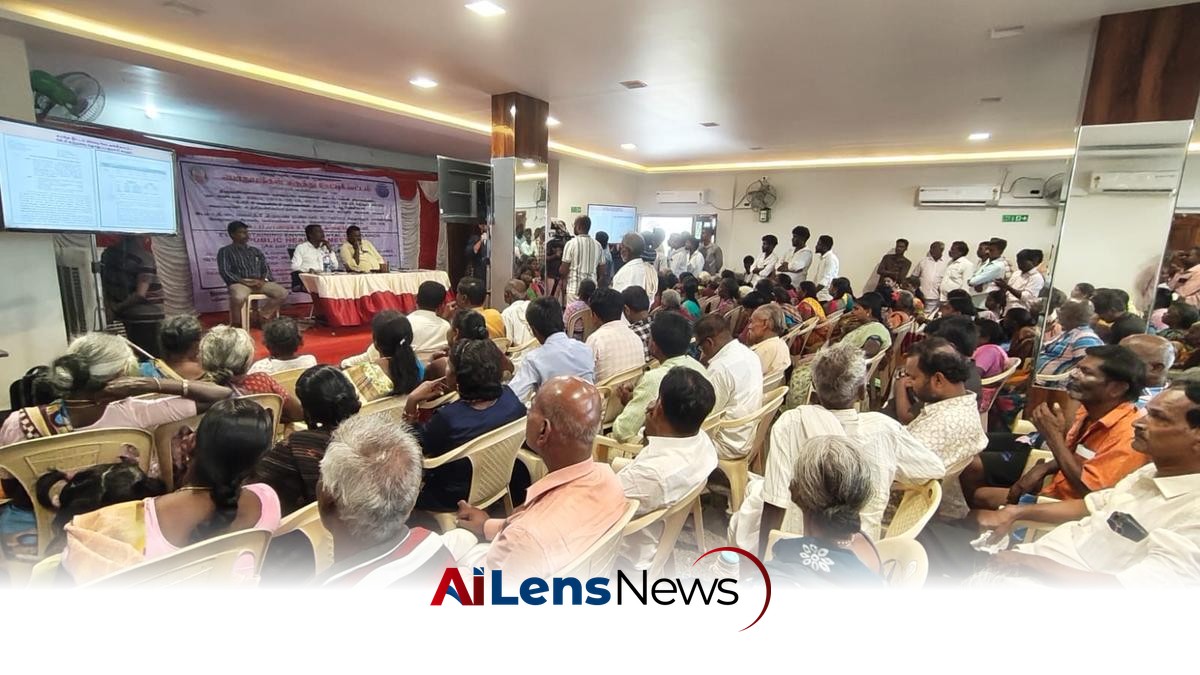


Residents express concerns over potential groundwater pollution and agricultural impact from a new quarry in Palli village, Tiruvannamalai.
Chennai, India Jul 20, 2026 ALN: In recent weeks, a significant wave of opposition has emerged from villagers in the Tiruvannamalai district, specifically those residing in the villages of Palli, Irumanthangal, Mottur Nagar, Vadakkanpattu, and Mangalam. The crux of the villagers' discontent is the proposal for a new stone quarry and crusher unit in Palli village. This development has raised numerous concerns among local farmers and traders, who depend heavily on agriculture for their livelihoods. The situation is reflective of a broader conflict between industrial development and agricultural sustainability that is increasingly common in many rural areas across India.
The public hearings regarding this proposed quarry were conducted under the supervision of Sub Collector S. Madhu Cheziyan and were organized by the Pollution Control Board (TNPCB). Such hearings are a legal requirement for any new quarry operations that exceed five hectares of land. The official from the TNPCB noted that the public hearing serves as a platform for residents to voice their objections or support for the proposed facility, emphasizing that feedback should be documented in writing. This process is crucial not only for transparency but also for ensuring that the concerns of local residents are formally recognized and taken into account.
The regulations set forth by the TNPCB stipulate that public hearings are only necessary for quarries that are larger than five hectares. In contrast, smaller quarries or clusters that occupy less than five hectares can be approved without public consultation. The proposed stone quarry in Palli is set to cover over 10 acres, which necessitates this public hearing process due to its size and potential impact on the local community. This distinction in regulations raises questions about the adequacy of oversight for smaller operations, which may also pose significant risks to local environments and communities.
One of the primary concerns raised by the residents is the proximity of the proposed quarry to extensive paddy fields that are vital to the local agricultural economy. The farmers in the area cultivate a variety of crops, including green chili, brinjal, groundnuts, greens, and mango, which are essential not only for their sustenance but also for their income. The villagers fear that the quarry's operations could lead to pollution of groundwater and nearby water bodies, which would have dire consequences for their agricultural activities. K. Sampath, a local farmer, articulated this concern, stating that the livelihoods of residents in surrounding villages depend on clean water sources for agriculture and cattle rearing, both of which could be jeopardized by the quarry's establishment. This concern is particularly pertinent in a country where water scarcity and pollution are increasingly pressing issues, often exacerbated by industrial activities.
In addition to potential water contamination, residents are also apprehensive about the noise and disturbances that would arise from the quarry's operations. Regular blasting activities are expected to create significant noise pollution, which could affect the quality of life for senior citizens and children living in the vicinity. The fear extends to the physical safety of the community, as there is a concern that large stone fragments could fall onto agricultural lands, posing a risk to crops and livestock. Furthermore, the transportation of excavated stones is anticipated to damage local roads, which would not only affect everyday travel for villagers but could also impede essential services such as government buses and ambulances. The implications of such disruptions extend beyond mere inconvenience; they could significantly impact access to healthcare and education, further entrenching the challenges faced by rural communities.
Tiruvannamalai district already hosts approximately 150 stone quarries, with many situated in Cheyyar, Vembakkam, Polur, and Chetpet. These existing quarries are strategically located to ensure efficient transportation of stone materials to neighboring districts, which raises questions about the necessity of additional quarries in the region. The cumulative impact of these quarries on the environment and local communities is a growing concern, as the area grapples with balancing economic development and environmental sustainability. The proliferation of quarries has led to increased scrutiny regarding their environmental footprint, including issues related to dust pollution, habitat destruction, and the strain on local water resources.
The objections raised by the residents of Palli and surrounding villages will be forwarded to the State Level Environment Impact Assessment Authority (SEIAA), which is responsible for evaluating the environmental implications of new projects and issuing licenses accordingly. The SEIAA's decision will play a crucial role in determining whether the proposed quarry will be allowed to proceed. It is important to note that the renewal of licenses for existing quarries occurs every five years, which underscores the ongoing scrutiny of quarry operations in the region. This regulatory framework aims to ensure that environmental standards are upheld, although the effectiveness of such measures often depends on the enforcement of regulations and the responsiveness of regulatory bodies to community concerns.
As the situation unfolds, the implications of the proposed stone quarry extend beyond local agricultural practices. The conflict highlights a broader issue of land use and resource management in Tiruvannamalai, where the demand for construction materials often clashes with the needs of local communities. The villagers' rally against the quarry proposal exemplifies the challenges faced by rural populations in protecting their livelihoods against industrial interests. This conflict is emblematic of a larger trend observed across India, where rural communities frequently find themselves at odds with industrial development projects that threaten their way of life.
Moreover, the outcome of this public hearing and the subsequent decision by the SEIAA could set a precedent for future quarry proposals in the region. If the quarry is approved despite community opposition, it may embolden other developers to pursue similar projects without adequately considering the concerns of local residents. Conversely, if the quarry is rejected, it could empower communities to advocate more vigorously for their rights and environmental protections in the face of industrial developments. The implications of such outcomes could resonate beyond Tiruvannamalai, influencing how similar conflicts are navigated in other parts of the country.
In conclusion, the villagers of Palli and surrounding areas are at a critical juncture as they confront the potential establishment of a stone quarry that could fundamentally alter their way of life. The outcome of this situation will not only affect the immediate community but also resonate throughout the district, impacting agricultural practices, environmental health, and the socio-economic landscape of Tiruvannamalai. As public hearings continue and the SEIAA deliberates, the voices of the villagers will be crucial in shaping the future of their land and livelihoods. Their fight represents not only a struggle for local rights but also a larger battle for sustainable development that respects the needs of rural populations in the face of industrialization.
To learn more about the latest developments in Pollution & Waste, stay updated with our exclusive reports and analyses on AiLensNews.

