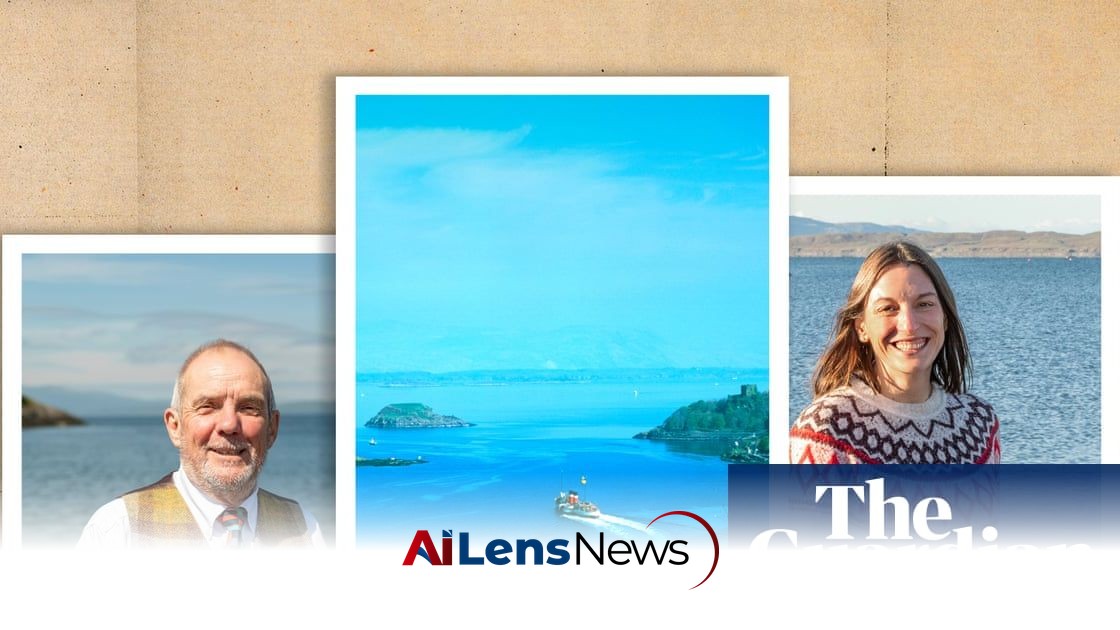


The Scottish Association for Marine Science has appointed the ocean as a trustee, marking a significant step in recognizing the rights of nature in decision-making.
New Delhi, India Jul 14, 2026 ALN: In a boardroom in an office building in Oban, a picturesque town on the west coast of Scotland, trustees attending meetings have long been able to see the breaking waves of the Atlantic through the windows. But since last month, the ocean has also been present in the room, with an unusual new initiative ensuring that it now has a say on decisions shaping the future of the 140-year-old Scottish Association for Marine Science (Sams).
Sams was established during the Scottish Enlightenment, a period marked by a burgeoning interest in oceanography and natural sciences, when nature was often viewed as a resource to be dominated and exploited. This historical context reflects a time when humanity's relationship with the was largely one of control and consumption. “There was this notion for a long time that the planet was so big, that we couldn’t possibly have any impact on it,” says Nick Owens, a marine scientist and the director of Sams. “Over recent decades, we’ve become more conscious of the impact that we’re having, yet it occurred to me that our ethical decisions are almost entirely from the human perspective.”
This shift in consciousness regarding al impact has been driven by numerous factors, including climate change, biodiversity loss, and pollution. The growing awareness of these issues has spurred movements advocating for the recognition of nature's rights, leading to a broader dialogue about how to integrate ecological considerations into decision-making processes. Tapping into this growing appetite for legal recognition of the rights of nature, and inspired by the strong connection between people and the ocean he observed in Indigenous cultures in North America, Owens decided he wanted to give the ocean a real voice at Sams. Thus, the organisation made it a trustee.
When the board meets, there is now someone in the room representing the ocean and giving a view on how decisions would affect its ability to function as an ecosystem. This innovative approach aims to ensure that marine considerations are factored into all discussions and decisions made by the organisation, highlighting the interdependence between human activities and marine health.
Sams is not the first to try out this unusual idea. In 2022, the eco beauty manufacturer Faith in Nature was the world’s first company to give nature a formal vote on corporate decisions that might affect it. Four years later, Faith in Nature’s brand director, Simeon Rose, notes that this initiative has led to a significant shift in corporate culture, pointing to tangible changes such as the sourcing team making a greater effort to find more ethical ingredients to present to the board as options, such as essential oil from the waste of the orange juice industry and tea tree oil from areas where koala corridors are being created. This example underscores the potential for businesses to rethink their supply chains and operational practices in a way that is more harmonious with the .
About 25 organisations have now followed suit in Britain, France, Belgium, the US, and Australia. Although the numbers are still small, Rose observes a nascent corporate movement developing. A French Green party MP recently proposed a law that would require nature to be represented on the boards of large companies, highlighting a growing legislative interest in integrating al considerations into corporate governance.
“There’s a real sense of community-building worldwide between interested parties and a will to figure out how we can improve this and strengthen it,” Rose says. This sentiment reflects a broader global trend towards al stewardship, as organisations and governments grapple with the urgency of ecological crises.
In response to the new initiative, Sams set up a working group to explore the options. How should the ocean be represented? What did it mean to give it a voice? And even more fundamentally: what did they mean by ocean? These questions are crucial as they delve into the complexities of representation and the ethical implications of decision-making in al contexts.
Helen Mitcheson, a lawyer with a background in marine mammal science at the law firm Pinsent Masons, was part of these discussions. Delving deep into law, science, and politics, the debates were interesting and sometimes difficult, she says. However, she believes it was worth spending the time tailoring the implementation of the concept for Sams – a charity with a commercial arm and an educational role – and anticipating areas of potential conflict that could arise from this innovative approach.
One area clarified by the debates was a definition of the ocean as planet-wide, including the seabed and parts of the airspace above but excluding human activities. This definition is significant as it establishes the parameters within which the ocean's interests will be considered and represented in discussions. The working group also agreed that the ocean would be represented by a single person, and Mitcheson was named as the role’s first incumbent. She has a say in all discussions but does not have a veto, which raises questions about the balance of power within the decision-making process.
In the very first meeting, Mitcheson had to force an intervention after 20 minutes of discussion without any mention of the ocean, she says. This highlights the challenge of embedding a new perspective into established practices and the need for ongoing advocacy for the ocean's interests. She admits there is still work to be done to fully integrate the concept but hopes that it will allow all factors to be considered early on in all strategic decisions.
Owens realized that if Sams became truly committed to the idea, things might change in unpredictable and fundamental ways. Giving the ocean a voice could, for example, lead the board in the direction of rejecting what would otherwise be a lucrative contract. This potential for change underscores the transformative power of rethinking decision-making frameworks to prioritize ecological integrity. Staff also questioned whether it would mean stopping them from working with particular industries, such as aquaculture, on the basis that they are inherently exploitative.
“We would need to work with industries to understand them and their impacts, perhaps to help them minimize their impacts and perhaps to educate them,” says Owens. “In all instances, we would be completely objective while representing the viewpoint of the ocean and be entirely transparent and fact-based. It is possible that we might decide not to work with a particular industry, but we have not done so yet.” This approach suggests a commitment to constructive engagement with industries rather than outright rejection, which may facilitate more sustainable practices in the long run.
On the other hand, Owens wants the decision to be meaningful. To allay fears that this is greenwashing, the ocean trustee’s remit is being added to Sams’ constitution, ensuring it becomes a formal part of its decision-making. This constitutional change is a significant step towards institutionalizing the representation of ecological perspectives in governance frameworks.
Although people outside Sams are often bemused by the new policy, Owens says it has been a much smaller leap internally. He knew the decision was coming alive when, listening to conversations at executive meetings and during coffee breaks, he began to hear the question: “What would the ocean think about this?” This shift in mindset indicates a growing recognition of the importance of considering ecological perspectives in organizational decision-making.
As well as benefiting the ocean, Owens hopes the decision will help Sams take a more sustainable approach to its work and perhaps even attract more philanthropic funding in the future. “Capitalism created the situation that we’ve got now,” says Owens. “But I think realistically it’s going to be industry and capitalism and human society that’s going to get us out of it. Rightly or wrongly, it is going to be the boardrooms where decisions are taken. I genuinely believe that in a decade or so this will be common practice.” This forward-looking perspective highlights the potential for systemic change in how organizations engage with al issues, paving the way for a more sustainable future.
To learn more about the latest developments in Environmental Policy, stay updated with our exclusive reports and analyses on AiLensNews.

