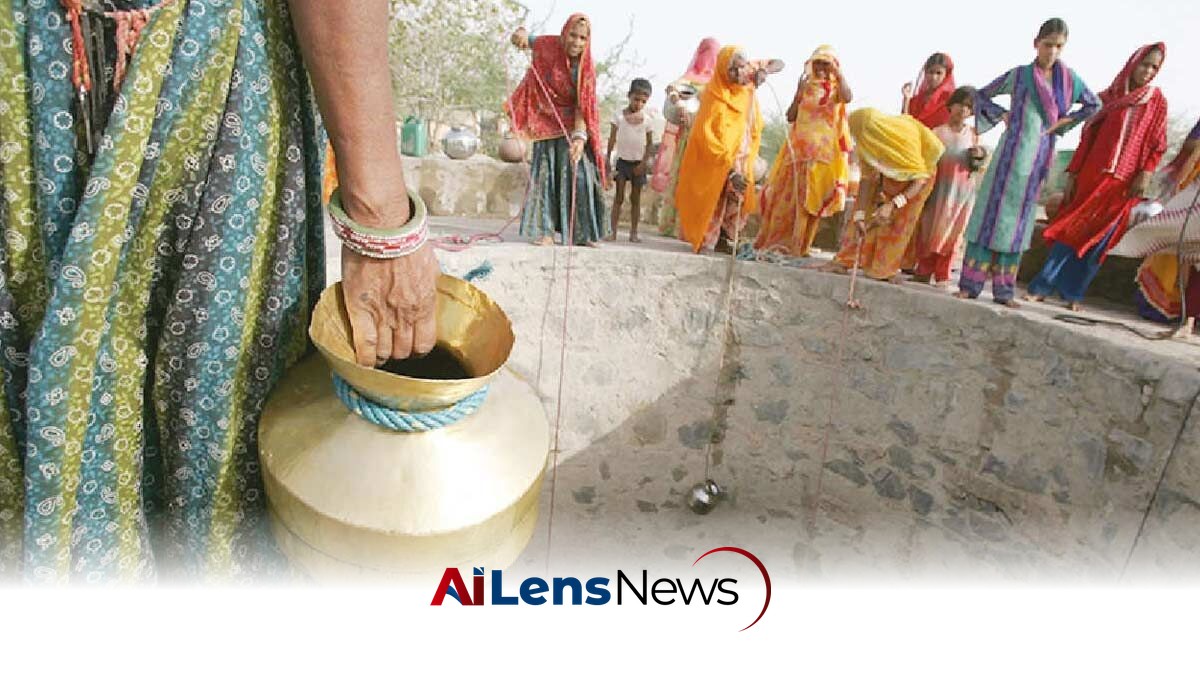


Rajasthan faces an escalating crisis with groundwater depletion and fluoride contamination, impacting public health and raising alarm among residents.
New Delhi, India May 25, 2026 ALN: Jaipur: Rajasthan is grappling with a worsening groundwater and public health crisis, marked by fluoride contamination, declining water tables, and an increasing disease burden affecting large areas of the state. This alarming situation has been highlighted in a vulnerability analysis prepared by BJP leader Vijay Singh Bainsla.
The study, which draws on groundwater reports, district fact sheets, NITI Aayog multidimensional poverty data, and health indicators from 2015 to 2024, indicates that the state's groundwater crisis has transitioned from a cyclical issue to a structural one, as extraction consistently exceeds annual recharge. The implications of this shift are profound, affecting not only the environment but also the health and livelihoods of millions of residents.
Groundwater is a critical resource in Rajasthan, a state characterized by arid and semi-arid climate conditions. The reliance on groundwater for agriculture, drinking water, and sanitation is immense, particularly in rural areas where surface water sources are often scarce. The study's findings reveal a stark reality: groundwater extraction reached a staggering 151 percent of annual recharge in 2022, meaning that for every liter of water naturally replenished, 1.51 liters were pumped out. This unsustainable extraction rate highlights the urgent need for intervention and reform in water management practices.
In terms of sheer volume, Rajasthan's groundwater overdraft that year was recorded at 4.43 billion cubic meters. This alarming figure underscores the severity of the crisis as the state continues to deplete its precious water resources at an unsustainable rate. The number of over-exploited groundwater blocks in Rajasthan increased from 198 in 2015 to 219 in 2022, while the number of safe-category blocks fell from 52 to 38 during the same period. This trend indicates a worrying shift toward increasingly critical water scarcity across the state.
Furthermore, pre-monsoon groundwater depth deteriorated from 24.5 meters below ground level in 2015 to 28.8 meters in 2024. This decline in groundwater levels not only reflects the unsustainable extraction practices but also poses significant risks to agricultural productivity and food security. As groundwater levels drop, farmers face challenges in irrigating their crops, which can lead to reduced yields and increased economic hardship for rural communities.
“Critical and over-exploited blocks now account for nearly four out of every five groundwater blocks in Rajasthan,” the analysis states. This statistic is particularly concerning as it indicates that a vast majority of the state's groundwater resources are under severe stress. The study also examines the detrimental impact of poor water quality on health outcomes, particularly in Rajasthan’s western fluoride belt, which includes districts such as Nagaur, Barmer, Jalore, Jodhpur, Sikar, and Jhunjhunu. The analysis reveals that 17 districts exceed the Bureau of Indian Standards permissible fluoride limit of 1.5 milligrams per liter, with Nagaur recording the highest concentration at 5.8 mg/L, nearly four times the prescribed limit.
Fluoride contamination poses significant public health risks. Citing survey data linked to the Indian Council of Medical Research (ICMR), the report indicates that 68 percent of individuals in Nagaur exhibit signs of dental fluorosis, while 24 percent suffer from skeletal fluorosis. Prolonged consumption of fluoride-contaminated water can lead to irreversible skeletal damage, kidney ailments, and cardiovascular stress. The analysis also points to higher mortality rates in fluoride-affected regions, raising concerns about the long-term health implications for affected populations.
Districts facing high fluoride contamination have recorded infant mortality rates averaging 45.9 per 1,000 live births, compared to 37.5 in districts with relatively clean water. Barmer has the highest infant mortality rate in the state, standing at 56 per 1,000 live births. These statistics illustrate the severe impact of water quality on the health of vulnerable populations, particularly infants and young children who are more susceptible to the adverse effects of contaminated water.
The implications of Rajasthan's groundwater crisis extend beyond immediate health concerns. The agricultural sector, which is the backbone of the state's economy, is at risk as water scarcity continues to threaten crop production. Farmers may face increased costs for water extraction and irrigation, leading to economic strain and potential food insecurity. Additionally, as groundwater levels continue to decline, the competition for water resources may intensify, leading to conflicts among users.
This comprehensive analysis underscores the urgent need for effective water management strategies and public health interventions to address the escalating crisis in Rajasthan. Policymakers must prioritize sustainable groundwater management practices that promote conservation and efficient use of water resources. This could involve the implementation of rainwater harvesting systems, the promotion of drought-resistant crop varieties, and the establishment of regulations to limit excessive groundwater extraction.
Moreover, public health initiatives must focus on educating communities about the dangers of fluoride contamination and providing access to safe drinking water. This could include the installation of water purification systems in affected areas and the promotion of alternative water sources. Collaborative efforts between government agencies, local communities, and non-governmental organizations will be essential to tackle this multifaceted crisis effectively.
In conclusion, the groundwater crisis in Rajasthan represents a complex challenge that intersects environmental sustainability, public health, and economic stability. Addressing this issue requires a holistic approach that considers both the immediate and long-term consequences of groundwater depletion and contamination. With concerted efforts and strategic planning, it is possible to mitigate the impacts of this crisis and secure a healthier future for the people of Rajasthan.
To learn more about the latest developments in Pollution & Waste, stay updated with our exclusive reports and analyses on AiLensNews.

