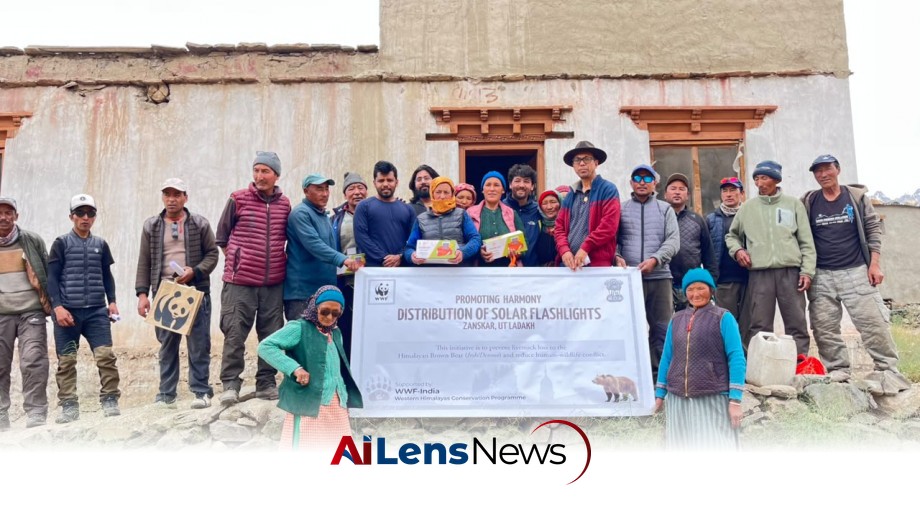


WWF-India has distributed solar flashlights to families in Doxa, , to enhance human-brown bear coexistence and reduce conflict.
Leh, India Jul 21, 2026 ALN: In an innovative effort to promote coexistence between humans and wildlife, WWF-India has distributed solar flashlights to families in Doxa, a remote village in the region. This initiative aims to mitigate human-brown bear conflicts, which have been a growing concern in the area. The increasing interaction between humans and wildlife has become a pressing issue as urbanization and agricultural expansion encroach upon the natural habitats of various species, including the brown bear. This particular initiative highlights the importance of finding practical solutions to ensure the safety of both local communities and wildlife.
As human activities encroach upon natural habitats, conflicts between local communities and wildlife, particularly brown bears, have increased significantly. Brown bears, which are known for their strength and size, can pose a serious threat to human safety when they venture into populated areas in search of food. These encounters can lead to dangerous situations for both humans and animals, often resulting in injuries and fatalities. Furthermore, such conflicts can lead to the culling of bears, which disrupts the ecological balance and threatens the species’ survival.
WWF-India's initiative seeks to address this issue by providing local families with tools that can help them navigate their environment safely. The distribution of solar flashlights is part of a broader strategy aimed at reducing human-wildlife conflicts through innovative solutions that empower local communities. By equipping families with these devices, WWF-India aims to create a safer environment where humans and wildlife can coexist with minimal risk.
The distribution event took place in Doxa, where community members gathered to receive their solar flashlights. The event not only served as a means of distributing the flashlights but also acted as a platform for educating the community about wildlife behavior and safety measures. The solar flashlights, which are environmentally friendly and sustainable, provide illumination that is crucial for nighttime activities, particularly in areas where brown bears are known to roam.
These devices not only provide illumination but also serve as a deterrent to wildlife, helping to keep bears at bay during nighttime hours. The light emitted from the flashlights can disorient animals, making them less likely to approach human settlements. This simple yet effective tool can significantly reduce the likelihood of dangerous encounters, thereby enhancing the safety of local residents.
Local residents expressed their gratitude for the initiative, noting that the flashlights would significantly enhance their safety. Many community members have shared stories of close encounters with brown bears, illustrating the real dangers they face. WWF-India representatives emphasized the importance of community involvement in wildlife conservation efforts, stating that educating families about coexistence strategies is crucial. This approach not only empowers local residents but also fosters a sense of responsibility towards wildlife conservation.
Engaging the community in these efforts is vital for the success of such initiatives. By involving local residents in discussions about wildlife behavior and safety, WWF-India aims to create awareness about the importance of preserving wildlife while ensuring human safety. Workshops and interactive sessions are planned to further educate the community on how to respond during bear encounters and the importance of not feeding wildlife, which can lead to increased human-wildlife conflicts.
WWF-India plans to continue its efforts in the region by conducting workshops and awareness programs focused on wildlife conservation and coexistence strategies. These programs will aim to educate families about the ecological role of brown bears and other wildlife in the ecosystem, emphasizing the need for coexistence rather than conflict. By empowering communities with knowledge and resources, the organization hopes to foster a harmonious relationship between humans and wildlife.
Future initiatives may also include the introduction of additional tools and resources that can assist families in living alongside wildlife. This could involve the development of community-led monitoring programs to track bear movements and behavior, allowing residents to be better prepared for potential encounters. By actively involving the community in these conservation efforts, WWF-India aims to create a sustainable model for coexistence that can be replicated in other regions facing similar challenges.
This initiative by WWF-India is a significant step towards promoting coexistence between humans and brown bears in the region. By providing practical solutions like solar flashlights, the organization is not only enhancing community safety but also contributing to the preservation of wildlife. As human populations continue to expand into natural habitats, it is essential to find innovative ways to mitigate conflicts and promote harmony between humans and wildlife.
The success of this initiative could serve as a model for similar programs in other regions facing human-wildlife conflicts. By prioritizing coexistence and employing community-driven solutions, WWF-India is paving the way for a future where both humans and wildlife can thrive together. The long-term implications of such efforts could lead to a more sustainable coexistence strategy that not only protects local communities but also ensures the survival of vital wildlife species like the brown bear.
Understanding the ecological significance of brown bears is crucial in this context. As apex predators, brown bears play a vital role in maintaining the health of ecosystems. They contribute to the balance of various species within their habitats, and their presence can indicate the overall health of the ecosystem. Therefore, protecting brown bears and promoting coexistence is not just about safeguarding human interests, but also about preserving biodiversity and ecological integrity.
Moreover, initiatives like the one undertaken by WWF-India can have broader implications beyond the immediate community. By showcasing successful coexistence strategies, these programs can influence policy-making at higher levels, encouraging governments and organizations to invest in wildlife conservation and community engagement. This could lead to more comprehensive strategies that address human-wildlife conflicts across various regions, fostering a culture of coexistence that benefits both wildlife and human populations.
In conclusion, the distribution of solar flashlights by WWF-India is a commendable step towards addressing the challenges posed by human-brown bear interactions. By equipping communities with the tools and knowledge to coexist safely with wildlife, WWF-India is not only enhancing the safety of local residents but also contributing to the long-term conservation of brown bears. The initiative stands as a testament to the importance of innovative, community-driven solutions in the quest for sustainable coexistence between humans and wildlife.
To learn more about the latest developments in Conservation, stay updated with our exclusive reports and analyses on AiLensNews.

