

The Jammu and Kashmir Eco-Tourism Policy is in its final stages, focusing on conservation and community livelihoods, as reviewed by the Assembly Committee on Environment.
Leh, India Jul 24, 2026 ALN: The Jammu and Kashmir Eco-Tourism Policy is in the advanced stages of formulation and will provide a framework for conservation, regulated tourism, and community-based livelihoods, officials informed the Assembly Committee on Environment on Thursday. This policy aims to strike a balance between the burgeoning tourism sector in the region and the need to preserve its rich natural heritage, a task that has become increasingly critical in light of environmental challenges and the impacts of climate change.
Tourism in Jammu and Kashmir has long been a vital part of the region's economy, attracting millions of visitors each year due to its stunning landscapes, diverse flora and fauna, and rich cultural heritage. However, the rapid increase in tourist footfall has raised concerns about the environmental degradation of these pristine areas. The proposed Eco-Tourism Policy seeks to address these concerns by promoting sustainable practices that benefit both the environment and local communities.
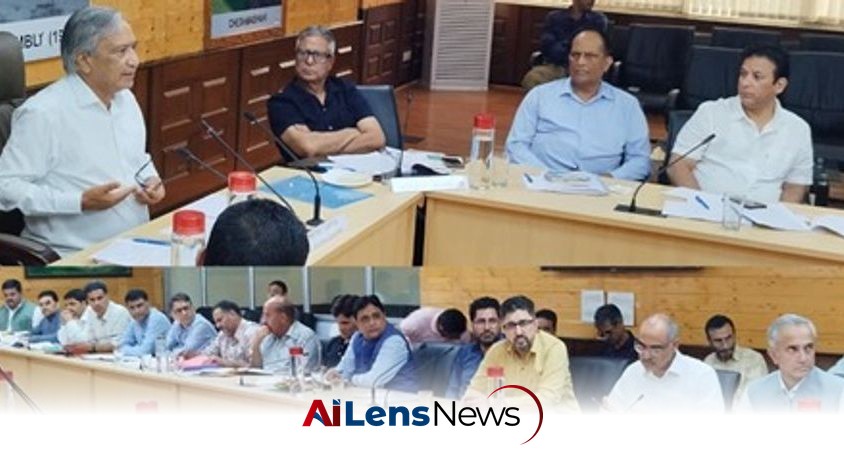
MLA Mohammad Yousuf Tarigami chaired a meeting of the Committee on Environment here at the Legislative Assembly Complex to assess the implementation of the J&K Eco-Tourism Policy and environmental safeguards across Jammu and Kashmir. The meeting highlighted the importance of integrating ecological considerations into tourism planning and development, ensuring that tourism activities do not compromise the integrity of the natural environment.
The meeting was attended by Legislators Professor Gharu Ram, Dr. Sajjad Shafi, Showkat Hussain Ganie, and Javaid Riyaz Bedar, who collectively reviewed the current state of eco-tourism initiatives in the region. The diverse backgrounds and expertise of the committee members allowed for a comprehensive discussion on various aspects of eco-tourism, including its economic, social, and environmental implications.
The Chairman laid special emphasis on the preparation of destination-specific Master plans for all eco-tourism destinations in Jammu and Kashmir to ensure planned development, regulation of carrying capacity, scientific waste management, and protection of biodiversity. These Master Plans are intended to serve as blueprints for sustainable tourism development, outlining specific strategies for managing visitor numbers, preserving natural resources, and enhancing the visitor experience.
The Committee directed that these Master Plans be finalized in consultation with the experts, local communities, and relevant stakeholders to ensure environmentally sustainable tourism growth across the Union Territory (UT). Engaging local communities in the planning process is crucial, as it fosters a sense of ownership and responsibility towards the environment, ultimately leading to more effective conservation efforts.
The Committee undertook a comprehensive appraisal of major eco-tourism destinations, revenue trends over the last five years, and environmental challenges confronting the sector. This evaluation is essential in understanding the current landscape of eco-tourism in Jammu and Kashmir, identifying areas for improvement, and developing strategies to overcome existing obstacles.
The Chairman reviewed the measures taken to promote eco-friendly tourism, including the declaration of tourist and religious destinations as plastic and polythene-free zones. This initiative is part of a broader movement to combat plastic pollution, which poses significant threats to both terrestrial and aquatic ecosystems. By creating plastic-free zones, the government aims to mitigate the negative impact of tourism on the environment while promoting sustainable practices among visitors.
The Department informed that awareness programs are being conducted under national campaigns such as Travel for Life: Tourism for Tomorrow and Swachhata Hi Seva. These campaigns are designed to educate both tourists and local residents about the importance of sustainable tourism and environmental conservation. The emphasis on awareness is critical, as informed individuals are more likely to engage in responsible behaviors that protect the environment.
Besides, enforcement mechanisms have been strengthened at destinations like Dodhpathri and Youmarg. He directed all CEOs of Tourism Development Authorities to submit destination-wise details on plastic-free initiatives and their enforcement. The effective implementation of these initiatives is vital for ensuring compliance and fostering a culture of environmental stewardship among tourists and local businesses.
The Committee reviewed environmental compliance by Tourism Development Authorities, the status of Sewage Treatment Plants (STPs), including proposed mini-STPs, water quality, pollution control, solid waste management, carrying capacity of tourist destinations, and implementation of tourism master plans. These factors are critical in determining the sustainability of tourism in the region, as they directly impact the health of ecosystems and the quality of life for local residents.
The status of encroachments on wetlands, lakes, water bodies, and tourism department land was another key focus of the Committee's review. Encroachments pose significant risks to the ecological balance of these sensitive areas, and the Committee stressed the protection of environmentally sensitive areas in coordination with the District Administration, Revenue, and Police departments. By addressing encroachments, the government aims to safeguard vital ecosystems and ensure that tourism development does not come at the expense of environmental integrity.
Furthermore, the Committee directed that all cases of unauthorized occupation be monitored regularly and retrieval actions be expedited. This proactive approach is essential for maintaining the ecological health of the region and upholding the principles of sustainable development.
The Committee also examined the preventive and remedial measures undertaken by the Department, including the installation of waste segregation facilities, scientific waste management, restriction on single-use plastics, promotion of eco-friendly mobility solutions, and strengthening community participation in conservation. These initiatives reflect a comprehensive strategy to address the multifaceted challenges posed by tourism, focusing on both prevention and remediation.
Taking cognizance of the incessant rains currently prevailing across Jammu and Kashmir, the Chairman of the Committee directed the Flood & Irrigation Department to take all requisite measures and ensure full preparedness to deal with any emergent situation arising out of continuous rainfall. This directive highlights the importance of disaster preparedness in the context of eco-tourism, as extreme weather events can have significant implications for both the natural environment and the tourism infrastructure.
The finalization of the Eco-Tourism Policy is expected to have far-reaching implications for the region, potentially transforming Jammu and Kashmir into a model for sustainable tourism in India. By prioritizing conservation and community engagement, the policy aims to create a tourism framework that not only supports economic growth but also protects the region's unique natural and cultural heritage for future generations. This balanced approach is increasingly recognized as essential for the long-term viability of tourism in ecologically sensitive areas, ensuring that the benefits of tourism are equitably distributed while minimizing environmental impacts.
To learn more about the latest developments in Environmental Policy, stay updated with our exclusive reports and analyses on AiLensNews.

