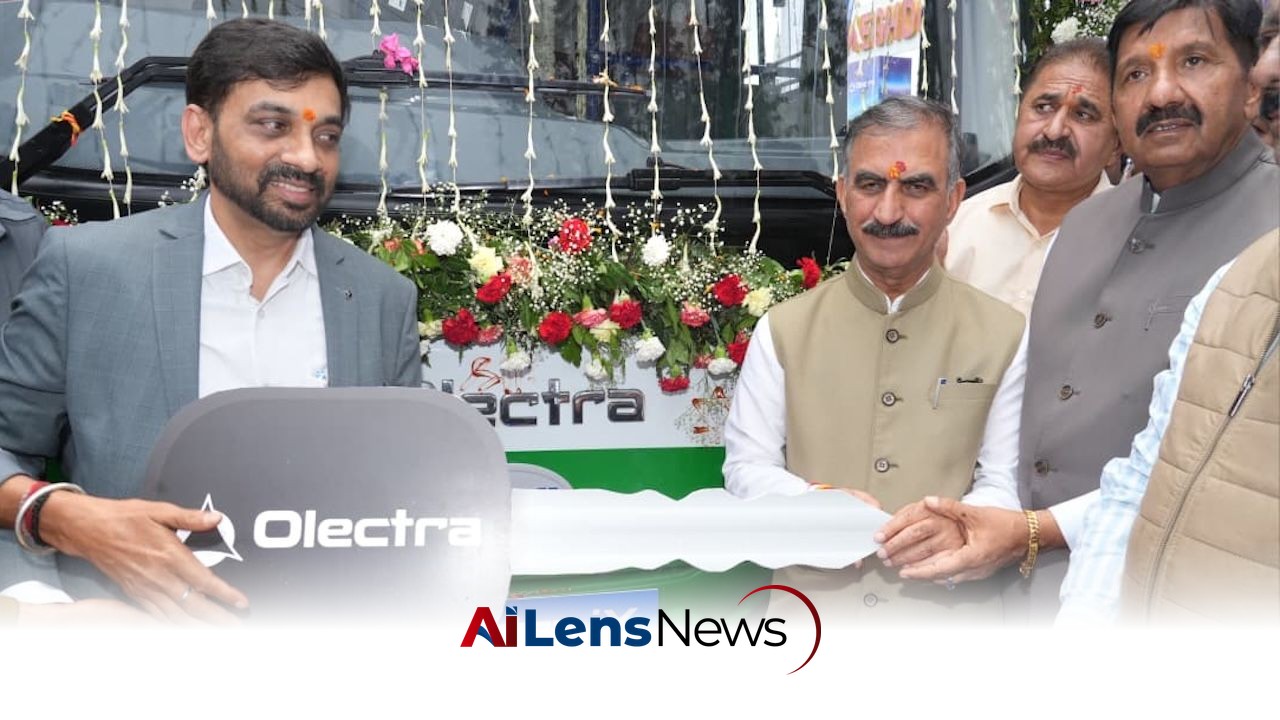


The Himachal Pradesh government plans to procure 1,000 electric buses and 100 hydrogen-powered buses, enhancing its commitment to sustainable public transport.
Shimla, India Jul 30, 2026 ALN: Shimla: After expanding its electric public transport network, the Himachal Pradesh government is now turning its focus towards hydrogen-powered mobility as part of its green transport roadmap. Chief Minister Sukhvinder Singh Sukhu on Thursday announced that the state plans to procure 1,000 additional electric buses and is also considering purchasing 100 hydrogen-powered buses, making Himachal one of the frontrunners in adopting clean public transport technologies.
The announcement came after the Chief Minister flagged off 297 new Type-I electric buses from Kyarighat in Solan district for deployment across various depots of the Himachal Road Transport Corporation (HRTC). The induction of the new buses marks a major milestone in the modernisation of public transport in the hill state.
With the addition of these buses, the total number of electric buses in the HRTC fleet has now reached 500, significantly strengthening the corporation’s transition towards sustainable and environmentally friendly transportation.
Addressing the gathering, Sukhu said the new electric buses would provide passengers with a safe, comfortable and pollution-free travel experience while reducing dependence on fossil fuels and lowering carbon emissions. He said the government has already established charging infrastructure at multiple HRTC depots to ensure the smooth operation of the expanding electric fleet.
The Chief Minister said the state government remains committed to environmental conservation and sustainable development. “Our objective is not only to improve public transport but also to ensure a clean Himalaya, clean air and a healthy environment for future generations,” he said.
Speaking to mediapersons later, Sukhu said the government would soon begin the tendering process for procuring 1,000 additional electric buses during the current year. He also revealed that the government is actively considering the procurement of 100 hydrogen-powered buses, describing the move as the next step in Himachal’s clean energy transition.
The proposed hydrogen buses aim to reduce the impact of climate change while positioning Himachal Pradesh as a leading green energy state in the country. If implemented, the initiative would place the state among the early adopters of hydrogen-powered public transport in India.
Hydrogen fuel cell technology is increasingly being recognized as a viable alternative to traditional fossil fuels, particularly in sectors like public transport, where the demand for sustainable solutions is growing. Hydrogen buses operate by converting hydrogen gas into electricity through a chemical reaction, emitting only water vapor as a byproduct. This technology aligns with global efforts to reduce greenhouse gas emissions and combat climate change.
The Chief Minister highlighted the financial advantages of electric mobility, stating that operating an electric bus costs around Rs. 36-38 per kilometre, including staff and maintenance expenses, compared to Rs. 76-86 per kilometre for diesel buses. This significant difference in operating costs underscores the economic benefits of transitioning to electric and hydrogen-powered transport.
According to the government, every electric bus could save HRTC approximately Rs. 40-50 per kilometre in operating costs, contributing significantly to the corporation’s long-term financial sustainability. The reduction in fuel costs is particularly crucial in the context of fluctuating oil prices and the need for budgetary prudence in public transport operations.
Moreover, the transition to electric and hydrogen buses is expected to create new job opportunities in the region, particularly in sectors related to maintenance and infrastructure development. As the state invests in charging stations and hydrogen production facilities, local economies could benefit from increased employment and business opportunities.
On the occasion, the Chief Minister also launched the HimBus Plus Card, a digital travel card designed to promote cashless and smart public transportation across the state. The introduction of such technology is in line with broader trends in urban mobility, where digital solutions are being integrated to enhance user experience and streamline operations.
Under the scheme, regular passengers will receive a 5 per cent discount on bus fares, while senior citizens will be eligible for a 15 per cent concession. Cardholders can also earn cashback of up to Rs. 2,000 per month, depending on their usage of HRTC services. This initiative not only incentivizes the use of public transport but also encourages a shift towards a more digital economy.
The twin initiatives—rapid electrification of HRTC’s fleet and the proposed introduction of hydrogen-powered buses—underscore the state’s strategy of transforming public transport into a cleaner, more efficient and technologically advanced system while reducing operational costs and carbon emissions.
As Himachal Pradesh moves forward with these ambitious plans, the implications extend beyond just transportation. The state’s commitment to green mobility could serve as a model for other regions in India, particularly in the context of the Indian government's broader goals for sustainable development and climate action.
India has been facing significant challenges related to air pollution, particularly in urban areas where vehicular emissions are a major contributor. By adopting cleaner technologies such as electric and hydrogen-powered buses, states like Himachal Pradesh are taking proactive steps to mitigate these issues. This aligns with national policies aimed at enhancing public transport systems, reducing reliance on fossil fuels, and promoting renewable energy sources.
Furthermore, the success of these initiatives could attract investments in green technologies, paving the way for further innovations in the transport sector. As more states look to emulate Himachal Pradesh's model, the potential for a nationwide shift towards sustainable public transport becomes increasingly feasible.
In conclusion, the Himachal Pradesh government's focus on expanding its electric and hydrogen bus fleet not only represents a significant step towards modernizing public transport but also highlights the state's commitment to environmental sustainability and economic efficiency. As the world grapples with the challenges of climate change and urban pollution, initiatives like these are crucial in shaping a greener future for generations to come.
To learn more about the latest developments in Renewable Energy, stay updated with our exclusive reports and analyses on AiLensNews.

