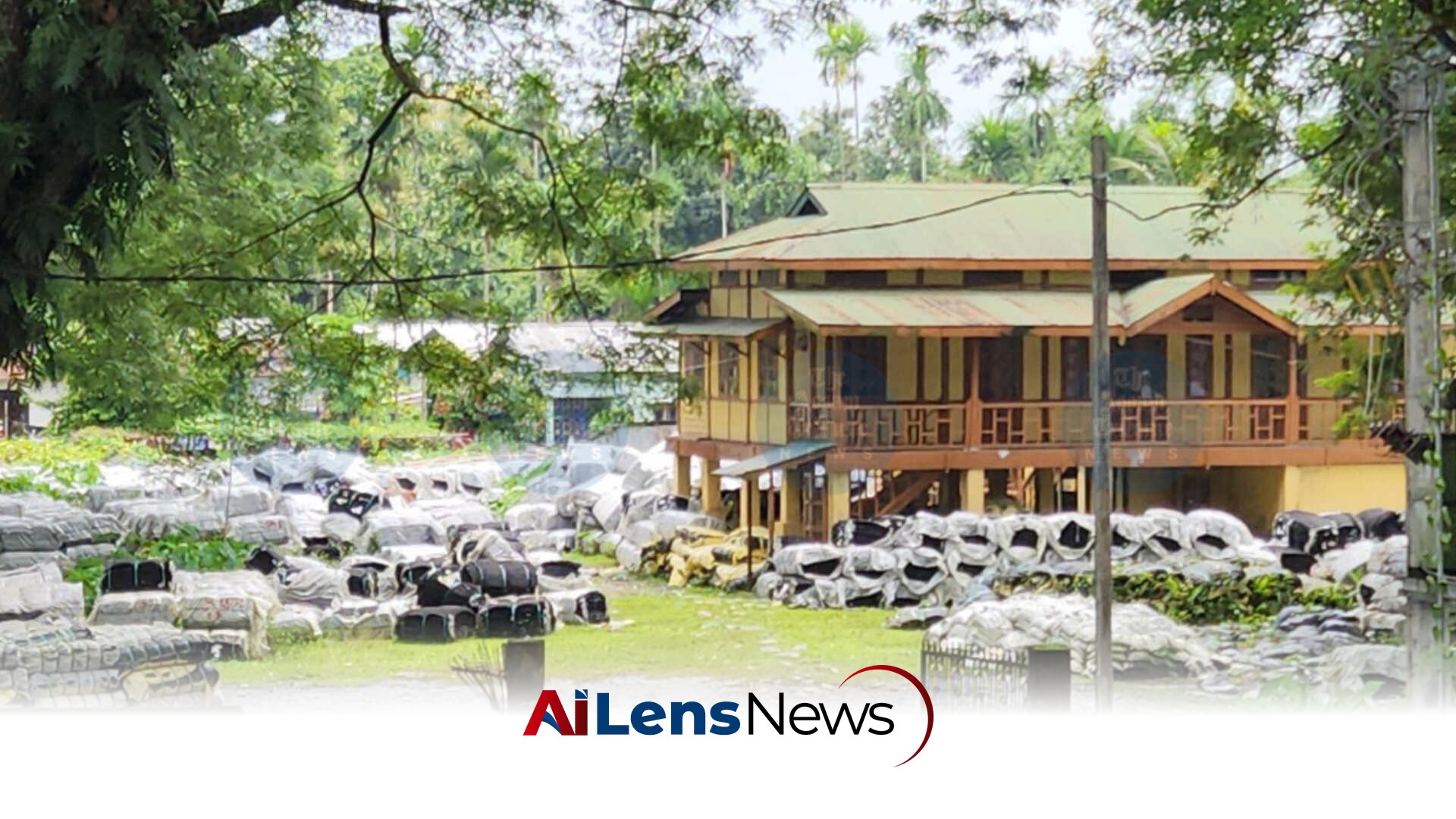


Thousands of geo-bags meant for erosion control have been lying unused at the Water Resources Department in Kamrup, raising concerns among local residents as riverbank erosion continues.
Dispur, India Jul 31, 2026 ALN: Even as the riverbank erosion continues to ravage several parts of Assam during the ongoing floods, thousands of geo-bags meant for erosion control have been lying unused for years at the Water Resources Department’s inspection bungalow premises at Chulikata near Simina Chowk under Palasbari LAC in Kamrup district.
According to local residents, the geo-bags and other erosion-control materials have remained stacked in the open for nearly two to three years without any apparent plan for their utilisation. With weeds and vegetation growing around the stockpile, many fear that materials worth crores of rupees may be damaged before they are put to use.
The sight has drawn sharp criticism from residents, particularly as riverbank erosion continues unabated along the Brahmaputra at Simina, Guimara and Gumi. Locals questioned why the department has failed to utilise the materials despite the persistent erosion threatening these vulnerable stretches.
Residents alleged that the prolonged storage of the geo bags reflects poor planning and lack of proper management by the authorities. They argued that while the government has been implementing ambitious erosion-control measures across the state using geo bags and other protective structures, valuable materials are lying idle at a time when several riverbank areas urgently require protection.
The erosion protection works in the Palasbari-Gumi stretch were earlier executed under an Asian Development Bank (ADB)-assisted project by Brahmaputra Infrastructure Limited. However, locals claimed that the unused stock has remained unattended despite the continuing erosion in the region.
Questioning whether public funds are being wasted in the name of government schemes, residents urged Chief Minister Himanta Biswa Sarma and the Water Resources Department to intervene immediately, ensure accountability and utilise the geo-bags for erosion-prone areas before the materials become unusable. They also demanded strict action against any lapses in planning and execution.
When contacted, an official of the Water Resources Department said the geo-bags were procured under the ADB-assisted project and that the contract had been awarded to Brahmaputra Infrastructure Limited. The official stated that around 90% of the project work in the Palasbari area has already been completed.
The official further said the geo-bags currently stored at the Chulikata Inspection Bungalow are in good condition and fully fit for use.
According to the department, approximately 2.5 lakh geo-bags are available at the site and will be utilised for the next phase of anti-erosion works in the Chhaygaon and Boko areas.
While the department has maintained that the stored geo-bags are meant for upcoming projects and remain usable, the prolonged storage of such a large stock during an ongoing erosion season is likely to invite further public scrutiny.
Riverbank erosion is a significant issue in Assam, particularly in areas adjacent to the Brahmaputra River, which is known for its unpredictable flooding patterns. The state has faced numerous challenges related to erosion, which not only threatens agricultural land but also poses risks to infrastructure and local communities. The government has historically implemented various measures to combat this issue, including the use of geo-bags, which are designed to provide temporary barriers against water flow and sediment movement.
Geo-bags are typically filled with sand or other materials and are used to create barriers that can help stabilize riverbanks. They are a crucial part of erosion control strategies, particularly in vulnerable regions. However, the effectiveness of such measures can be compromised if they are not deployed in a timely manner. The current situation in Kamrup district raises questions about the efficiency of resource allocation and management within the Water Resources Department.
In recent years, Assam has seen an increase in the frequency and intensity of floods, attributed to climate change and other environmental factors. This has made the need for effective erosion control measures more urgent than ever. The presence of unused geo-bags during a critical period of flooding highlights potential shortcomings in the state's disaster management and response strategies.
The implications of this situation extend beyond just the immediate concerns of erosion and flooding. It raises broader questions about governance, accountability, and the effective use of public funds. Residents are rightfully concerned about the mismanagement of resources, especially in an area where the community's safety and livelihoods are at stake. The demand for accountability reflects a growing awareness among citizens regarding the need for transparency in government operations, particularly in disaster-prone regions.
Moreover, the situation underscores the importance of proactive planning and timely execution of erosion control projects. It is essential for the government to not only secure funding for such initiatives but also to ensure that the materials procured are utilized effectively and in a timely manner. This requires a coordinated effort between various departments and stakeholders to address the challenges posed by riverbank erosion comprehensively.
In light of these concerns, local residents have called for an immediate review of the current strategies employed by the Water Resources Department. They have suggested that a more integrated approach, involving community participation and input, could lead to more effective erosion control measures. Engaging local communities in the planning and execution of such projects can help ensure that the solutions implemented are tailored to the specific needs and conditions of the area.
As the situation unfolds, it remains to be seen how the authorities will respond to the mounting pressure from residents and whether they will take decisive action to address the issues surrounding the unused geo-bags. The outcome of this situation could set a precedent for how similar issues are handled in the future, particularly in the context of disaster management and environmental protection in Assam.
In conclusion, the ongoing erosion crisis in Assam, compounded by the sight of unused geo-bags at the Water Resources Department, serves as a stark reminder of the challenges faced in managing natural disasters and the importance of effective governance. As communities continue to grapple with the impacts of climate change, the need for timely action and accountability in resource management will only become more critical.
To learn more about the latest developments in Environmental Policy, stay updated with our exclusive reports and analyses on AiLensNews.

