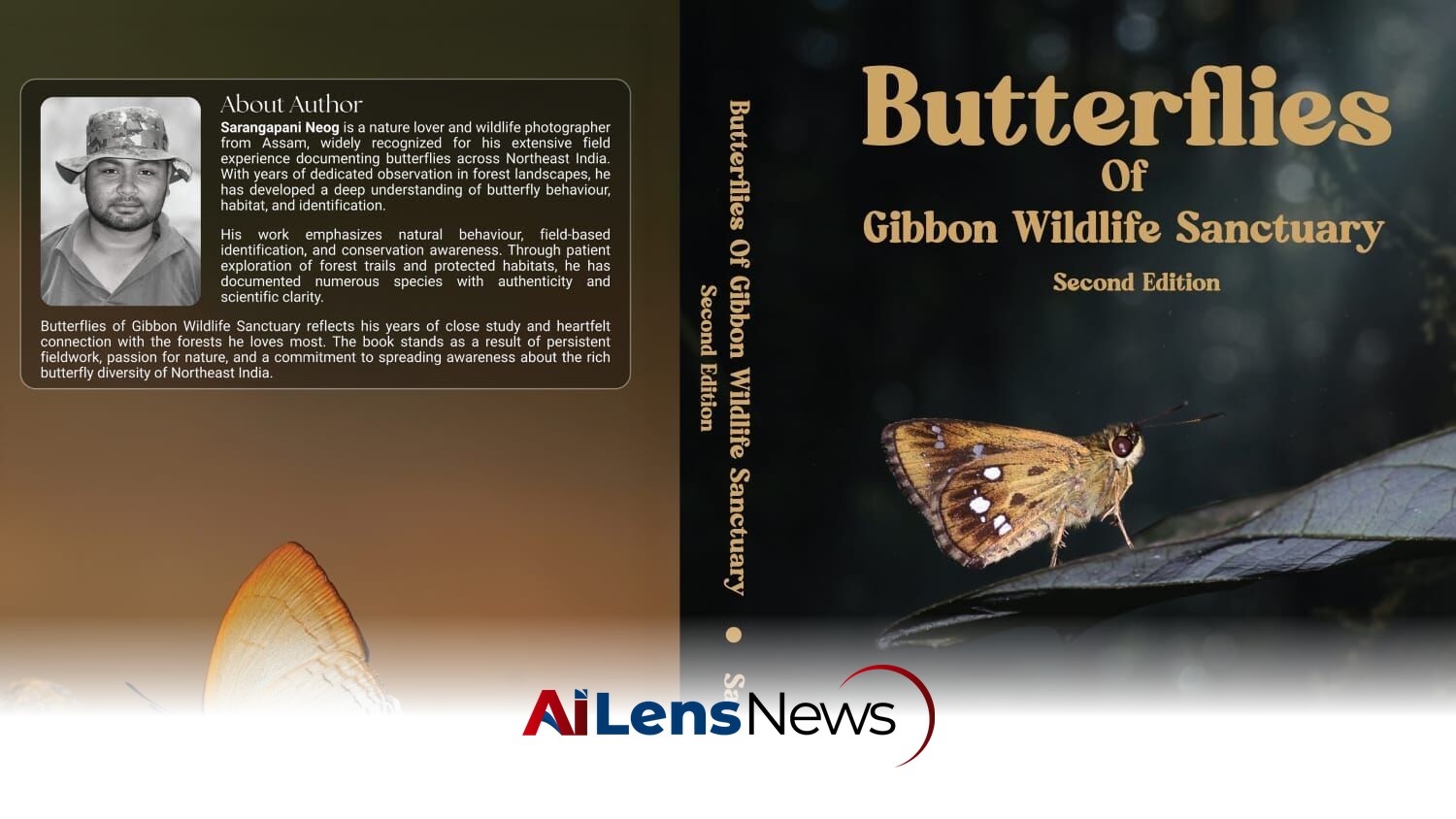


Naturalist Sarangapani Neog's latest book documents the rich butterfly diversity in Assam's Hoollongapar Sanctuary, highlighting rare species and ideal habitats.
Dispur, India Jul 19, 2026 ALN: Assam's Hoollongapar Sanctuary, known for its endangered western hoolock gibbon, is also recognized as one of the richest butterfly habitats in the state, according to a new book.
In his book Butterflies of Gibbon Wildlife Sanctuary, naturalist and wildlife photographer Sarangapani Neog documents 281 butterfly species observed in the sanctuary located in Assam's Jorhat district. This revelation not only highlights the sanctuary's ecological significance but also underscores the need for conservation efforts in the region.
Butterflies are often considered indicators of a healthy ecosystem due to their sensitivity to environmental changes. The presence of a diverse range of butterfly species in Hoollongapar Sanctuary indicates a thriving environment capable of supporting various forms of life. Many of these species are regarded as "dream butterflies" by lepidopterists due to their rarity and elusive nature, making the sanctuary an important site for both scientific research and recreational butterfly watching.
Neog highlights rare species such as the Assam Forest Bob (Scobura parawoolletti), Red-veined Lancer (Pyroneura niasana), and Yellow-veined Lancer (Pyroneura latoia) found within the Hollongapar Gibbon Wildlife Sanctuary. These species are not only captivating for their beauty but also for their ecological roles, contributing to pollination and serving as food sources for other wildlife.
"The sanctuary possesses a well-developed multi-layered forest canopy, from towering Hollong trees forming the upper canopy to dense shrubs and herbs in the understorey. This complex vegetation structure creates a variety of microhabitats suitable for different butterfly species," Neog explains. The diverse plant life offers various resources that butterflies rely on throughout their life cycles, from caterpillars to adult butterflies.
According to Neog, several ecological factors contribute to making the Hollongapar Gibbon Wildlife Sanctuary an ideal habitat for butterflies. "The rich diversity of trees, shrubs, climbers, grasses, and herbs provides abundant host plants for caterpillars and nectar sources for adult butterflies. The shaded forest trails, sunny openings, streams, and mud-puddling spots further enhance butterfly diversity and make the sanctuary an excellent location for butterfly watching," he adds. This rich biodiversity contributes to the sanctuary's reputation as a hotspot for lepidopterists and nature enthusiasts alike.
Despite its relatively small size of 20.98 sq km, the sanctuary is home to seven species of primates, including the western hoolock gibbon, as well as Asian elephants, leopards, leopard cats, fishing cats, civets, wild boars, barking deer, pangolins, numerous reptiles, birds, squirrels, and countless invertebrates. The presence of such a variety of species indicates a well-balanced ecosystem, where each organism plays a role in maintaining the overall health of the environment.
Neog emphasizes that the sanctuary offers excellent accessibility for butterfly watching. "Its well-maintained forest trails and permitted guided trekking provide visitors, researchers, photographers, and naturalists with outstanding opportunities to observe and photograph butterflies in their natural habitat with minimal disturbance," he states. This accessibility not only enhances the visitor experience but also promotes awareness and appreciation of the region's biodiversity.
One of the highlights of Neog's book, now in its second edition, is its photographic-based identification system, designed to facilitate easier, faster, and more accurate identification for everyone. This approach is particularly beneficial for amateur naturalists and photographers who may not have extensive experience in butterfly identification.
"The images highlight the real field appearance, wing patterns, color variations, posture, and other distinguishing features that observers encounter during field surveys," he explains. This focus on practical identification methods is crucial for fostering a deeper understanding of butterfly diversity and ecology among a broader audience.
The author dedicates one species per page for quick and convenient reference, including wingspan, scientific name, and taxonomic information. This structured approach allows readers to easily navigate through the book and find the information they need while observing butterflies in the field.
He employs field identification keys based on visible photographic features and look-alike species comparisons to avoid misidentification. This is particularly important in the study of butterflies, as many species can appear quite similar, leading to confusion among observers. The inclusion of such keys not only aids in accurate identification but also enhances the educational value of the book.
Additionally, the book indicates the best observation seasons for each butterfly. Understanding seasonal behavior is essential for both researchers and enthusiasts, as it allows for more effective planning of field trips and surveys. This feature also highlights the dynamic nature of butterfly populations, which can change based on environmental factors and seasonal cycles.
"I have also used practical field notes drawn from extensive field experience rather than relying solely on published literature," Neog adds. This emphasis on firsthand experience enriches the content of the book, providing readers with insights that may not be found in traditional academic texts.
The 321-page book, published by Photo Musings Colour Lab, includes comments from former chief editor of Butterflies of India Purnendu Roy, butterfly experts and researchers Isaac Kehimkar, Peter Smetacek, and Saito Motoki, as well as Young James, chairman of the Lepidoptera Society Hong Kong. The inclusion of endorsements from recognized experts in the field lends credibility to Neog's work and highlights the importance of the sanctuary as a site for butterfly research and conservation.
The publication of this book comes at a crucial time, as global butterfly populations face threats from habitat loss, climate change, and pollution. By documenting the rich diversity of butterflies in Hoollongapar Sanctuary, Neog not only contributes to the scientific understanding of these species but also raises awareness of the need for conservation efforts to protect their habitats. The book serves as a call to action for both local communities and policymakers to prioritize the preservation of biodiversity in Assam and beyond.
In conclusion, the release of Butterflies of Gibbon Wildlife Sanctuary is a significant contribution to the field of entomology and conservation. It underscores the ecological importance of Hoollongapar Sanctuary and the need for ongoing research and protection of its unique biodiversity. As more individuals become aware of the sanctuary's rich butterfly population, it is hoped that greater efforts will be made to ensure the survival of these species and their habitats for future generations.
To learn more about the latest developments in Biodiversity, stay updated with our exclusive reports and analyses on AiLensNews.

