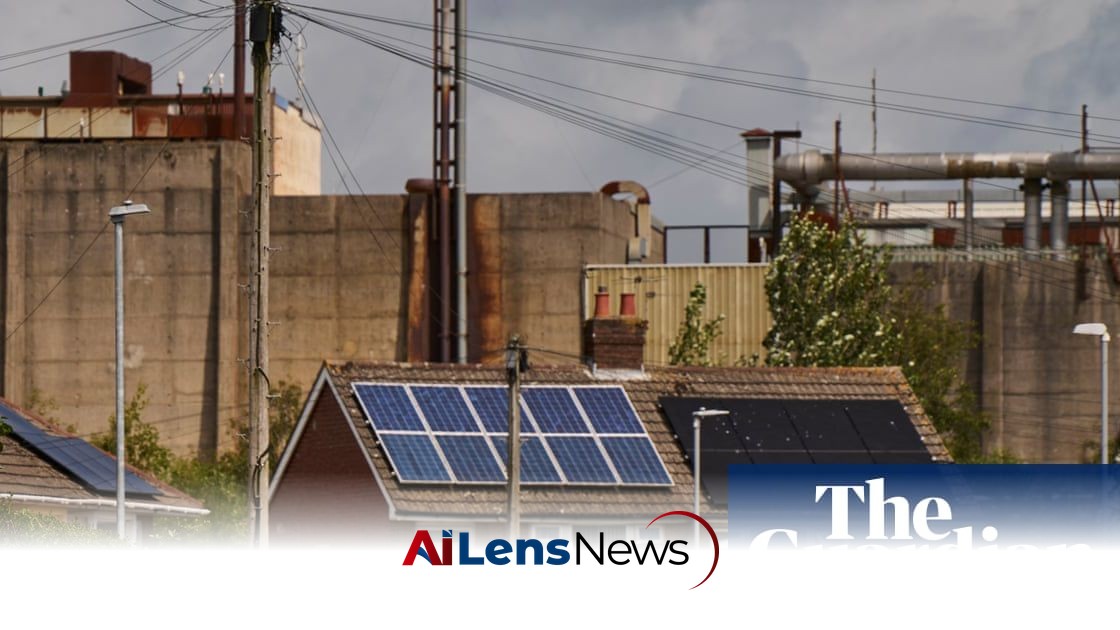


Residents in Thornton-Cleveleys are seeking answers regarding the health impacts of contamination from a nearby chemical plant linked to cancer.
New Delhi, India Jul 10, 2026 ALN: “Everything I wanted was finally coming to fruition. A house, a change of job and getting married,” says Liz Hurst, looking out to sea on a hot evening in Blackpool. “But then all of a sudden, everything was put on hold.” Fifteen years ago, Hurst was diagnosed with kidney cancer at the age of 32.
“The doctors told me they didn’t know why I’d got it; they said it was very uncommon for somebody of my age and sex,” she recalls.
Last month, a government-commissioned study revealed higher-than-expected rates of kidney cancer in the vicinity of the AGC Chemicals Europe manufacturing plant in Thornton-Cleveleys, a town north of Blackpool where Hurst lived until recently. Between the 1950s and 2012, the facility emitted an estimated 49 tonnes of the carcinogenic chemical PFOA.
PFOA, or perfluorooctanoic acid, is a type of PFAS (per- and polyfluoroalkyl substances) that international research has linked to kidney cancer. These chemicals are often referred to as “forever chemicals” because they do not break down in the . The Thornton-Cleveleys factory, acquired by AGC Chemicals Europe in 1999, used PFOA to manufacture PTFE (polytetrafluoroethylene), another type of forever chemical commonly found in non-stick coatings. PFOA was banned globally in 2020.
Despite the elevated cancer rates, the study found no evidence of a cancer cluster or a direct association between the elevated kidney cancer rates and PFOA exposure. Experts have expressed concern over the findings and believe further investigation, including blood testing, is necessary.
Hurst reflects on AGC Chemicals Europe’s significant presence in her life growing up. She recalls regular “cloud burst drills” at her primary school to prepare for potential chemical spills and spent several summers working in the factory’s labs as a young science student. “It was just always there,” she says.
A spokesperson for AGC Chemicals Europe stated that the company was not involved in the drills.
In response to rising global concerns about the harmful effects of PFAS chemicals, the local council and the Agency (EA) initiated an investigation into historical emissions from the site in 2024. Soil and local produce were tested for PFOA, revealing widespread contamination. Residents were advised against consuming eggs laid within 1km of the factory and were instructed to wash and peel homegrown fruits and vegetables.
“I saw an article in the local paper about the contamination and started looking into it,” Hurst explains. “When I saw kidney cancer linked to it, I just went cold. I just want to know if it has caused my cancer.”
Hurst has been cancer-free since 2019 after having her left kidney removed.
For the past five years, Alan Hodson, 61, has tended to a plot on allotments bordering the AGC Chemicals Europe site. He describes the allotment as his sanctuary. “It just gets me out for a few hours,” Hodson says. “I just potter around, leave my problems outside, and when I go home, my mind’s cleared.”
However, his perspective changed last year when soil testing revealed alarming levels of PFOA in his produce. A hand-delivered letter informed him that his beetroot contained the highest level of PFOA among all products tested. One soil sample from the allotment was found to have PFOA levels seven times higher than Belgium’s guideline for soil.
As a result, the EA has recommended classifying the allotment as officially contaminated land, leading the local council to announce its impending closure.
Sam Hammond, 48, lives next to the allotment and discovered that her garden is also contaminated with PFOA, at levels significantly exceeding safety guidelines. One sample collected from her property contained 40 times more PFOA than the Belgian guideline level. The level of PFOA in her duck’s eggs was found to be so high that consuming just one egg a week would exceed the European safe weekly limit by ten times. Hammond and her children have been eating these eggs daily for years.
Despite the imminent closure of the allotment, Hammond has yet to receive any information regarding the implications of the test results for her home.
“I just think it’s disgusting that we’ve been left in limbo like this,” she states. “It’s just stressful. It’s in my brain when I get up, when I go to bed, when I’m trying to sleep; there’s no escape from it.”
Wyre council has assured residents that all agencies involved in the investigations are committed to transparency and that the EA will contact residents once formal conclusions are reached.
A spokesperson for Wyre council emphasized the complexity of the investigation, stating, “It is critical that the appropriate time is taken to ensure any decisions made are robust, evidence-based, and unchallengeable.”
In the United States, the PFAS contamination crisis has led to class-action lawsuits resulting in billion-dollar settlements. While Europe has not yet seen legal action on that scale, changes may be on the horizon. On July 8, lawyers at the NGO ClientEarth filed a complaint with the European Committee of Social Rights regarding the Belgian government’s failure to protect citizens from widespread PFAS pollution.
In Thornton-Cleveleys, the law firm Leigh Day has reached out to AGC Chemicals Europe, indicating they are investigating the viability of a claim on behalf of Hammond related to the “loss of enjoyment and usage” of her land and potential personal injuries. Over 90 residents have expressed interest in participating in any potential legal action, with 50 having accessed blood tests over the summer.
Hurst is determined to raise awareness about the issue, stating, “I want as many people around the area to know about it, so they can get the healthcare that they need. I’m just angry.”
In response, AGC Chemicals Europe reiterated their commitment to the community, stating, “While it would not be appropriate to comment on individual cases or allegations, the multi-agency Health Cell report concluded that there was no evidence of a statistically significant kidney cancer cluster.”
As the community grapples with the implications of contamination, the quest for answers continues amid rising health concerns and the search for justice.
To learn more about the latest developments in Pollution & Waste, stay updated with our exclusive reports and analyses on AiLensNews.

