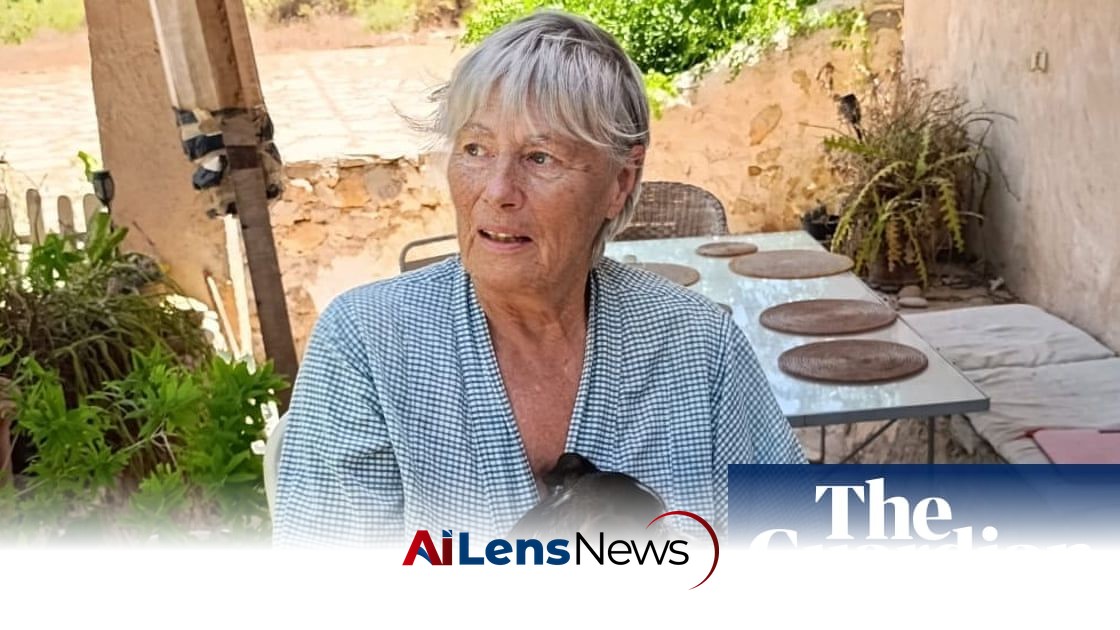


Jeanne Henny, 74, shares her terrifying experience as she narrowly escaped a wildfire in Almería, Spain, while trying to evacuate her friend and pets.
New Delhi, India Jul 10, 2026 ALN: The speed, scale, and ferocity of the wildfire in and around the Bédar municipality of Almería took everyone by surprise. Jeanne Henny, a 74-year-old English woman who has lived in the tiny hamlet of Los Pinos for 33 years, initially mistook the yellow skies on Thursday afternoon for a calima wind from the Sahara, which brings desert dust to the area. However, her perception quickly changed when she noticed the smoke and received alerts from a fire-monitoring app indicating that a blaze had ignited nearby.
“There was a lot of smoke, but it was far away,” Henny recounted. “We get fires and there’s some kind of scare most years. The police will come to each house and tell us to get out, and there will be sirens going. But this time it didn’t happen like that.”
The gravity of the situation became apparent when a neighbor knocked on her door at 5:30 PM, urging her and her friend, who uses a wheelchair, to abandon their home immediately. This urgency reflects a broader context of increasing wildfire risks in southern Europe, where climate change and prolonged drought have made regions like Andalucía particularly vulnerable to such disasters.
It took Henny nearly half an hour to get her friend and two dogs into the car, but she was forced to leave her five cats behind. They drove to the nearby village of Serena, about 1 km away. “We were supposed to go to the town of Bédar, but there’s only one main road,” Henny explained. “There’s an alternative route, but it’s too hard to get to.” This highlights the challenges faced by residents in rural areas, where evacuation routes can be limited and difficult to navigate, especially under stress.
As they reached Serena and were about to turn towards Bédar, Henny saw the fire surging up the cliff and onto the road. “I had to make a split-second decision and do a three-point turn to get away from Bédar,” she said. “It was a narrow road, and if I’d missed that three-point turn, I would have gone over the cliff. But the fire was pouring onto the road, so I had to make that split-second decision, and I did the turn in one and just made it.” This quick maneuver ultimately saved their lives, illustrating the chaotic and unpredictable nature of wildfires, which can escalate rapidly and leave little time for decision-making.
After navigating up the mountain and down a rough path for another 5 km, they reached safety. Unfortunately, Henny learned that others were not as fortunate. “Some people took the alternative road and they died in their car,” she said, reflecting on the tragedy. Such incidents underscore the critical importance of timely evacuation orders and the need for effective communication in emergency situations, as many individuals may not fully grasp the severity of the threat until it is too late.
Perhaps the most frightening aspect of the fire, Henny noted, was its sheer speed: “You thought it was miles away, and then suddenly it was in front of you on the road.” This rapid progression of the fire is not an isolated incident; it is part of a worrying trend observed in many parts of the world, where wildfires are becoming more intense and frequent due to climate change. The phenomenon of wildfires spreading at unprecedented rates is a growing concern for many communities, especially in Mediterranean climates.
Juan Manuel Moreno Bonilla, the regional president of Andalucía, reported that most of the 12 people who died in the fire appeared to be foreigners, including hikers. “I think they’ve been caught off-guard in the woods. When there’s a sudden fire … you don’t know how to get out,” he stated. This tragic loss of life serves as a stark reminder of the dangers posed by wildfires, particularly for those who may not be familiar with the local geography or the best escape routes.
Ángel Francisco Collado, the mayor of Bédar, mentioned that he and others had gone door to door, advising residents to evacuate along an officially approved route or to stay put. “Some people didn’t want to leave and they stayed in their houses and are still alive,” he said, adding that some decided to leave when it was too late. “A group of nine people was told to stay put, but they didn’t listen. Seven of them are dead, and two are on the way to the hospital with severe burns.” This highlights the complexities of human behavior in emergencies, where fear and disbelief can lead to tragic outcomes despite the best efforts of local authorities to provide guidance and support.
Francisco Miguel Reyes, the mayor of the nearby municipality of Los Gallardos, described the past few hours as terrible. “The fire is fearsome and it’s devoured everything in its path,” he told Cadena Ser radio. “The difference between yesterday and today is just devastating.” His remarks reflect the broader impact of wildfires on local communities, not only in terms of immediate danger to life and property but also in terms of long-term recovery and rebuilding efforts that will be necessary in the aftermath of such disasters.
As Henny spoke, helicopters flew overhead, battling the flames. She expressed her concern for her home and her cats but felt “very lucky” to be alive. “I’m with some friends, but if the wind changes, then obviously we’ll have to leave here as well. But I had an incredible escape,” she concluded. Her experience is a testament to the resilience of individuals in the face of natural disasters, as well as the importance of community support and preparedness in mitigating the impacts of such events.
The implications of this wildfire extend beyond the immediate devastation. It raises questions about fire management practices, land use policies, and the need for increased investment in firefighting resources and infrastructure. Communities facing similar risks must grapple with how to better prepare for and respond to wildfires, including the development of more effective communication strategies to ensure that residents understand the risks and know how to act when danger strikes.
Furthermore, as climate change continues to alter weather patterns and increase the frequency of extreme weather events, it is imperative for governments and organizations to prioritize climate resilience in their planning and response strategies. The lessons learned from this tragic event should inform future efforts to protect lives and property from the growing threat of wildfires.
To learn more about the latest developments in Climate Change, stay updated with our exclusive reports and analyses on AiLensNews.

