

Scientists at the Wellcome Sanger Institute are embarking on a groundbreaking project to sequence the genomes of all life on Earth, starting with the resilient tardigrade.
New Delhi, India Jul 4, 2026 ALN: As this year’s invertebrate of the year competition launches, scientists are focusing on last year’s winner, the tardigrade, as part of an ambitious project to sequence the genomes of all life on Earth. This initiative, known as the Earth BioGenome Project, aims to catalog the genetic blueprints of various organisms, which is essential for understanding biodiversity, evolution, and conservation efforts. The completion of this project could provide a comprehensive database that would allow scientists to study the genetic relationships and evolutionary history of all living organisms, offering insights that could benefit numerous fields, including medicine, agriculture, and al science.
Witek Morek, a postdoctoral researcher and tardigrade expert, is closely inspecting an old brick-and-flint wall on the Cambridgeshire campus of the Wellcome Sanger Institute. He explains, “We are going to use a very advanced tool designed by bioengineers and evolved over millions of years – the human hand – and grab some moss, and put it in an envelope.” This marks the beginning of what is termed tardigrade hunting. The process of gathering these organisms is not merely a scientific exercise; it symbolizes a growing recognition of the importance of invertebrates in ecological systems and their potential contributions to scientific research.
This endeavor is part of a larger scientific undertaking to sequence the genomes of all life forms. Accompanied by Professor Mark Blaxter, who leads the institute’s Tree of Life programme, Morek collects lichen from a walnut tree before returning to the lab with his samples. The Tree of Life programme is focused on understanding the evolutionary relationships among species, and sequencing the genomes of organisms like tardigrades is crucial for mapping out these relationships.
The first animal to have its whole genome sequenced was a millimetre-long nematode worm in 1998. The human genome followed just five years later, although it was not fully completed until 2021. A genome contains the instructions for creating an organism, encoded in DNA, and genomics extends beyond genes to include all the DNA found between them. The sequencing of various genomes provides a reference point for scientists, enabling them to explore genetic variations and evolutionary adaptations across species.
Establishing reference genomes for various species aids scientists in studying biology and evolution, while also identifying new medicines and compounds. Sequencing genomes was once a lengthy process; however, advancements in technology now allow the Tree of Life programme to sequence 48 genomes each week, totaling 2,600 genomes so far, primarily focusing on British and Irish species. This rapid pace of sequencing is a testament to the advancements in genomic technologies, such as next-generation sequencing, which have drastically reduced the time and cost associated with genome sequencing.
The tardigrade, whose name means “slow stepper,” is a resilient creature with about 1,500 identified species worldwide. Known for their ability to survive extreme conditions, including searing heat, freezing temperatures, and even outer space, tardigrades can enter a state of suspended animation until rehydrated. This remarkable resilience has made them a subject of interest not only in biological research but also in astrobiology, as their survival under extreme conditions raises questions about the potential for life beyond Earth.
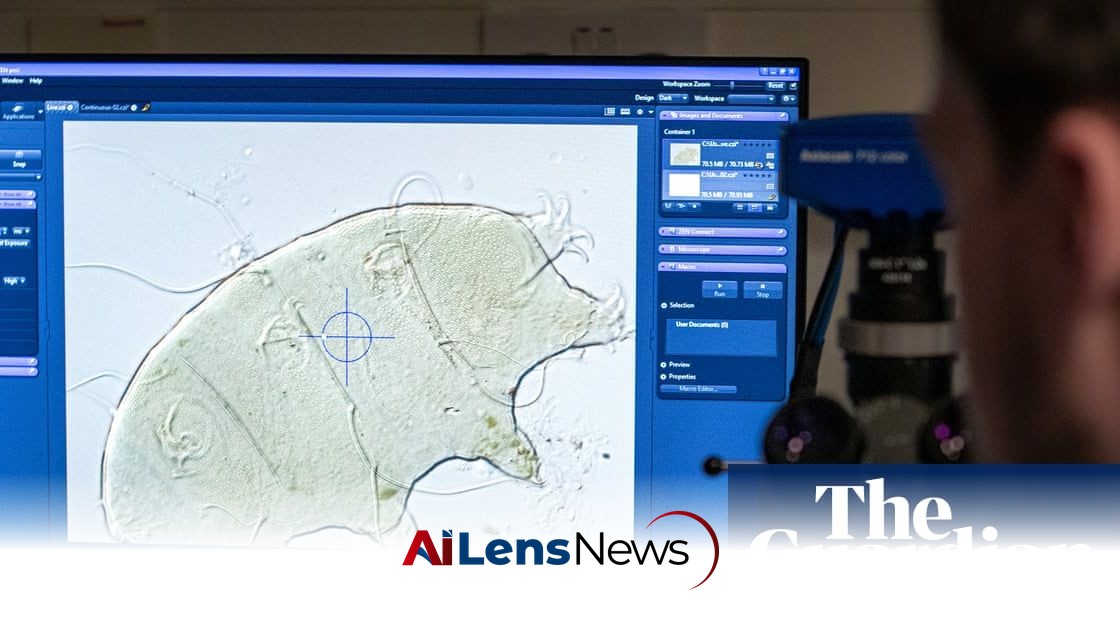
Morek begins the sequencing process by placing the collected moss and lichen samples in a beaker of water. After thirty minutes, the tardigrades begin to move. Under a microscope, Morek identifies a tardigrade, noting its chubby-baby legs and translucent body, which measures about 350 micrometres in length. The ability to observe these creatures in their natural habitat enhances the accuracy of species identification and provides insights into their ecological roles.
To accurately identify the species, Morek must observe the eggs of the tardigrade, as different species have distinct egg shapes. Tardigrades can exhibit voracious carnivorous behavior, preying on nematodes, and they also demonstrate parental care by shedding their skin to protect their eggs. This behavior is particularly interesting to researchers studying the evolutionary adaptations of tardigrades, as it suggests a level of complexity in their reproductive strategies that may be uncommon among other invertebrates.
Morek prepares a temporary slide to confirm the tardigrade's taxonomy, ensuring it remains alive during the process. The specimen is then transferred to a barcoded plastic tube and frozen for later sequencing in specialized freezers set at -71°C. This meticulous approach highlights the importance of preserving the integrity of the samples throughout the sequencing process, as even minor contamination can lead to significant errors in the resulting genetic data.
With only a tiny amount of DNA present in tardigrades, researchers previously needed to pool thousands of specimens to obtain sufficient DNA for sequencing. However, the Wellcome Sanger Institute employs a novel approach called the picogram input multimodal sequencing protocol, which allows for the extraction and amplification of genomic DNA and RNA from individual tardigrades. This technique represents a significant advancement in genomic research, as it enables scientists to study the genetics of rare or difficult-to-collect species without the need for large sample sizes.
After sequencing, the data is processed and stored in the institute’s computer cluster. Tardigrade genomes are notably smaller than the human genome, simplifying the assembly process despite the complexity of the PCR technique. The ability to analyze these genomes efficiently is crucial for the ongoing efforts to understand the genetic underpinnings of tardigrade resilience and adaptability.
For Morek, sequencing tardigrades will provide insights into the evolutionary relationships between species, some of which have been separated for over 550 million years. This long evolutionary history offers a unique opportunity to study how organisms adapt to extreme s and the genetic changes that accompany these adaptations. Additionally, understanding the genetic basis for the tardigrades’ extraordinary survival abilities may have broader implications for biotechnology and medicine.
As Blaxter states, “These genomes will in turn open up new ideas and opportunities in biomedicine and biotechnology.” The research could lead to breakthroughs in creating drought-resistant crops or developing dry vaccines. The potential applications of this research extend beyond agriculture and medicine; they could also inform conservation strategies aimed at preserving biodiversity in the face of climate change and habitat loss.
“There are a lot of research questions,” Morek adds. “The more we know, the more questions we are asking. It’s a never-ending story.” This sentiment captures the essence of scientific inquiry, where each discovery leads to new avenues of exploration and understanding. The ongoing research into tardigrades exemplifies the interconnectedness of various scientific disciplines and the importance of studying even the smallest organisms in the quest for knowledge.
The tardigrade won last year’s invertebrate of the year contest, but the search is on for this year’s winner. The competition invites nominations for favorite invertebrates, celebrating the crucial roles these creatures play in ecosystems. Invertebrates, which make up the vast majority of animal life on Earth, are essential for pollination, soil health, and water purification. The recognition of invertebrates through such contests raises public awareness about their significance and the need for their conservation.
As biologist E.O. Wilson noted, “The truth is that we need invertebrates but they don’t need us.” This statement underscores the importance of understanding and protecting invertebrate species, which often serve as the foundation of ecosystems. Participants are encouraged to nominate their favorite invertebrate, with a shortlist to be announced later this year. The ongoing celebration of invertebrates not only highlights their ecological importance but also fosters a greater appreciation for the diversity of life on our planet.
To learn more about the latest developments in Conservation, stay updated with our exclusive reports and analyses on AiLensNews.

