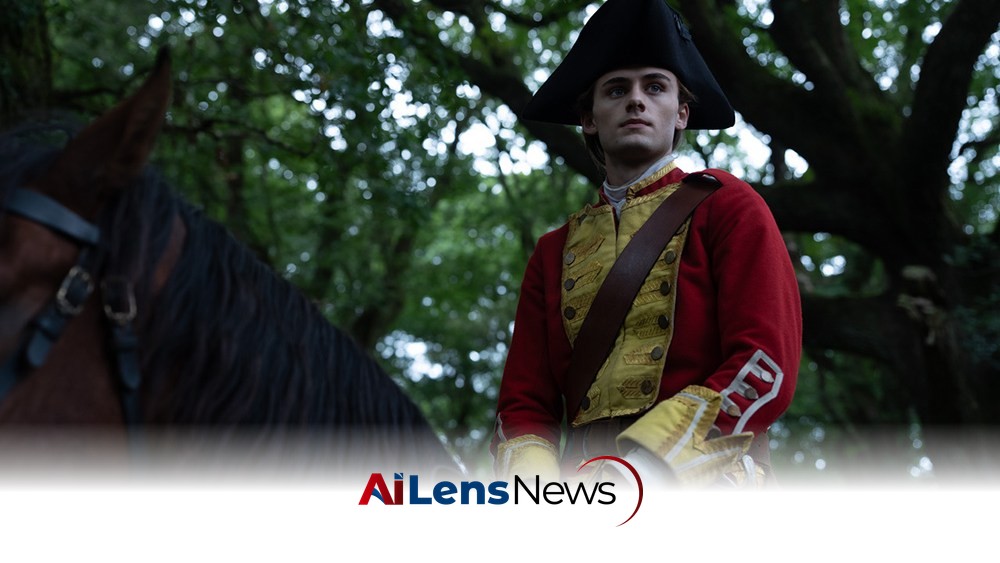


Director Jon Erwin discusses how AI tools enhanced the production of 'Young Washington,' making it safer and more affordable while maintaining artistic integrity.
New Delhi, India Jul 3, 2026 ALN: In Jon Erwin’s telling, even the most advanced visual effects tools are no match for the physics of water. This statement resonates profoundly in the context of modern filmmaking, where directors often grapple with the challenges posed by natural elements while striving to maintain the safety of their cast and crew.
The director of the film “Young Washington,” a historical drama that premiered nationwide on July 3, faced a particularly daunting scene: a pre-Revolutionary War George Washington, played by William Franklyn-Miller, and his companion find themselves in a life-threatening situation in an icy river. The inherent dangers of filming such a scene are magnified by the cold temperatures of the water, which could pose severe risks to the health and safety of actors and stunt doubles alike.
To navigate this challenge, Erwin employed a creative solution that involved a combination of practical effects and cutting-edge technology. The crew constructed a 50-foot pool of water in Ireland, allowing them to film close-ups of the actors without subjecting them to freezing conditions. Additionally, they used props resembling ice and a suite of generative AI tools to enhance the scene, particularly for wider shots. This approach not only ensured the safety of the performers but also allowed the production to remain in Ireland, avoiding the logistical complications of relocating to a colder climate.
“The actors were there, the raft was there, the water was there, but the water wasn’t cold,” Erwin explained in an interview. “It was a very small area that we were able to film it in, and we just mapped it to a much larger area. I think that’s a great example of the use case of these tools to make something safer and more affordable in that scope to a project like this, and that way we didn’t have to leave Ireland.”
Erwin's innovative use of technology is part of a broader trend in Hollywood, where filmmakers are increasingly vocal about integrating generative AI into their work. This trend reflects a significant shift in the industry, as creative professionals explore how AI can serve as a valuable tool rather than a replacement for traditional filmmaking techniques. Erwin has previously employed AI in projects for Amazon MGM Studios, including shows like “House of David” and “The Old Stories: Moses.” He also co-founded Innovative Dreams, an AI production company that merges AI with traditional filmmaking practices.
“My view on the use of these tools is: Do everything you can for real, everything you possibly can, and then use these tools to amplify your vision and give you a bigger canvas,” Erwin stated. This philosophy underscores his commitment to preserving the authenticity of filmmaking while harnessing the advantages offered by modern technology. He believes that AI should enhance rather than replace the core elements of storytelling and production.
For a film like “Young Washington,” which Erwin describes as “a story about the American frontier,” he sought to blend his passion for period pieces with the innovative tools he has come to embrace. The production employed five AI artists, along with an AI producer and crew member, to augment approximately 100 shots in the film. This included a mix of AI-generated establishing shots and visual effects depicting the firing of physical cannons rented for the production.
In one notable scene, Erwin creatively utilized AI to transform two Wonder Project employees into British soldiers. This was a clever workaround for a scene that had not been captured during the principal photography. After filming the executives in modern clothing, AI technology was employed to place them in period-accurate costumes and on horseback, demonstrating the versatility and potential of AI in enhancing storytelling.
For other visual effects needs, such as crowd duplication in wide shots, Erwin relied on traditional visual effects techniques. “We had the good fortune of having enough extras on set, and then when we needed to kind of duplicate into wide shots, we relied on traditional methods,” he explained. This balance between classic methods and modern technology highlights a thoughtful approach to filmmaking that respects the craft while embracing innovation.
Despite Erwin’s enthusiasm for AI, the deployment of such technology in “Young Washington” has not been without controversy. Some critics on social media have expressed skepticism about the film's AI usage, questioning the overall quality of the movie. “Young Washington” currently holds a 63% rating on Rotten Tomatoes, with critic Owen Gleiberman describing it as “watchable in a stolid way,” likening it to a production reminiscent of “Masterpiece Theatre” from two decades ago. This mixed reception raises questions about the impact of AI on storytelling and whether it can truly enhance the viewer’s experience.
Erwin, however, remains unfazed by the criticism. He contends that some detractors misidentify which elements were generated by AI and which were created using traditional visual effects techniques. “You’re looking at traditional VFX,” he asserted. “You might not like it, you might not think those shots are good, but they’re how we’ve been doing visual type stuff for the last three decades.” This defense illustrates a tension in the industry, as filmmakers navigate the evolving landscape of technology while facing scrutiny from audiences and critics alike.
Another factor influencing the reception of AI in filmmaking is the perspective of the cast. The film features notable actors such as Ben Kingsley, Andy Serkis, and Mary-Louise Parker. Earning their trust in the use of AI has involved “communicating in a transparent, honest way and helping them understand how the tools are used,” Erwin noted. By fostering an environment of collaboration and understanding, Erwin has sought to alleviate concerns and demonstrate the potential benefits of AI in enhancing their performances.
“Once they see, once you demonstrate the technology for them — I mean, I don’t want to speak for them, you have to ask them — but by and large, they love these tools, because a lot of times an actor is not able to have any agency into their digital performance,” Erwin added. This perspective highlights the potential of AI to empower actors, providing them with new ways to express their artistry and engage with their characters.
At 44 years old, Erwin perceives the use of AI as the next frontier in filmmaking, akin to the transition from film to digital cameras. His journey began in Birmingham, Alabama, where he faced challenges securing jobs on projects that relied on traditional film cameras. Embracing digital technology allowed him to carve out a niche in the industry, and he now views AI as a critical component of the ongoing evolution of filmmaking. He argues that this technological advancement will not only increase the number of projects produced in Hollywood but also democratize the creative process, opening doors for diverse voices and innovative storytelling.
“I bled on the bleeding edge of every digital alternative zone,” he shared. “A lot of people stopped at the cameras, but for me it was my way to compete. It was a democratizing event, so now I think we’re going to see scope and scale democratize the filmmakers everywhere. It might be disruptive, but I think it’s going to get us to a new birth of creativity and original voices in our industry.” This optimism reflects a broader belief among some filmmakers that AI can serve as a catalyst for new ideas and artistic expression.
As the film industry continues to grapple with the implications of AI, the experiences of directors like Jon Erwin will likely shape the future of filmmaking. The balance between traditional techniques and emerging technologies remains a focal point of discussion, as filmmakers seek to harness the best of both worlds. Whether AI will ultimately enhance or hinder the creative process is a question that will continue to evolve alongside advancements in technology.
In conclusion, Jon Erwin’s approach to utilizing AI in “Young Washington” exemplifies a thoughtful integration of technology into the filmmaking process. By prioritizing safety, creativity, and collaboration, he aims to push the boundaries of storytelling while navigating the challenges posed by modern filmmaking. As the industry moves forward, the dialogue surrounding AI will undoubtedly continue, influencing the way stories are told and experienced on screen.
To learn more about the latest developments in Movies, stay updated with our exclusive reports and analyses on AiLensNews.

