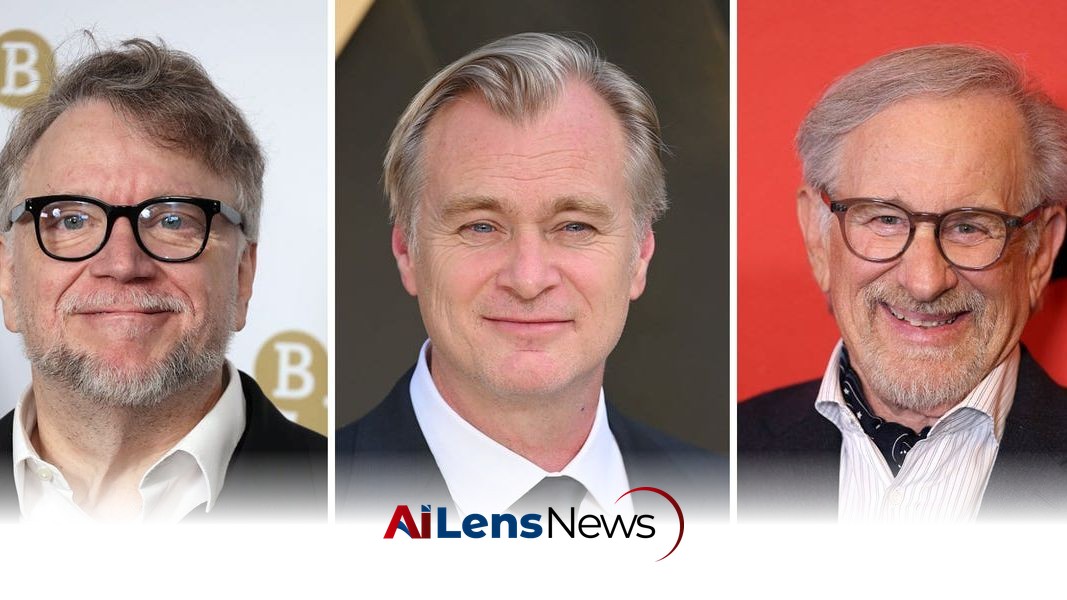


Top filmmakers like Guillermo del Toro and Christopher Nolan express concerns about AI's impact on the art of filmmaking, emphasizing the irreplaceable human experience.
Washington DC, United States Jul 27, 2026 ALN: As AI technology rapidly advances, some of Hollywood's most celebrated filmmakers are pushing back, asserting that great art is rooted in the human experience—something that AI cannot replicate. From Guillermo del Toro to Christopher Nolan, these directors are vocal about their apprehensions regarding AI's encroachment on the creative process. This growing concern among filmmakers reflects a broader anxiety within the creative industries, as artists grapple with the implications of AI technologies that can generate content traditionally crafted by human hands.
Generative AI can now produce everything from scripts to visual effects, but many in the film industry argue that it lacks the lived experience, creative judgment, and years of craftsmanship that define great art. This concern is part of a broader reckoning in Hollywood, where celebrities like Taylor Swift and Matthew McConaughey have also sought to protect their likenesses from AI-generated impersonations. The fear is that as AI becomes more integrated into the creative process, it could dilute the authenticity and emotional resonance that human artists bring to their work.
Guillermo del Toro has expressed that AI could hinder future filmmakers from mastering their craft. At the 2026 San Diego Comic Con, he emphasized the importance of manual processes in filmmaking, citing the 3D rerelease of "Pan's Labyrinth," which involved about 1,000 artists rotoscoping the film. Del Toro's dedication to the artistry of filmmaking is evident in his films, which often blend intricate practical effects with deep, emotional storytelling. He stated, "What we're protecting is the beauty and the redeeming power of art. If we cut a generation of people from learning their craft, you're cutting the rest of the history of that medium away from them." This sentiment underscores a fundamental belief among many filmmakers that the process of creating art is as significant as the final product itself. The fear is that reliance on AI could lead to a generation of filmmakers who lack the essential skills and experiences necessary to create meaningful art.
Christopher Nolan has labeled AI a "Trojan horse," cautioning that the motives behind its development should be scrutinized. In a conversation with YouTuber HugoDécrypte, he remarked, "I've never seen a technology advancing so rapidly, so completely rejected by the public." Nolan's skepticism is rooted in his belief that while technology has the potential to enhance storytelling, it should not come at the cost of the human experience. He welcomed the skepticism toward AI, particularly among younger generations, and emphasized the need for caution when adopting new technologies. Nolan's films often explore complex themes of time, memory, and identity, all of which are deeply tied to the human condition. He argues that the essence of storytelling lies in the shared human experience, something that AI, regardless of its capabilities, cannot fully grasp or replicate.
Steven Spielberg has drawn a clear line against using AI to replace human creativity. At the 2026 SXSW conference, he stated, "I have never used AI on any of my films yet." Spielberg's illustrious career has been marked by a deep understanding of narrative and character, and he firmly believes that while technology can assist in the filmmaking process, it should not supplant the creative individual. Spielberg's perspective highlights a critical tension in the industry: the balance between embracing technological advancements and preserving the artistry that defines filmmaking. He is open to AI in various disciplines, but his caution reflects a broader concern that the essence of storytelling could be lost in the pursuit of efficiency and novelty.
Tim Burton has voiced his discomfort with AI-generated artwork that imitates his style. Reflecting on BuzzFeed's use of AI to create Disney characters in his distinctive style, he remarked, "It's like a robot taking your humanity, your soul." Burton's unique visual aesthetic, characterized by whimsical yet dark elements, is deeply personal and tied to his own experiences and emotions. While he acknowledged that some AI-generated pieces were impressive, he found the concept unsettling. Burton's comments illustrate a broader concern about the potential for AI to commodify artistic styles, reducing them to mere algorithms devoid of the emotional depth that human artists infuse into their work. The fear is that AI could lead to a homogenization of art, where distinct voices and styles are overshadowed by generic outputs.
Bong Joon Ho, the Oscar-winning director of "Parasite," humorously suggested that AI's rise is prompting humanity to reconsider what only humans can create. He stated, "AI is good because it's the very beginning of the human race finally seriously thinking about what only humans can do." However, he also joked about organizing a military squad to "destroy AI." Bong's playful remarks highlight a serious underlying concern: the need for artists and society to engage in a critical dialogue about the role of technology in creative fields. His films often explore themes of class struggle and human connection, emphasizing the importance of storytelling that resonates with the lived experiences of individuals. Bong's perspective encourages a thoughtful examination of how AI might impact not only the creative process but also the narratives that emerge from it.
Celine Song, director of "Past Lives," expressed her concerns about AI encroaching on the experiences that make life beautiful. At the 2025 Marrakech Film Festival, she stated, "The number one thing that we're here to defend as artists is humanity. We're here not to think about what makes human life easy, but what it's like to actually live." Song's emphasis on the human experience underscores a central theme in the ongoing debate about AI in the arts: the need to preserve the emotional depth and authenticity that human creators bring to their work. As filmmakers navigate the complexities of integrating AI into their creative processes, they must also grapple with the implications of allowing technology to shape the stories they tell.
As the debate over AI in Hollywood continues, these directors highlight the importance of preserving the artistry and human touch that define great filmmaking. The conversations surrounding AI's role in the creative process are not merely about technology but rather about the essence of storytelling itself. As filmmakers advocate for the protection of their craft, they are also championing the idea that art should reflect the human experience in all its complexity, emotion, and nuance. The implications of AI's integration into the film industry will likely shape the future of storytelling, prompting a reevaluation of what it means to create art in an increasingly automated world. The challenge for filmmakers will be to find a balance between embracing technological advancements and maintaining the authenticity that defines their work.
To learn more about the latest developments in Film & TV Production, stay updated with our exclusive reports and analyses on AiLensNews.

