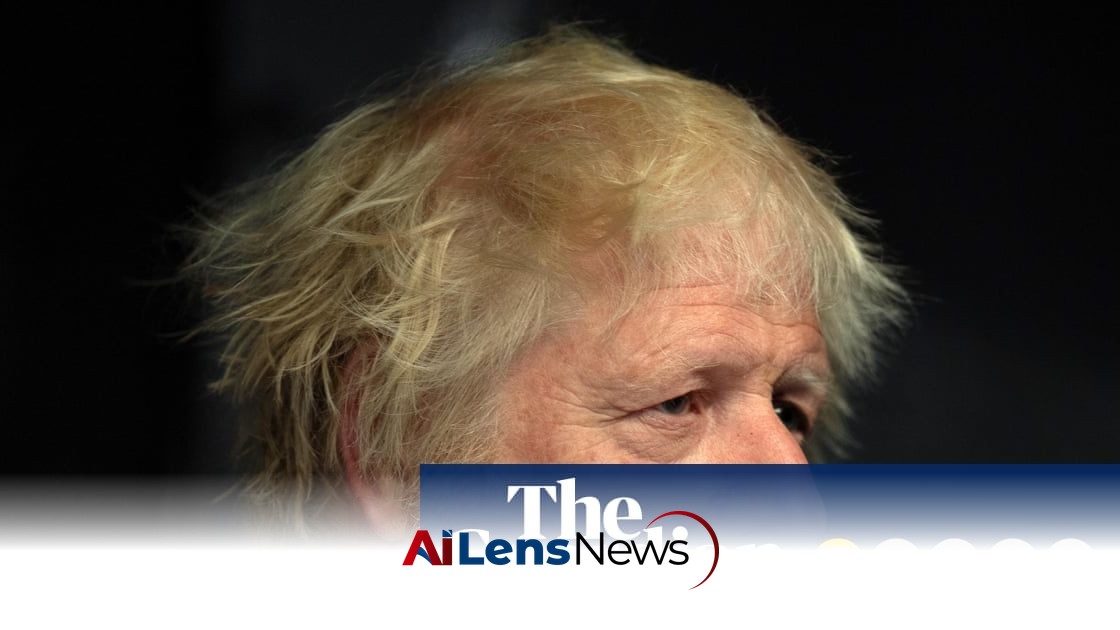


Boris Johnson's documentary 'Into Ukraine’s Kill Zone' undermines the honor of soldiers with his self-serving narrative, raising questions about its integrity.
London, United Kingdom Jul 25, 2026 ALN: The documentary titled Boris Johnson: Into Ukraine’s Kill Zone presents a unique and controversial perspective on the ongoing conflict in Ukraine, particularly through the lens of the former British Prime Minister, Boris Johnson. The film, which runs for an hour, is marked by a disclaimer that states it offers Johnson's subjective viewpoint on the war, raising questions about the objectivity and integrity of the content presented.
The opening caption serves as a warning to viewers: it acknowledges the potential bias inherent in Johnson's portrayal of events. The implication is clear: the audience should be cautious about accepting his narrative at face value. This disclaimer may also reflect a broader concern about the integrity of documentary filmmaking, especially when high-profile figures are involved. It prompts viewers to consider whether the film is an authentic exploration of the conflict or merely a vehicle for Johnson to promote his own image and political narrative.
From the outset, the documentary invites scrutiny not only of Johnson's motivations but also of the broader implications of his presence in a war zone. As the former Prime Minister interacts with soldiers on the frontlines, he often shifts the focus back to himself, employing a tone that many might find inappropriate given the gravity of the situation. His attempts at camaraderie, such as referring to military equipment in a casual manner and making light-hearted comments about their weaponry, may come off as tone-deaf in the context of a conflict that has resulted in significant loss of life and suffering.
Critics of Johnson have long pointed to his reputation for bending the truth and his tendency to prioritize personal image over substantive discourse. This documentary raises the question of whether his involvement in the film undermines its credibility. Many viewers might wonder if a figure with such a contentious past can genuinely convey the realities of war without distorting them for personal gain. The documentary's content, juxtaposed with Johnson's history, leads to a broader discussion about the role of leaders in shaping public perception of international conflicts.
Throughout the documentary, Johnson's clumsy attempts to fit into a war zone setting are highlighted, from donning a balaclava to wearing his flak jacket incorrectly. Such moments may detract from the seriousness of the subject matter, as they evoke a sense of performance rather than authenticity. Critics argue that this behavior trivializes the experiences of those who are genuinely risking their lives in the conflict. The documentary, rather than serving as a serious examination of the war, risks becoming a spectacle centered around Johnson's persona.
As the narrative unfolds, Johnson's commentary often seems to lack depth and analysis. His observations about the conflict, while expressing a moral stance, do not delve into the complexities of the situation. For instance, he states, "I just don’t think I’ve ever seen such a clear case of right and wrong," but fails to provide a nuanced understanding of the geopolitical factors at play. This lack of substantive analysis is particularly concerning given the significant implications of the conflict for international relations and global security.
The documentary also touches on the impact of Johnson's political decisions during his tenure as Prime Minister. It notes that he played a role in persuading Ukraine to abandon peace talks in favor of continued fighting, a decision that has been criticized for exacerbating the conflict and contributing to further loss of life. This acknowledgment raises ethical questions about the responsibilities of political leaders in times of war and the consequences of their actions on the ground.
As the film progresses, viewers are left grappling with the broader implications of Johnson's involvement in the conflict. His presence in Ukraine not only reflects his personal ambitions but also underscores the complexities of international diplomacy and the often fraught relationship between leaders and the realities of war. The documentary serves as a reminder that the narratives constructed by politicians can have far-reaching consequences, influencing public perception and international policy.
The context of the Ukraine conflict is crucial to understanding the documentary's significance. Since the Russian annexation of Crimea in 2014, Ukraine has been embroiled in a struggle that has drawn international attention and involvement. The war has not only been a humanitarian crisis but has also reshaped geopolitics in Europe, with NATO and the European Union responding to the aggressive actions of Russia. Johnson's role as a leader during this time, particularly his support for Ukraine against Russian aggression, has been both praised and scrutinized.
In this light, Johnson's documentary can be seen as an attempt to solidify his legacy in the context of the Ukraine conflict. By portraying himself as a steadfast ally of Ukraine, he may be seeking to counterbalance criticisms of his leadership and decisions during his time in office, especially in light of his controversial handling of domestic issues. This raises further questions about the motivations behind political narratives and the extent to which they can be trusted.
Moreover, the documentary's timing is significant. Released during a period of heightened tensions and ongoing conflict in Ukraine, it could be interpreted as an effort to influence public opinion and reinforce Johnson's image as a global leader. This strategic timing invites scrutiny regarding the ethical implications of using a humanitarian crisis as a backdrop for personal narrative and political posturing.
In conclusion, Boris Johnson: Into Ukraine’s Kill Zone presents a provocative lens through which to view the ongoing conflict in Ukraine. While it offers insights into Johnson's perspective, it simultaneously raises critical questions about the integrity of his narrative and the implications of his actions. The film serves as a reminder of the importance of scrutinizing the motivations behind political narratives, particularly in the context of war. As viewers process the documentary, they are encouraged to reflect on the broader ethical considerations surrounding leadership, truth, and the human cost of conflict.
Ultimately, the documentary's reception may hinge on the audience's willingness to engage critically with Johnson's portrayal of the situation. It challenges viewers to consider the complexities of war and the narratives that shape public understanding of international conflicts. In the end, the film is not just about Johnson's journey into a war zone; it is a commentary on the nature of political storytelling and the responsibilities that come with it. This serves as a crucial reminder of the importance of accountability in leadership, especially in times of crisis, where the stakes are not just political but profoundly human.
To learn more about the latest developments in TV Shows, stay updated with our exclusive reports and analyses on AiLensNews.

