

This delightful comedy explores the bond between an elderly widow and her robot carer, blending humor with poignant moments of human connection.
London, United Kingdom Jul 18, 2026 ALN: The home, warns Jamaican nurse Brianna (Michelle Greenidge), can be a “lethal” environment for elderly people. “You lucky like plucky you never smash your head on the corner of the coffee table, or land teeth first on the iron doorstep!” she says, fatalistically, as Sue (Sue Johnston) tries in vain to explain that she didn’t “have a fall”, but fainted due to low blood pressure. In any case, Sue – widowed two years ago – has wound up in hospital with a sprained wrist and is discharged with her arm in a sling.
At least she has her son, Michael (Paul Ready), to rely on. Except that Michael – gutless, whiny and covered in red blotches from a drug trial he’s joined for quick cash (“if it was dangerous”, he says, “do you really think drug companies would do it?!”) – is moving back in with his cheating ex. His solution? A robot carer, preloved and purchased on a 24-month contract. Cocking snooks at an era where everything is on subscription and at the general direction of late-capitalist travel, the preloved Ann Droid robot is useless without an internet connection, and is delivered by overburdened delivery driver Cass (Sarah Kendall), who we later discover has completed a PhD on Chaucer. Sue is appalled.
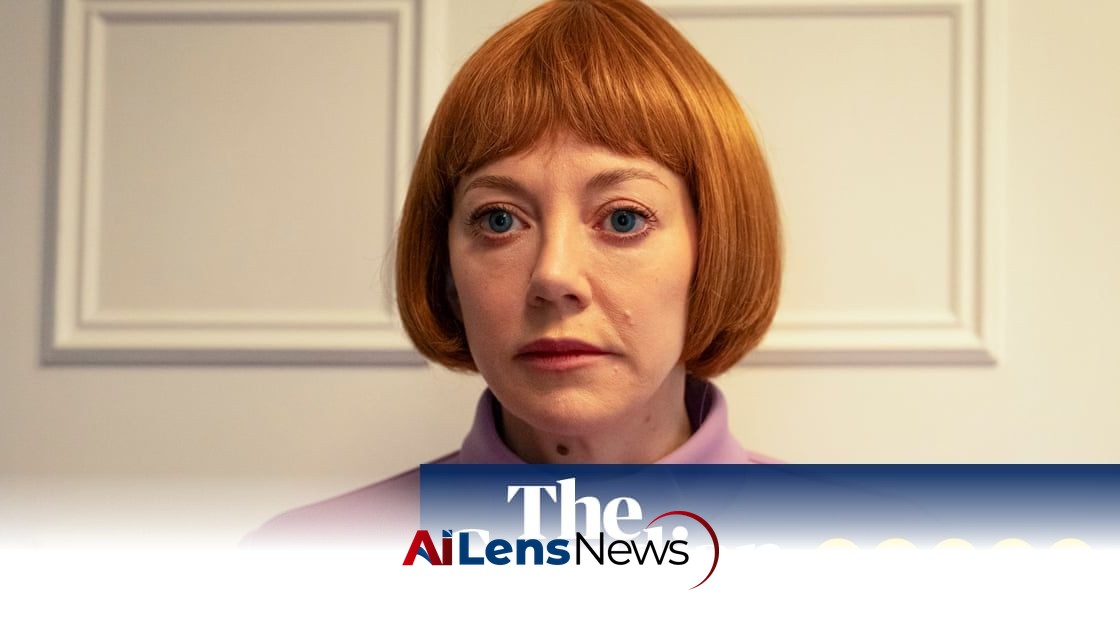
Arriving at a moment when debates around AI and robotics can be fairly binary (humans – good! robots – bad!) this comedy from Aussie comic Kendall and TV mainstay Diane Morgan offers an intriguing perspective. What if robot carers were incompetent and socially inept … but also considerate, compassionate and lovable? It’s not much of a spoiler to say that Sue develops an unlikely bond with Linda (played by Morgan), who reminds her when to take her medication but also devises a programme of social activities for her to stave off isolation and depression. If some of the more techy themes recall Channel 4’s 2010s sci-fi drama Humans – with its ethical quandaries about using machines as carers and sex partners – the more human parts of the series, namely Sue’s grief over the death of her husband David, recall something more like Stefan Golaszewski’s weepy sitcom Mum. Add in a heavy dose of Morganian deadpanning a la Philomena Cunk and Mandy, and the zinger-heavy family drama Johnston mastered in The Royle Family and you’ve got the gist of the thing.
Yet in spite of those familiar parallels, Ann Droid feels wonderfully fresh and funny, set in a world that draws on existing tech tropes while remaining silly and singular. Much of this is down to Morgan, who commits to the bit entirely as Linda, with the perfect level of unblinking stiffness. Credit must also go to her fellow bots – who include Roxy (Nicole Sadie Sawyerr) and Keith (Ed Jones) – and are as unnerving as they are loyal. The contrast between these highly stilted creations and the quirky characters that surround Sue – among them, smug acquaintance Phyllis (Margot Leicester) and salt-of-the-earth bestie Eileen (Kathryn Hunter) – only make the series more surreal. Not that it wasn’t already: Linda is hooked on The Apprentice and the novelty pop song Cotton Eye Joe, and uses her laser-beam eyes to taser the Brazilian jiu-jitsu instructor who slept with Michael’s wife (“I used a low amperage”).
It is also – depending on your mileage for comedies about death and loss – a tearjerker. Johnston is frequently heartbreaking as Sue, struggling to find a new normal without David. At the end of the first episode, Linda does something so touching and means so much to Sue that she can’t help but warm to her. Later in the series, Linda is called on to provide some appropriate words while Sue’s friend Tom (David Hargreaves) scatters his cousin’s ashes. Seeing a robot parse the minutiae of human emotion like this for the first time is poignant. Not that things are sad for long. It’s off to the seaside funfair, where Eileen warns against going on the rollercoaster because of a Swedish woman who was “skewered like a shish kebab” in an accident.
Back in the real world, the elder-care robots are already here, notably in Asia. Countries like Japan and South Korea have been at the forefront of integrating technology into elder care, driven by rapidly aging populations and a shortage of caregivers. These nations have developed robots not just for companionship but also for practical assistance, showcasing a blend of technology and empathy that resonates with the themes explored in Ann Droid. The show cleverly navigates the fine line between humor and the serious implications of relying on technology for care, raising questions about the future of human interaction and the role of machines in our lives.
In Japan, for instance, robots like Paro, a therapeutic baby seal, are used in nursing homes to provide comfort and companionship to elderly patients. These robots have been shown to reduce feelings of loneliness and improve the emotional well-being of residents. Similarly, the robotic pet Aibo has been utilized in various care settings to provide companionship and emotional support. These developments highlight the growing acceptance of robots in caregiving roles, a trend that Ann Droid playfully critiques while also celebrating the potential for positive human-robot relationships.
Furthermore, the implications of introducing robots into elder care extend beyond mere companionship. As the population ages, the demand for caregivers is expected to outpace supply, leading to a potential crisis in elder care. The integration of robots into this space could alleviate some of the pressures on human caregivers, allowing them to focus on more complex emotional and physical care needs. However, this raises ethical questions about the extent to which we should rely on machines to fulfill roles traditionally held by humans. Ann Droid captures this tension humorously, reflecting the anxieties and hopes that accompany advancements in technology.
In addition to the comedic elements, the show also addresses the emotional landscape of aging and loss. Sue's journey through grief is a central theme, and her relationship with Linda evolves in a way that mirrors the complexities of human connections. Linda, despite being a robot, becomes a source of comfort and support for Sue, illustrating how companionship can take many forms. This exploration of grief and healing is particularly resonant in a society where many elderly individuals face isolation and loneliness, a reality that the show approaches with sensitivity and care.
Moreover, the character dynamics within the show reflect broader societal themes. The interactions between Sue, Michael, and other characters highlight the generational divides and the challenges of modern family relationships. Michael’s struggles with adulthood and responsibility serve as a counterpoint to Sue’s journey of self-discovery and resilience. The humor derived from these interactions is not only entertaining but also serves to underscore the complexities of family life in contemporary society.
Ultimately, Ann Droid is a heartwarming exploration of the intersection between technology and humanity. It challenges viewers to consider the implications of our increasingly automated world while also celebrating the enduring power of human connection. The series invites us to reflect on the ways in which we care for one another, whether through the assistance of a robot or the support of family and friends. In a landscape where the lines between human and machine are becoming increasingly blurred, Ann Droid stands out as a thoughtful and humorous commentary on the future of caregiving and the importance of empathy in our lives.
To learn more about the latest developments in TV Shows, stay updated with our exclusive reports and analyses on AiLensNews.

