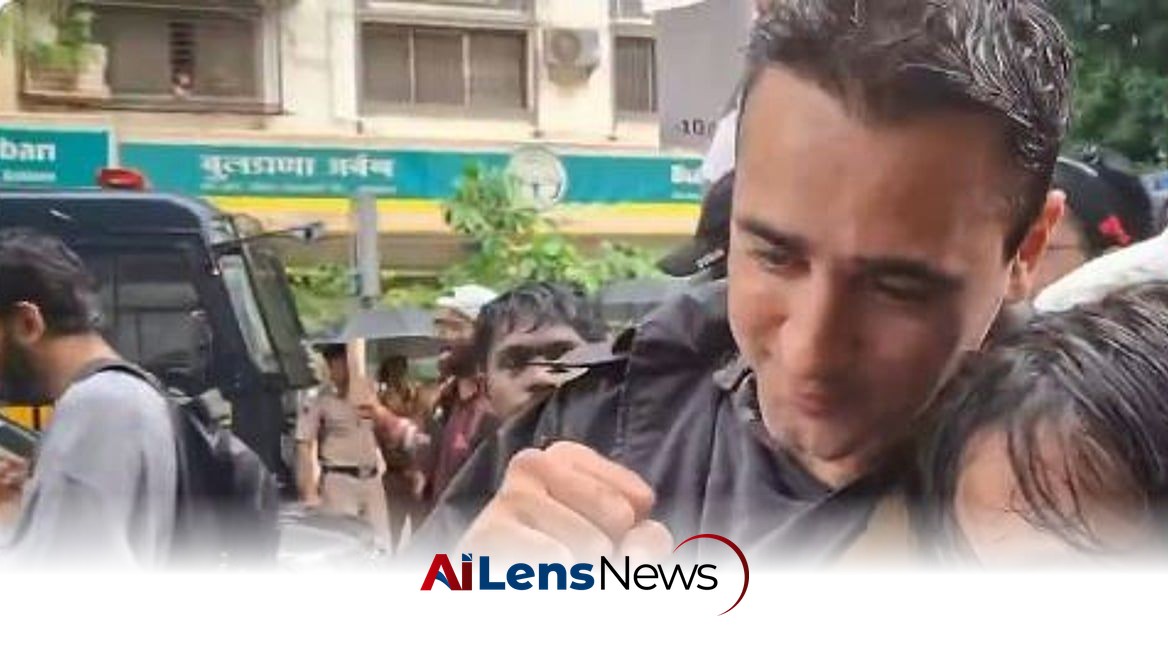


Actor Imran Khan rallies with students in Mumbai, criticizing police actions during protests over alleged NEET-UG exam irregularities.
Abu Dhabi, United Arab Emirates Jul 23, 2026 ALN: Actor Imran Khan has joined the growing wave of celebrity support for students protesting over alleged irregularities in the NEET-UG examination process, appearing alongside demonstrators at a large gathering in Mumbai on Wednesday. This development comes amid rising tensions surrounding the National Eligibility cum Entrance Test for Undergraduates (NEET-UG), a crucial examination for aspiring medical students in India, which has faced scrutiny over its fairness and transparency.
The protest at Shivaji Park in Dadar was held in solidarity with students demonstrating at Jantar Mantar in New Delhi, reflecting a nationwide concern over the integrity of the examination process. The protests were intensified following a police action during Monday’s Chalo Sansad March, where students attempted to march towards the Parliament to voice their grievances. The heavy-handed response from law enforcement, which included the use of tear gas and physical force, has drawn widespread condemnation from various quarters, including students, educators, and now, celebrities.
Videos from the protest have since circulated widely on social media platforms, particularly Instagram, showing Imran Khan walking with students, smiling as supporters recognized him, stopping for selfies, and greeting people along the route. His presence at the protest highlights the significant role that public figures can play in amplifying social issues, particularly those affecting the youth.
Speaking to The IV Pillar News, Imran explained why he had chosen to take part in the protests. "I’m here to show support with all of the students, who work hard and whose hard work was invalidated and discarded. I’m here because this is the fight for the future of our nation. All the students of Mother India are here today, and I’m here to show my support to them.” His statement underscores the emotional and moral dimensions of the protests, emphasizing the perceived betrayal felt by students who have invested significant time and energy into their education.
Imran Khan's appearance came a day after he sharply criticized the police action at the Chalo Sansad March in an Instagram post. He expressed his dismay at witnessing police brutality against students, stating, "Something broke in me today. Watching as police gassed and battered student protestors… how could I make sense of this? These students who worked hard, only to be failed by the system. These people who asked to be heard, only to be met with silence. These citizens who stood up to show what matters to them… beaten down and disowned by the establishment.” This articulation of frustration resonates with many who feel that the current educational and political systems are failing to support the aspirations of young people.
Imran Khan was not the only celebrity to publicly stand with the protesters. Early on Thursday, actress Huma Qureshi and her brother, actor Saqib Saleem, joined students at Jantar Mantar, further amplifying the visibility of the protests. A video shared by vlogger Syed Umair Ali showed the siblings walking alongside protesters, indicating a growing trend of celebrity involvement in social justice movements. This involvement can often bring greater attention to the issues at hand, mobilizing more supporters and drawing in media coverage.
Singer Mika Singh has also spoken out in support of the students, emphasizing the fundamental democratic right to question those in power. He stated, "I have been following the protests for several days and believe every Indian citizen has the democratic right to express their views and question those in authority. People ask questions from us too. The protests had remained peaceful for days, but the recent police action left me shocked as innocent students trying to secure their future were subjected to violence.”
Mika's comments highlight a critical aspect of the protests— the right to dissent and the expectation of a peaceful dialogue between citizens and their government. He added, "I saw young boys and even girls getting hit. I understand the authorities may suspect outsiders among the protesters, but that cannot justify violence against students, especially young women. How can society advocate women’s safety while simultaneously using force against female protesters? This is wrong.”
His remarks bring to light the broader societal issues surrounding gender, safety, and the treatment of protestors, particularly women, in India. The juxtaposition of advocating for women's rights while using force against women in protests raises important questions about the consistency of societal values.
Mika further elaborated, stating, "The validity of the students’ demands can be debated later, but physically dragging and beating women and then smiling is unacceptable. Society reserves such harsh treatment for criminals like rapists and gangsters. So, it’s difficult to understand why students were being handled similarly.” This perspective reflects a growing concern among the public regarding the methods employed by law enforcement during protests, particularly in a democratic society where the right to protest is constitutionally protected.
The demonstrations at Jantar Mantar, led by the Cockroach Janata Party (CJP), have intensified in recent weeks amid educator and environmentalist Sonam Wangchuk’s indefinite hunger strike, which has now entered its 25th day. Wangchuk, a prominent advocate for educational reforms, has become a symbol of the movement, drawing attention to the urgent need for changes in the education system. His hunger strike serves as a stark reminder of the lengths to which individuals will go to advocate for their beliefs and the dire circumstances that have led to such drastic measures.
On Monday, students from across the country gathered in New Delhi and marched towards Parliament as the Monsoon Session began. The Delhi Police stopped the march, leading to clashes and a police response that sparked widespread criticism and debate online. The heavy-handed approach has led to discussions about the balance between maintaining public order and respecting citizens' rights to protest and express dissent.
The protesters are seeking a dialogue with the Central government and have called for several changes, including the resignation of Union Education Minister Dharmendra Pradhan over the alleged NEET-UG paper leak and other alleged irregularities in the examination process. The calls for resignation highlight a growing frustration with accountability in government positions, particularly when the integrity of educational assessments is at stake. The NEET-UG examination, which serves as a gateway for medical education in India, is critical not only for individual students but also for the healthcare system at large.
The implications of these protests extend beyond the immediate concerns of the NEET-UG examination. They reflect a broader discontent with the educational system in India, which many perceive as increasingly competitive and fraught with inequities. The involvement of celebrities like Imran Khan and Mika Singh signals a potential shift in public discourse, where issues of educational integrity and student rights may gain more traction in mainstream conversations. As the protests continue, the outcomes may influence not only the future of the NEET-UG examination but also broader educational policies and the treatment of student voices in the political arena.
To learn more about the latest developments in Events & Award Shows, stay updated with our exclusive reports and analyses on AiLensNews.

