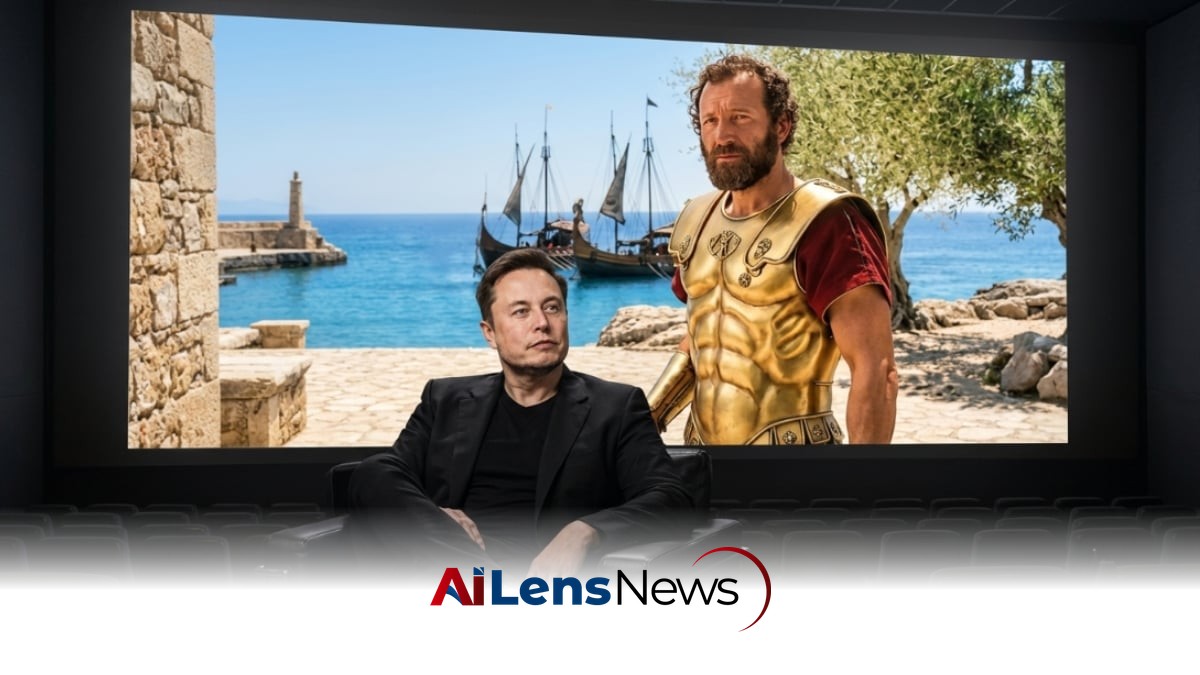


Elon Musk announces that his AI program, Grok Imagine, will produce a full-length film of Homer's The Odyssey by the end of 2026.
Islamabad, Pakistan Jul 23, 2026 ALN: Following the release of The Odyssey, tech billionaire Elon Musk issued a bold statement recently.
The Tesla founder claimed on his social media platform, X, that his artificial intelligence (AI) program, Grok Imagine, will create a “historically accurate” full-length film version of Homer’s epic Greek poem.
The tech tycoon stated that his AI project, The Odyssey, would be complete by the end of 2026. Elon Musk shared his statement alongside a three-minute clip of The Odyssey that an X user had created using AI, writing:
“Before this year ends, Grok Imagine will make a full-length movie of The Odyssey that is historically accurate and true to the art of Homer.”
Dialogue scene from Homer’s Odyssey built on Grok Imagine.
Thread on how this was built below. pic.twitter.com/jk6yDtZJxx— Heavy Pulp (@heavypulp) July 21, 2026
The social media post was prompted by Elon Musk’s criticism of the Christopher Nolan-directed film for casting Lupita Nyong’o as Helen of Troy. He claimed that Chris Nolan cast Lupita simply because “he wants the awards.”
Elon went on to say that the all-white AI cast of the short film he shared on his platform seemed to align more closely with his vision.
The concept of using AI to create films, particularly adaptations of classic literature, is not entirely new but has gained significant traction in recent years. As technology advances, the ability of AI to analyze texts, understand narratives, and generate visual content has opened up new avenues for filmmakers and storytellers. Musk’s initiative to utilize Grok Imagine for The Odyssey underscores a growing trend in the entertainment industry where AI is seen as a tool for both creativity and historical fidelity.
Background on The Odyssey
The Odyssey, composed by the ancient Greek poet Homer, is one of the foundational works of Western literature. It recounts the adventures of Odysseus as he attempts to return home after the Trojan War. The poem explores themes of heroism, loyalty, and the struggle against fate, and has been interpreted and adapted in numerous ways throughout history. Its enduring popularity has led to countless retellings in various forms, including literature, theater, and film.
Given the complexity and depth of the original text, creating a “historically accurate” film presents a significant challenge. Traditional adaptations often take creative liberties, altering characters, plot points, and settings to fit modern sensibilities or artistic interpretations. Musk's assertion that Grok Imagine will produce a version true to Homer’s intent raises questions about what constitutes historical accuracy in storytelling and how AI can interpret and represent ancient narratives.
Implications of AI in Film Production
The use of AI in film production has implications that extend beyond the realm of storytelling. For instance, the ability to generate characters, dialogue, and settings through AI could democratize the filmmaking process, allowing independent creators to produce high-quality content without the need for extensive resources. However, this raises concerns about originality, the potential for AI-generated content to replace human creativity, and the ethical considerations surrounding content ownership.
Moreover, Musk’s comments regarding the casting choices in Nolan’s film highlight ongoing debates about representation in Hollywood. The casting of actors in roles that may not align with their historical or cultural backgrounds has been a contentious issue, with advocates calling for more authentic representations. Musk’s preference for an all-white cast in his AI-generated version of The Odyssey may provoke discussions about the ethics of casting and the responsibilities of filmmakers in portraying diverse narratives.
Technological Developments in AI
Grok Imagine, Musk's AI program, is part of a broader movement towards integrating AI into creative industries. Recent advancements in machine learning and natural language processing have enabled AI systems to analyze vast amounts of data, including scripts, performances, and historical texts. This capability allows AI to generate content that is informed by a wide range of sources, potentially leading to innovative storytelling approaches.
However, the reliance on AI also raises questions about the role of human oversight in the creative process. As AI becomes more capable of generating content, the challenge will be to ensure that human values, ethics, and artistic sensibilities are preserved. Musk's project may serve as a case study in the balance between technological innovation and the preservation of human creativity.
Future of AI in Storytelling
As Musk’s Grok Imagine project progresses towards its 2026 completion date, the film industry will be watching closely. The success or failure of this endeavor could shape the future of AI in storytelling and influence how classic texts are adapted. If Grok Imagine is able to produce a film that resonates with audiences while remaining true to the source material, it may pave the way for more AI-driven adaptations of literary classics.
Conversely, if the project falls short of expectations, it could reinforce skepticism about the capabilities of AI in creative fields. The outcome of Musk’s ambitious project may also impact public perception of AI, particularly regarding its role in the arts and entertainment sectors.
In conclusion, Elon Musk's announcement regarding Grok Imagine and its planned adaptation of The Odyssey represents a significant moment at the intersection of technology and storytelling. As the project unfolds, it will undoubtedly spark conversations about historical accuracy, representation, and the evolving role of AI in shaping narratives. The implications of this venture extend beyond the realm of film, potentially influencing broader discussions about the future of creativity in an increasingly digital world.
As the film industry grapples with the integration of AI, it is crucial to consider the ethical dimensions of such technologies. The potential for AI to alter the landscape of storytelling is immense, but it comes with responsibilities that filmmakers, technologists, and audiences must navigate together. The balance between innovation and tradition will be a defining factor in how stories are told in the future, and Musk’s Grok Imagine project may serve as a pivotal point in this ongoing evolution.
To learn more about the latest developments in Film & TV Production, stay updated with our exclusive reports and analyses on AiLensNews.

