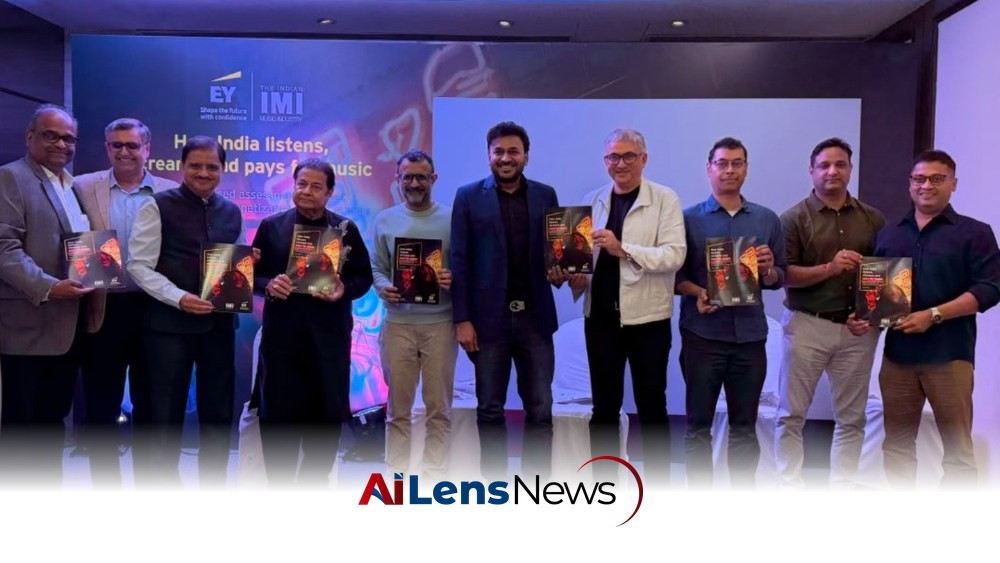


A recent EY-IMI report forecasts India's paid music streaming subscribers could grow to 30 million by 2028, highlighting a significant market potential.
New Delhi, India Jul 24, 2026 ALN: India's paid music streaming r base is projected to grow significantly, reaching between 28 million and 30 million by 2028, according to the latest report by EY and the Indian Music Industry (IMI), titled "How India Listens, Streams and Pays for Music." The report was released on July 24, 2026, in Mumbai, and provides a detailed analysis of the current state of music consumption and the potential for growth in the Indian music streaming market.
The report draws on a comprehensive survey of over 15,000 smartphone owners conducted in March and April 2026, alongside psychometric research involving more than 2,200 consumers and discussions with industry executives. This extensive data collection aims to provide a holistic view of music consumption patterns, preferences, and the underlying factors that influence consumer behavior in India.
The findings highlight a paradox in the Indian music industry: while 96% of smartphone owners consume music and 80% listen for more than an hour daily, only 38% have ever paid for music streaming services. This contrasts sharply with the 86% who have paid for video streaming services at some point. This discrepancy raises questions about the value perception of music versus video content among Indian consumers.
Dedicated digital service providers (DSPs) are the preferred choice for structured listening, utilized by 60% of respondents, while 32% listen to music on YouTube. Despite YouTube being the largest platform for music discovery, it is primarily driven by short-form video content. This suggests that while consumers engage with music, they may not view it as a standalone product worthy of payment, instead opting for platforms that offer free access, albeit with ads.
The report attributes the slow growth in paid subscriptions to a legacy of India's transition from physical formats directly to free, ad-supported streaming. Blaise Fernandes, CEO of IMI, emphasized that a non-paid music ecosystem adversely affects creators and owners, advocating for a collaborative effort among record labels, DSPs, and creators to establish a tiered paid model. This model could potentially offer different levels of access and benefits, catering to various consumer segments.
Currently, India's 14 million paid rs lag behind Brazil's 30 million and the United States' 106 million. In contrast, China's music industry, which ranked behind India as recently as 2015, has surged to over 171 million paid rs, positioning it as the second-largest globally in streaming revenue. This comparison highlights the potential for growth in India's music streaming market and the need for strategic initiatives to boost subscription numbers.
Fernandes remarked, "Art requires more than just inspiration; it requires economic oxygen. To elevate Indian music on the global stage and nurture the next generation of talent, we must shift from being passive consumers to active patrons. Paying for a digital audio subscription is a direct investment in supporting our favorite artists and preserving our rich cultural heritage." This statement underscores the cultural significance of music in India and the importance of fostering a sustainable ecosystem for artists and creators.
Vikram Mehra, chair of IMI, noted that the survey validates a shift among consumers towards a willingness to pay for quality music. He expressed optimism about expanding the audio paid services ecosystem in India, aiming to position the country among the top five music markets globally. This ambition reflects a growing recognition of the value of music and the potential economic impact of a thriving music industry.
Ashish Pherwani, partner and leader of the media & entertainment sector at EY India, described the findings as an opportunity rather than a setback. He stated, "Music remains one of India’s most consumed forms of digital entertainment. The report highlights the potential for the industry to enhance subscription adoption through better consumer awareness and innovative offerings that align with evolving listener preferences." This suggests that there is a significant opportunity for DSPs to tailor their offerings to meet the needs of Indian consumers.
Composer and performer Badshah, who contributed a foreword to the report, emphasized the cultural significance of valuing music, stating, "The future of music will be shaped not just by how widely it is heard, but by how deeply it is valued." This perspective aligns with the broader goal of promoting a culture of appreciation for music and supporting the artists who create it.
The report's psychometric research categorizes smartphone owners into three groups: Payers, who hold active subscriptions; Fence-sitters, who use free versions but would pay if necessary; and Never-payers, who rely on YouTube and do not use paid music apps. Among Never-payers, 49% believe music streaming isn't worth paying for, while 36% feel it is unjust to pay for digital products when free options are available. This segmentation provides valuable insights into consumer attitudes and preferences, which can inform marketing strategies for DSPs.
Fence-sitters appear to be the most promising conversion target, with 27% indicating that they would consider paying once they use a service regularly, and 34% citing reliability as a reason to pay. However, only 7% across all groups believe that bundling alone would be sufficient to encourage them to adopt a new paid product. This indicates that while bundling may attract some consumers, additional incentives or enhancements may be necessary to drive subscription growth.
Several structural factors contribute to the industry's optimism for future growth. India's smartphone base, currently at 584 million, is projected to reach 735 million by 2030. This growth in smartphone penetration is expected to facilitate greater access to music streaming services, particularly among younger demographics who are more likely to engage with digital content.
Additionally, the country's real GDP growth of 6.5% in 2025 is expected to position India as the world's third-largest economy by 2030. This economic growth could lead to increased disposable income and consumer spending on entertainment, including music subscriptions. The expanding vehicle base and a youthful population, with 65% of Indians under 35, are also anticipated to drive music consumption, as younger consumers are often more inclined to adopt new technologies and services.
Paid subscriptions grew by 37% in 2025, with revenues projected to rise from approximately INR 10 billion (about $111 million) in 2025 to INR 22 billion (about $244 million) by 2028. Industry executives estimate the long-term ceiling for paid subscriptions could reach between 50 million to 75 million. This projection reflects a growing recognition of the value of music and the potential for a robust subscription market in India.
Among those who do pay for music, the most common reasons include avoiding ads (44%), the ability to play songs in any order (38%), and higher audio quality (36%). Conversely, 42% of non-payers cite YouTube as sufficient for their music needs, while 33% mention price as a barrier, and 30% feel they do not require premium features. Understanding these motivations and barriers is crucial for DSPs aiming to convert non-payers into rs.
The report recommends strategies to bridge the gap, including developing context-aware listening features, enhancing bundling with telecom and banking services, and creating multi-purpose apps that integrate music with live events and creator content, all while continuing to combat piracy. By adopting these strategies, the Indian music industry can work towards creating a sustainable ecosystem that benefits both consumers and creators alike, ultimately fostering a vibrant music culture in the country.
To learn more about the latest developments in Music & Concerts, stay updated with our exclusive reports and analyses on AiLensNews.

