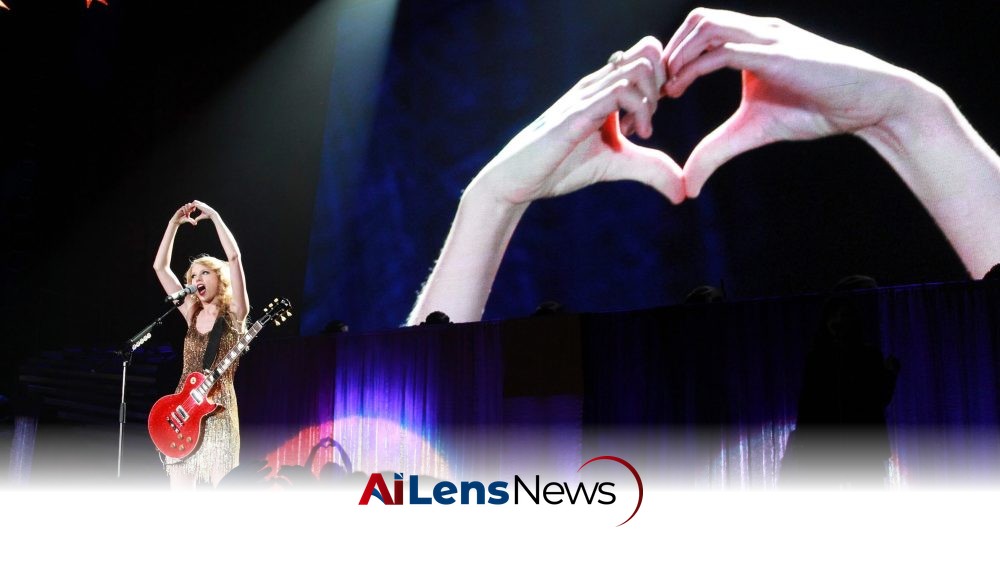


Taylor Swift's wedding to Travis Kelce marks a significant moment in her two-decade exploration of marriage in her songs, from hopeful beginnings to bittersweet endings.
New Delhi, India Jul 4, 2026 ALN: How Taylor Swift’s Wedding Caps 20 Years of Marriage Themes in Her Music
“I wouldn’t marry me, either,” Taylor Swift sang — bitterly, it’s fair to say — just a few years ago. Remember when the world’s biggest pop superstar was writing about how she had been deemed Not Marriage Material? You don’t? Most people probably wouldn’t. That particular line came in a heartbreaking but little-heard digital bonus track called “You’re Losing Me,” written in 2021 and released in 2023, that chronicled the desultory end of a long-time relationship… one that might have lasted, say, six years. She followed the lyric about marriage by referring to herself as “a pathological people pleaser” (sarcastically) “who only wanted you to see her.”
The weekend of Swift’s wedding to Travis Kelce may not seem to everyone like the most appropriate occasion to dredge up the singer’s deep tracks, especially the most depressing ones. But recalling songs like these actually goes some way toward explaining why Swift fans are so jubilant over the nuptials. While broadcast media are busy snipping bits of “Love Story” and “Paper Rings” to use as cheerful bumper music for their wedding updates, Swifties come into this honeymoon period remembering all the times over the last 20 years when she referenced not tying a knot. In some songs, she even seemed resigned to life having taken her in the opposite direction of a “marry me, Juliet” ending.
For anyone who has followed Swift’s shifting attitudes toward matrimony as closely as they would a BFF’s — or their own — this isn’t some royal wedding, with all the corniness that entails, so much as a reaffirmation that personal dreams count as much as professional ones. Even if those dreams might be more challenging to achieve than a streak of 15 No. 1s. They’re not just celebrating for her; they’re whooping it up for themselves, or their pals, or anyone in their life who’s had to grapple with the impossibility of work/life balance or just felt seriously let down by love.
Her earliest references to matrimony in song were on the winsomely juvenile side, as you’d expect from country-pop’s own child bride. “Love Story” rewrote Shakespeare into a fairy tale because, at 17, why the hell not? The title track of “Speak Now” imagined a “Graduate”-style interruption of vows, where a dumb wedding could be thwarted in time to take an unworthy bride’s spot and, who knows, maybe even elope. The idea of getting passed over started looming like a cloud even in some of these early compositions, though, like “Foolish One,” where she wrote, “I’ll get your longing glances but she’ll get your ring.”
Things got lighter, in that regard, before they got much, much darker, as at least some of her songs came to reflect long, mature, adult relationships. There was the “Lover” album — the period us gossips and snoops can cavalierly refer to as Early Joe — when an optimism about affairs of the heart crept into her music. In the title track, she actually wrote freaking vows… legally and spiritually nonbinding ones, but still! “I take this magnetic force of a man to be my lover / My heart’s been borrowed and yours has been blue… / Swear to be overdramatic and true.”
Her attitudes about these things became harder to track during the pandemic albums, as she turned in “Folklore” and “Evermore” to either writing thinly disguised broadsides against her business antagonists or making up stories about intriguing characters. “The wedding was charming, if a little gauche,” she sang, not imagining her own, but describing the ceremony of the woman who long ago lived in her Rhode Island mansion, Rebekkah Harkness. A creeping sense of dread about marriage emerged out of the character studies, like “Illicit Affairs,” the aborted-engagement story “Champagne Problems,” and the laceratingly sad “Tolerate It.” Suddenly, in these fictional pieces, if not in anything obviously autobiographical, Marriageland sounded like the unhappiest place on earth.
And then came the album that to me is still somewhat underrated, one of her best and certainly most intriguing-to-unpack collections of work to date: “Midnights.” Here, she asserted herself again as someone still in love, but also in long-term lust, who held the cards (or at least had designed the deck, in “Mastermind”), and who proudly held herself as an independent woman who didn’t need to be married to happily carry on. This isn’t reading something into the music; she, like, says this repeatedly. “He wanted a bride, I was making my own name, chasing that fame,” she sings in “Midnight Rain,” and although it wasn’t clear who she was referring to in that number, the message was clear — she was happy to be in a state of independence.
But did the woman protest too much? Swift was presenting herself by now as living out a post-feminist ideal, carving out a long-term relationship on her own terms. But perhaps this was a self-pep talk, one that masked a darker reality, that the relationship was on life support. Only later would she have the nerve to release “You’re Losing Me,” a song describing that same relationship as a terminal case, complete with the “I wouldn’t marry me either” lyric, and let the world know through clues in her social media that it was written in 2021, when she was dismissing the idea of being a wife as “1950s shit.”
The clues in her lyrics suggest she put an end to what had become more of a situationship than a romance. At some point, when someone doesn’t want to be seen with you in public, maybe you stop convincing yourself that’s what you want, too, and you put the brakes on hiding away at “The Lakes” as your ideal of how to be and stay in love. By the time of “The Tortured Poets Department,” perhaps the most revealing album she ever wrote, she had already moved so far beyond the embers of the dead companionship relationship with the passive actor that most of this new record seemed to be about the quick rise and fall of a renewed infatuation with a bad boy. Taming the brat, while rubbing the nose of polite society in taking up with someone they disapproved of, was the theme of songs like “But Daddy, I Love Him,” which openly reveled in the idea of exchanging vows with a rebel.
There would be no wedding; other songs on “The Tortured Poets Department” speak to being ghosted. It was to Swift’s credit that she kept a hopeful song about that relationship like “But Daddy, I Love Him” on the album, snuggled in amid all the breakup songs, as a reminder of the infatuation’s happier days. The idea of matrimony and happily-ever-after recurs in “TTPD,” but mostly recounted in anger and a sense of lyrical recrimination. “You and I go from one kiss to gettin’ married,” she sings in “loml” (short for “love of my life”), seeming to recall how fast a romance went to flirtation to wedding talk amid the “rekindled flames” of a love that’d simmered on a back burner for years.
In conclusion, Taylor Swift’s wedding to Travis Kelce is not just a personal milestone; it’s a culmination of two decades of her artistic exploration of love, commitment, and the complexities of relationships. As fans celebrate this joyous occasion, they also reflect on the poignant journey she has shared through her music, making her wedding a moment of collective joy for many.
To learn more about the latest developments in Celebrities & Influencers, stay updated with our exclusive reports and analyses on AiLensNews.

