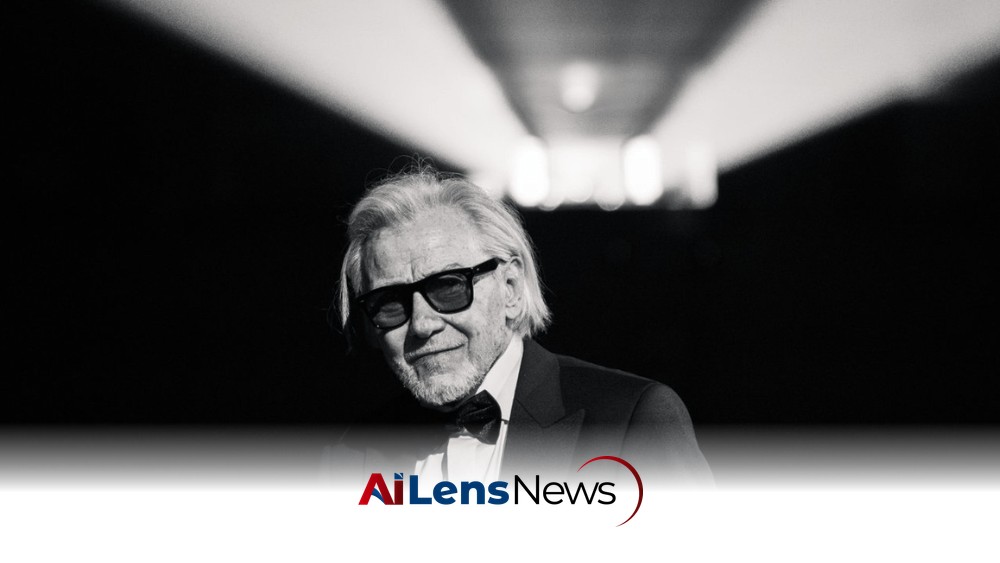


At the Karlovy Vary Film Festival, Harvey Keitel discusses his new film written by his wife and expresses concerns about AI's impact on art, referencing Michael Caine's AI-narrated audiobook.
New Delhi, India Jul 5, 2026 ALN: Harvey Keitel, a revered figure in the film industry, is currently attending the Karlovy Vary Film Festival, where he is presenting a screening of Martin Scorsese’s iconic film “Mean Streets.” This marks Keitel’s third appearance at the festival, an event that celebrates cinema and provides a platform for filmmakers and actors to showcase their work. During his time at the festival, Keitel shared exciting news about a new project he is working on, which is penned by his wife, Daphna Kastner, who is herself an accomplished actor, writer, and director.
In his remarks, Keitel expressed a palpable enthusiasm for the project, describing it as something that “really excites me.” He elaborated on the nature of the film, indicating that it will not conform to traditional Hollywood standards. “It’s sort of guerrilla warfare,” he said, highlighting the independent spirit of the production. This approach is increasingly common in the film industry, where many creators are opting to work outside the constraints of major studios to tell their stories authentically. Keitel noted that the film is being produced in Hollywood, where he and Kastner reside, and that they are utilizing a crew composed largely of college students. This choice not only supports emerging talent but also reflects a broader trend in the industry towards fostering new voices and perspectives.
As Keitel delves into this new project, he also took the opportunity to voice his concerns regarding the growing influence of artificial intelligence (AI) in the creative fields. He stated, “Danger is in front of us,” highlighting the potential risks associated with the rise of AI technologies in the arts. This sentiment is echoed by many in the creative community who are wary of how AI could impact the authenticity and emotional depth of artistic expression.
One specific example that Keitel mentioned was an audiobook adaptation of Homer’s “The Odyssey,” which features an AI-generated narration using a digital replica of the voice of renowned actor Michael Caine. Caine, who has a storied career in film and is widely regarded as one of the greatest actors of his generation, recently licensed his voice to the AI audio technology company ElevenLabs. This partnership has allowed for the creation of a digital clone of Caine’s voice, which can be used for various projects, including the aforementioned audiobook.
Despite the innovative nature of this technology, Keitel expressed skepticism about its ability to capture the essence of a performer’s artistry. He pointed out a significant flaw in the AI-generated narration, stating that while the technology could replicate Caine’s voice, it failed to convey the emotional depth and beauty that characterizes his performances. “They used his voice, but there was no emotion in it. They couldn’t reproduce Michael Caine’s beauty,” Keitel remarked. This observation raises important questions about the limitations of AI in replicating the nuances of human expression, particularly in a medium as emotionally charged as storytelling.
Keitel’s comments reflect a broader discourse within the entertainment industry regarding the ethical implications of using AI to recreate human voices and images. As actors and artists begin to navigate this new landscape, many are grappling with the question of how to protect their intellectual property and artistic integrity in an age where technology can so easily replicate their likenesses. Keitel himself acknowledged that while AI could potentially be harnessed for positive purposes, it is crucial to approach this technology with caution and to ensure that it does not undermine the emotional and artistic qualities that define great performances.
Throughout his career, Keitel has been a staunch advocate for the art of acting, having served as co-president of the Actors Studio from 1995 to 2017. His dedication to the craft is evident in his extensive filmography, which includes collaborations with celebrated directors such as Martin Scorsese, Wes Anderson, and Quentin Tarantino. Keitel has played pivotal roles in landmark films, including “Taxi Driver,” “Pulp Fiction,” and “The Piano,” showcasing his versatility and depth as an actor.
Despite his impressive achievements, Keitel remains grounded and reflective about his career. When asked about what he still hopes to explore in his artistic journey, he took a moment to ponder the complexities of the human experience. “There are so many things to deal with as a human being,” he stated, emphasizing the importance of addressing personal fears, loves, desires, and the inevitability of death through the arts. This perspective underscores the notion that storytelling, whether through film, theater, or literature, serves as a vital means of grappling with the fundamental questions of existence.
Keitel’s passion for cinema extends beyond his own projects; he also values the role of film festivals in fostering community and dialogue within the industry. He expressed a particular fondness for the Karlovy Vary Film Festival, where he was previously honored with a Crystal Globe for Outstanding Artistic Contribution to World Cinema in 2004. His return to the festival in 2015 to introduce Paolo Sorrentino’s “Youth,” which won the Právo Audience Award, further illustrates his commitment to supporting fellow filmmakers and engaging with audiences.
In his reflections on the current state of the world, Keitel voiced concerns about the socio-political climate, noting that film festivals are more important now than ever. “Politics is a disaster. Religions are in conflict with each other,” he lamented, highlighting the ongoing struggles that many communities face globally. He criticized the tendency to judge individuals based on religion or race, calling such discrimination “ridiculous” and urging for greater empathy and understanding among people.
Keitel’s insights resonate with many who believe that the arts have the power to transcend divisions and foster connection. He poignantly quoted the Greek philosopher Aristotle, stating, “It takes more than words to change a culture. To change a person, it takes aesthetic force. The force of the arts.” This assertion reflects a deep belief in the transformative potential of storytelling and the arts to inspire change and provoke thought in a world often marked by division and conflict.
As Keitel continues to navigate his career and engage with contemporary issues, his commitment to the craft of acting and the power of storytelling remains unwavering. His upcoming project with Daphna Kastner promises to be a reflection of his artistic vision, and his ongoing dialogue about the implications of AI in the arts serves as a crucial reminder of the importance of preserving the emotional core of human expression in an ever-evolving technological landscape.
To learn more about the latest developments in Movies, stay updated with our exclusive reports and analyses on AiLensNews.

