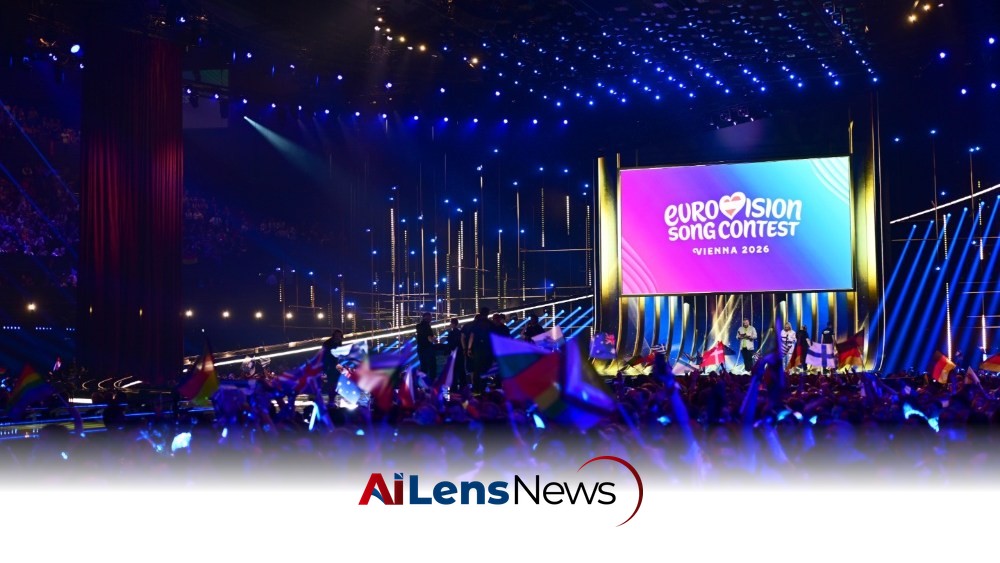


Canada has officially joined the Eurovision Song Contest as a full member of the EBU, making it eligible to participate in the annual competition.
New Delhi, India Jul 1, 2026 ALN: C’est officiel: Canada is joining the Eurovision Song Contest. This significant announcement marks a new chapter for the renowned international music competition, which has captivated audiences for decades with its eclectic mix of performances, cultural exchanges, and national pride. Canada's official membership in the European Broadcasting Union (EBU), the organization that oversees Eurovision, was confirmed after a vote during the EBU’s general assembly held in Prague. This decision not only allows Canada to participate in the contest but also reflects the growing global interest in Eurovision beyond its traditional European borders.
The Eurovision Song Contest, which has been a staple of European culture since its inception in 1956, has seen substantial changes and adaptations over the years. Initially designed to foster unity and cooperation among European nations post-World War II, it has evolved into a vibrant celebration of music, diversity, and artistic expression. With Canada’s inclusion, the contest is set to embrace an even broader audience and cultural representation.
Canadian Prime Minister Mark Carney reportedly raised the idea of joining Eurovision in his 2025 budget proposal, indicating a strategic move to enhance Canada's cultural and diplomatic ties with Europe. Carney, who has a notable background in international finance and governance, having served as the governor of the Bank of England, may be leveraging his experiences and connections to foster closer economic and political relations with European nations. While it remains unclear if Carney is a personal fan of the contest, his initiative underscores a recognition of the significance of cultural diplomacy in today’s interconnected world.
Public enthusiasm for Eurovision in Canada has been palpable, even prior to the official announcement of membership. In the recent contest held in Vienna, Canadians displayed a remarkable level of engagement, ranking among the top three countries in the “rest of the world” voting segment. This enthusiasm was further reflected in ticket sales, as Canadians constituted one of the largest groups of international attendees for both the semi-final and grand final events. Such interest suggests a strong cultural affinity for the contest, which may translate into robust support for Canada’s future entries.
Although Canada has not been eligible to participate in Eurovision until now, the country has a rich history of involvement with the contest. Over its seven-decade history, several Canadian artists have made their mark on the competition. Notably, Céline Dion achieved fame after winning the contest in 1988 while representing Switzerland, narrowly beating the United Kingdom by a single point. This victory not only launched Dion’s illustrious career but also showcased the potential for Canadian talent on an international stage.
The first Canadian to grace the Eurovision stage was Sherisse Laurence, who represented Luxembourg in 1986, finishing in third place. Her participation highlighted the long-standing connection between Canadian artists and the contest, setting a precedent for future involvement. As Canada prepares to enter the competition officially, it will be interesting to see how the country’s diverse musical landscape influences its entries and performances in the years to come.
As Canada gears up for its inaugural participation in the Eurovision Song Contest, plans are underway to determine the selection process for its first official contestant. The Canadian Broadcasting Corporation (CBC), which is expected to play a pivotal role in the selection and representation of the country, has not yet disclosed details on how it will choose its representative. This decision will likely be closely watched by fans and industry insiders alike, as it will set the tone for Canada’s identity within the contest.
Canada is not the first non-European country to join Eurovision; it follows in the footsteps of Australia and Israel, both of which have established themselves as regular participants. Australia made its debut in 2015, while Israel has been part of the contest since 1973. Both countries have performed admirably in recent contests, with Israel’s Noam Bettan finishing in second place and Australia’s Delta Goodrem securing fourth place in the latest edition. However, the contest is not without its controversies; last year, five countries—Spain, Netherlands, Ireland, Iceland, and Slovenia—withdrew in protest of Israel’s participation, highlighting the political sensitivities that can arise within the framework of the competition.
Eurovision celebrated its 70th anniversary last year, a milestone that reflects its enduring popularity and cultural significance. The contest has reached an impressive audience of 131 million viewers across 35 TV markets, demonstrating its global appeal. In recent years, Eurovision has embarked on a period of expansion, exploring new formats and geographic boundaries. While an American version of the contest, launched by NBC, failed to gain traction in 2022, an Asian adaptation is set to take place in Thailand later this year, indicating a broader interest in the contest's unique format.
In addition to these developments, a Broadway show inspired by Will Ferrell’s 2020 film “Eurovision Song Contest: The Story of Fire Saga” is also in the works, further solidifying the contest's influence on popular culture. This varied interest in Eurovision—from its musical performances to its potential for theatrical adaptations—demonstrates the multifaceted nature of the contest and its ability to resonate across different mediums and audiences.
As Canada prepares to make its debut in the Eurovision Song Contest, the implications of its participation extend beyond mere entertainment. It represents an opportunity for cultural exchange, international collaboration, and the celebration of diversity through music. The inclusion of Canada in this storied competition may pave the way for other countries to explore similar avenues of engagement, ultimately enriching the global tapestry of the Eurovision experience.
To learn more about the latest developments in Music & Concerts, stay updated with our exclusive reports and analyses on AiLensNews.

