

Recent data reveals significant improvements in high school graduation rates among Native American students at federally funded schools, driven by innovative educational strategies.
Washington DC, United States Jul 13, 2026 ALN: The U.S. agency overseeing numerous schools serving Native American students has reported unprecedented gains in on-time high school graduation rates. This surge is attributed to innovative strategies and data-driven approaches implemented across these federally funded institutions. The increased graduation rates are a significant development in the ongoing efforts to improve educational outcomes for Native American students, a demographic that has historically faced numerous challenges within the American education system.
For decades, Native American students have encountered systemic barriers that have hindered their academic success. These barriers include high dropout rates, limited access to quality educational resources, and curricula that often do not reflect their cultural backgrounds. According to various studies, Native American students have historically graduated at lower rates compared to their peers from other ethnic backgrounds. The federal government, along with tribal nations, has recognized the need for targeted interventions to address these disparities.
In response to these challenges, the U.S. Department of Education and various tribal leaders have called for a re-evaluation of educational strategies. The goal has been to create an environment that not only promotes academic excellence but also honors and incorporates Native American culture and traditions into the learning process. This shift in focus is reflected in the recent gains reported by schools serving Native American students.
In recent years, schools like Chief Leschi Schools in Puyallup, Washington, have adopted new methodologies to enhance student engagement and educational outcomes. The integration of career and technical education programs has played a crucial role in this transformation, providing students with practical skills and real-world experience. These programs are designed to prepare students for both college and careers, thus equipping them with the tools necessary for success in a rapidly changing job market.
Data-driven approaches have also allowed educators to identify specific areas where students may be struggling. By analyzing performance metrics and attendance records, schools can implement targeted interventions that address the unique needs of their student populations. This proactive approach has been instrumental in identifying at-risk students early on, allowing for timely support and resources.
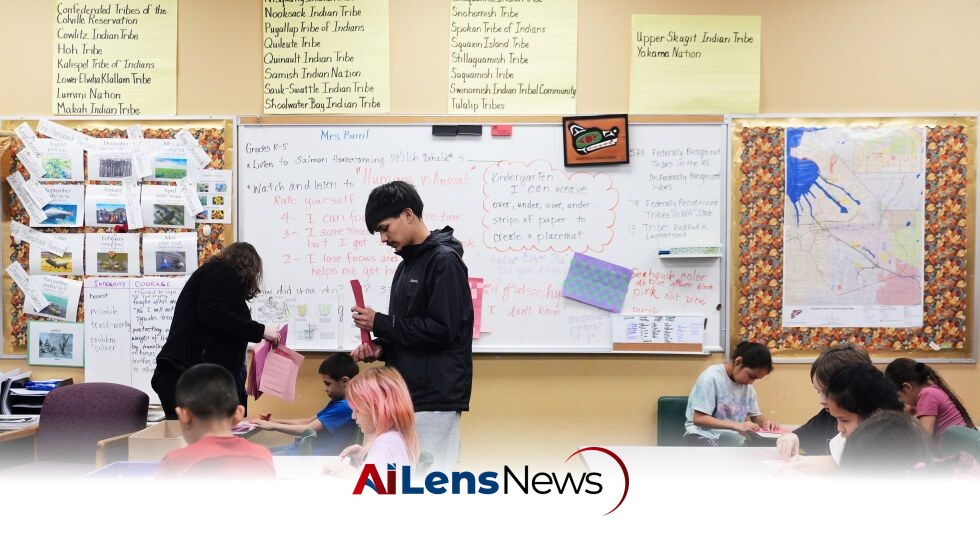
One notable initiative involves students taking on teaching assistant roles, as seen with Gerald Dillon, an 18-year-old senior at Chief Leschi Schools. Dillon assists second graders in a culture class, helping them with hands-on activities like weaving. This peer-to-peer interaction not only fosters a sense of responsibility but also strengthens community ties among students. Such initiatives empower older students to take leadership roles within their schools, creating a supportive environment where younger students can thrive.
Furthermore, these engagement initiatives often extend beyond the classroom. Schools are increasingly organizing community events, workshops, and cultural celebrations that involve families and local tribal members. These events serve to reinforce the importance of education within the community and promote a collective commitment to student success. By actively involving families, schools can create a support network that encourages students to stay focused on their educational goals.
Schools have also focused on incorporating cultural elements into their curriculum. For instance, classrooms display the names of various tribes, reinforcing students' identities and heritage. Such culturally relevant education has been shown to increase student motivation and connection to their studies. By integrating traditional knowledge and cultural practices into lessons, educators help students see the value of their heritage while also promoting academic achievement.
The curriculum is often designed to reflect the local culture and history, allowing students to engage with content that resonates with their experiences. This approach not only enhances learning but also fosters pride in their identity as Native Americans. Educators are increasingly recognizing that when students see themselves represented in their education, they are more likely to engage actively and perform better academically.
The results of these initiatives are promising. Chief Leschi Schools has reported a marked increase in graduation rates, reflecting the effectiveness of these innovative strategies. This success is not an isolated incident; other schools serving Native American students are also beginning to see similar improvements. As schools continue to refine their approaches, the goal remains to sustain and further enhance these positive trends.
Looking ahead, there is a collective hope among educators, parents, and community leaders that these gains will lead to long-term improvements in educational outcomes for Native American students. The emphasis on culturally relevant education, community involvement, and data-driven strategies provides a framework that other schools can emulate. By sharing best practices and collaborating across institutions, there is potential for widespread change that can uplift Native American students across the nation.
The recent gains in graduation rates among Native American students highlight the potential of innovative educational strategies. By focusing on community engagement, cultural relevance, and data-driven improvements, schools can create an environment where students thrive and succeed. These efforts not only contribute to higher graduation rates but also foster a sense of pride and identity among students, ensuring they are well-prepared for the challenges of the future.
As these positive trends continue, it is essential for policymakers and educational leaders to remain committed to supporting initiatives that empower Native American students. The journey toward equity in education is ongoing, and the lessons learned from these successful programs can guide future efforts to create inclusive and effective educational environments for all students.
To learn more about the latest developments in Education News, stay updated with our exclusive reports and analyses on AiLensNews.

