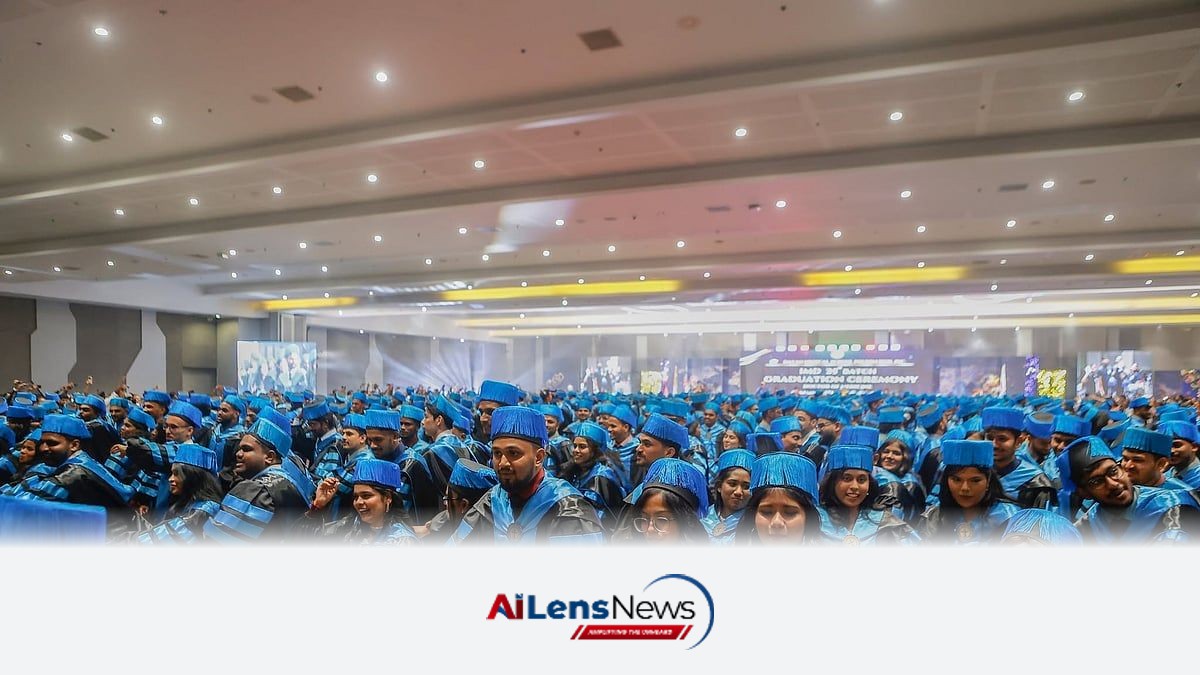



Thousands of Indian students are choosing the Philippines for medical education, with Davao emerging as a prominent destination due to its American-influenced curriculum and supportive community.
Abu Dhabi, United Arab Emirates Aug 26, 2026 ALN: Manila: For Indian families, sending a child abroad to study medicine is a major decision. Yet thousands have made the Philippines their destination, drawn by a combination of language instruction, an American-influenced medical curriculum, clinical training, comparatively accessible costs, and a growing Indian student community.
One of the Philippines' most striking success stories is Nirav Prajapati, an Indian graduate of the University of Northern Philippines (UNP) College of Medicine.
Dr. Prajapati topped India's June 2017 Medical Council of India screening examination, scoring 239 out of 300 and finishing ahead of more than 4,000 candidates.
Even more notable, he was the second UNP graduate to rank first in India's medical screening examination; another UNP graduate had topped the examination in 2013.
That kind of result gave Indian students and parents an important signal: studying medicine in the Philippines did not necessarily mean sacrificing competitiveness in India's licensing system.
In 2017, UNP already had more than 400 Indian students enrolled in its College of Medicine and more than 300 taking pre-medicine courses, according to ABS-CBN.
Easier visa process south: In June, Philippine First Lady Liza Araneta-Marcos met with government agencies to address concerns raised by Indian medical students studying in the Philippines. Discussions focused on improving visa processing and reducing burdens on foreign students and professionals. The First Lady said reforms are necessary if the Philippines wants to become an educational hub.
Today, the Philippines' appeal has since expanded well beyond northern Luzon.
Davao, in particular, has become a major centre.
The scale of that migration was on display in Davao City in March 2026, when 1,015 Indian-origin students received Doctor of Medicine degrees from the Davao Medical School Foundation (DMSF) at its 25th International Medical Doctors Graduation Ceremony. Indian media described it as one of the largest cohorts of Indian medical graduates from a single overseas institution in recent years.
DMSF itself says its March 2026 graduating class exceeded 1,050 students, making it the largest graduating batch in the school's history.
The numbers illustrate something bigger: the Philippines has developed into an established overseas medical-education destination for Indian students, rather than merely an alternative for students who could not secure a place in India.
Perhaps the simplest reason is also one of the most important: medical education in the Philippines is conducted in .
For Indian students who have already studied extensively in , the transition is relatively straightforward. Medical textbooks, lectures, examinations, and much of the clinical environment can be navigated without having to learn an entirely new language.
That matters enormously in medicine, where misunderstandings can have consequences for patient care.
David Pillai of Transworld Educare, which assists Indian students seeking medical education in the Philippines, told EducationTimes that -medium instruction and the school's US-based curriculum are among the factors that distinguish the Philippine pathway.
The Philippine medical system has long been influenced by the American model.
For Indian students, that can be particularly attractive if the eventual ambition is not simply to return to India, but to pursue postgraduate training in the US, Canada, Australia, or the Middle East.
DMSF describes its curriculum as U.S.-influenced, combining basic sciences with clinical integration. The school also promotes preparation for international licensing pathways.
Pillai specifically highlighted problem-based learning (PBL), in which students learn to apply medical knowledge to clinical problems rather than relying exclusively on traditional classroom instruction.
That creates an important attraction: Many Indian students choose the Philippines to get a medical degree, prepare them for a licensing examination, and take postgraduate training elsewhere.
For some families, the Philippines is therefore viewed as the first international step in a longer global medical career.
A medical degree is not just about classrooms and laboratories. Students need exposure to hospitals and patients.
Davao is the principal urban center of Mindanao and a major regional hub for health services and education. The city's government describes Davao as a center of education and human-resource development, while DMSF says it maintains affiliations with teaching hospitals in the city.
For an overseas student, having a major city around the medical school matters.
It means access to:
hospitals and clinical rotations;
laboratories and diagnostic facilities;
a large patient population;
accommodation and transportation;
restaurants and international food;
airports and other urban infrastructure; and
a substantial community of fellow foreign students.
The result is a medical-school experience that is less isolated than studying in a small university town.
For parents sending a teenager or young adult thousands of kilometers away, safety can be as important as tuition fees.
Davao has cultivated a reputation for security and order. In 2025, the city ranked second safest in the Philippines in the World Travel Index, with an overall safety score of 80.73%.
The 2025 Numbeo-based assessment cited by the Philippine Information Agency also placed Davao among Southeast Asia's safest cities.
That does not mean Davao is crime-free, and parents should still assess accommodation, transportation, and individual campus security. But the city's reputation provides something important for overseas students:
peace of mind.
For Indian parents making their first trip abroad to attend a child's graduation, that reassurance can be significant.
Davao is thousands of kilometers from India, but it can be surprisingly easy for Indian students to adapt.
The tropical climate is broadly familiar to students from southern India. Indian food is also increasingly available, while the large Indian student population provides an instant social network.
DMSF now promotes dedicated support for Indian students, including Indian food and accommodation services.
This creates an important psychological advantage.
A student arriving from Tamil Nadu, Maharashtra, Karnataka, Telangana, Kerala, Gujarat, or Delhi does not necessarily have to build an entirely new social world from scratch.
There are already classmates who speak familiar languages, eat familiar food, and understand the pressures facing Indian medical students.
The Indian community has reached a critical mass.
This may be one of the biggest reasons Davao's appeal has become self-reinforcing.
The more Indian students graduate, the more Indian families hear about the school through relatives, friends, doctors, and education consultants.
DMSF says thousands of Indian students have graduated from the institution, while Indian media reported that nearly 12,000 Indian students had graduated from DMSF over the years.
That creates a powerful network, making Davao a preferred choice for future medical aspirants.
To learn more about the latest developments in Higher Education, stay updated with our exclusive reports and analyses on AILensNews.

