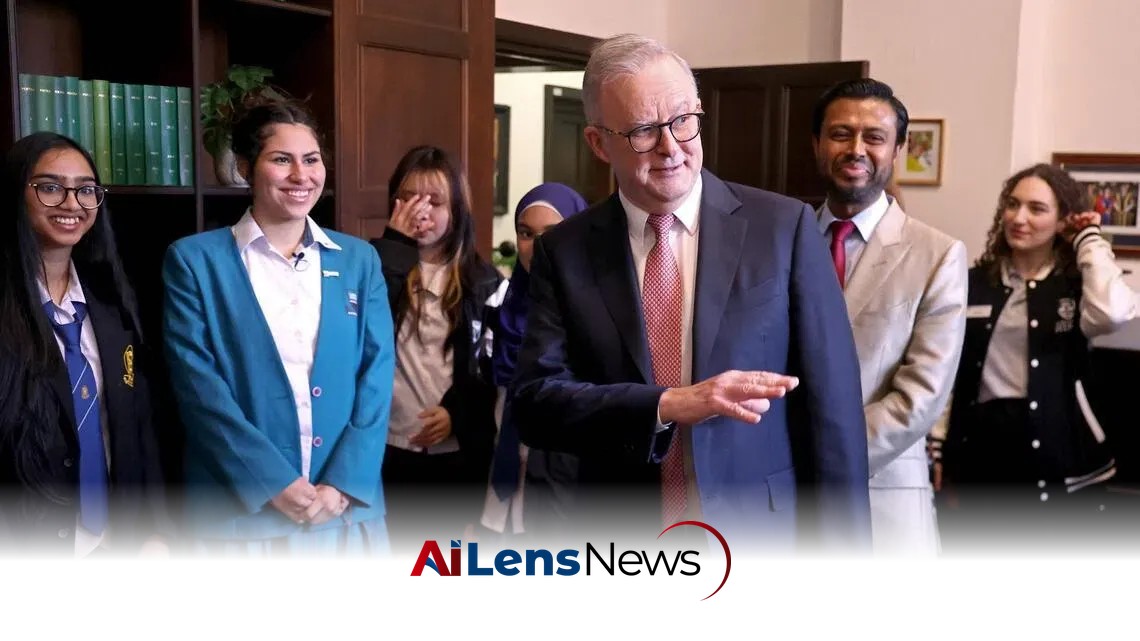


Australia has raised international student visa fees by 25%, exempting ASEAN countries to strengthen regional ties, despite concerns over affordability.
Singapore, Singapore Jul 26, 2026 ALN: Australia has imposed a dramatic 25 percent hike on international student visa fees but exempted students from South-east Asia from the increase as it seeks to boost ties with its regional neighbours. The federal government on July 3 raised the non-refundable fee for students applying for visas in Australia from A$2,000 (S$1,810) to A$2,500. However, for the first time, students from ASEAN countries were excluded from the hike and were subject only to an inflation-adjusted increase of A$50, bringing the fee to A$2,050.
Australia’s international student visa fees are among the highest in the world. In comparison, fees in the United States and Britain stand at US$535 (S$690) and £558 (S$959) respectively. This increase in fees comes at a time when Australia is experiencing a surge in migration, a trend that has been particularly noticeable since the Covid-19 pandemic. The fee for student visas had already seen significant increases in the past, rising from A$710 to A$1,600 in July 2024 and to A$2,000 in July 2025.
Australia’s assistant minister for international education, Julian Hill, stated that the government had exempted ASEAN students as part of its efforts to deepen Australia’s engagement with South-east Asia. This initiative reflects a broader strategy by the Australian government to strengthen diplomatic and educational ties with its regional partners, particularly in the context of increasing geopolitical tensions and economic competition in the Asia-Pacific region.
In addition to the exemption for ASEAN nations, Australia has historically offered lower fees for students from Pacific nations, including Timor-Leste, which became an ASEAN member in October 2025. Hill emphasized that “a reduced visa fee rate for students from ASEAN nations reflects the importance Australia places on welcoming high-quality students from South-east Asia.” He further noted that fostering relationships among young people from these nations is crucial for building lifelong bonds.
Despite the increases in visa fees, applications for Australian student visas have remained robust. Many students across the region have expressed that the fees, while significant, will not deter them from applying. AUG Student Services, an organization with over 30 years of experience in counseling Malaysian students on studying in Australia, indicated that the fee increase is unlikely to dissuade applicants. Since 2022, Australia has been the top overseas study destination for Malaysian students, with approximately 15,000 currently enrolled.
Nicole Chong, AUG’s partnership director (Australia), commented on the fee increase, stating, “The hike is just 2.5 percent, or A$50, from the previous A$2,000. This shows the Australian government’s determination to maintain a strong educational relationship with ASEAN.” The international education sector is a significant contributor to Australia’s economy, being the country’s fifth-largest export, bringing in A$55 billion in 2025.
As of now, Australia hosts around 681,000 foreign students across various institutions, including universities, vocational colleges, and schools. This diverse student body includes 160,000 students from China, 111,000 from India, 61,000 from Nepal, and 31,000 from Vietnam, with 6,165 students from Singapore. The presence of a large international student community has implications not only for the education sector but also for cultural exchange and economic growth.
Yesasvi Koganti, a final-year undergraduate political science student from Chennai, expressed that the hike in student visa fees is not a deal-breaker for her plans to study in Australia, as her family can still afford the higher expenses involved. “But I also know the kind of financial limitations that others who want to go abroad and study experience. So it is, to an extent, concerning,” the 19-year-old told ST. Despite the higher visa fees, Koganti noted that Australia remains an attractive option due to the increasing challenges foreign students face in other -speaking countries such as the US and Britain.
In recent years, rising costs and tougher visa rules in the United States, particularly under the second Donald Trump administration, have made it a less appealing destination for international students. Similarly, the UK has also tightened its regulations, reducing the post-study work period for graduates from two years to 18 months for those applying on or after January 1, 2027. In contrast, Australia continues to allow foreign students to work for between two and three years on a Temporary Graduate visa, although the application fee for this visa also increased on July 3, from A$4,600 to A$5,750.
Koganti remarked, “Comparatively, Australia still remains more open to foreign students when it comes to giving us economic opportunities.” This sentiment is echoed by many students who view Australia as a more favorable environment for pursuing higher education and gaining work experience post-graduation.
Andrew Norton, an Australian higher education expert from Monash University, explained that the recent series of fee hikes is largely a response to growing public concerns about migration, while also aiming to raise revenue. He noted that previous increases in fees have not significantly deterred students from applying, which may have prompted the government to impose further hikes. However, he cautioned that for students uncertain about their chances of obtaining a visa, A$2,500 is a considerable amount for individuals from developing countries, especially with no guarantee of a successful outcome.
In the year leading up to June 30, 2025, Australia granted a total of 371,564 student visas, including 233,570 for higher education. This represents a slight decrease from the previous 12 months, when 376,731 student visas were granted, with 227,230 for higher education. For the same period, 2,888 Singaporeans applied for student visas, including 2,456 intending to attend universities, compared to 3,242 in the previous year, of whom 2,717 applied to attend universities.
While international applications have remained high, there has been a noticeable decline in the number of Chinese students in Australia, with a decrease of 5.7 percent reported in May 2026 compared to the same month a year earlier. This decline is concerning for Australian educational institutions that have relied heavily on Chinese students as a significant source of revenue. Louis Chen, who earned his bachelor’s degree in Beijing, is now planning to pursue a master’s degree in a media-related field. Despite receiving offers from prestigious institutions like the University of Melbourne and the University of Sydney, Chen ultimately chose to attend a university in Hong Kong instead.
Chen explained, “The cost of an Australian student visa had already gone up when I applied, but that wasn’t my main concern. What mattered more to me was that, in China, studying in Australia is increasingly seen as less prestigious.” This perception shift highlights the challenges Australia faces in maintaining its appeal among international students, particularly as other countries enhance their educational offerings and marketing strategies to attract foreign talent.
In conclusion, while Australia’s recent increase in student visa fees may raise concerns among prospective international students, particularly from developing nations, the government’s strategic exemption for ASEAN countries demonstrates a commitment to fostering regional ties. As the global landscape of higher education continues to evolve, Australia will need to adapt its policies and perceptions to remain competitive in attracting and retaining international students.
To learn more about the latest developments in Education News, stay updated with our exclusive reports and analyses on AiLensNews.

