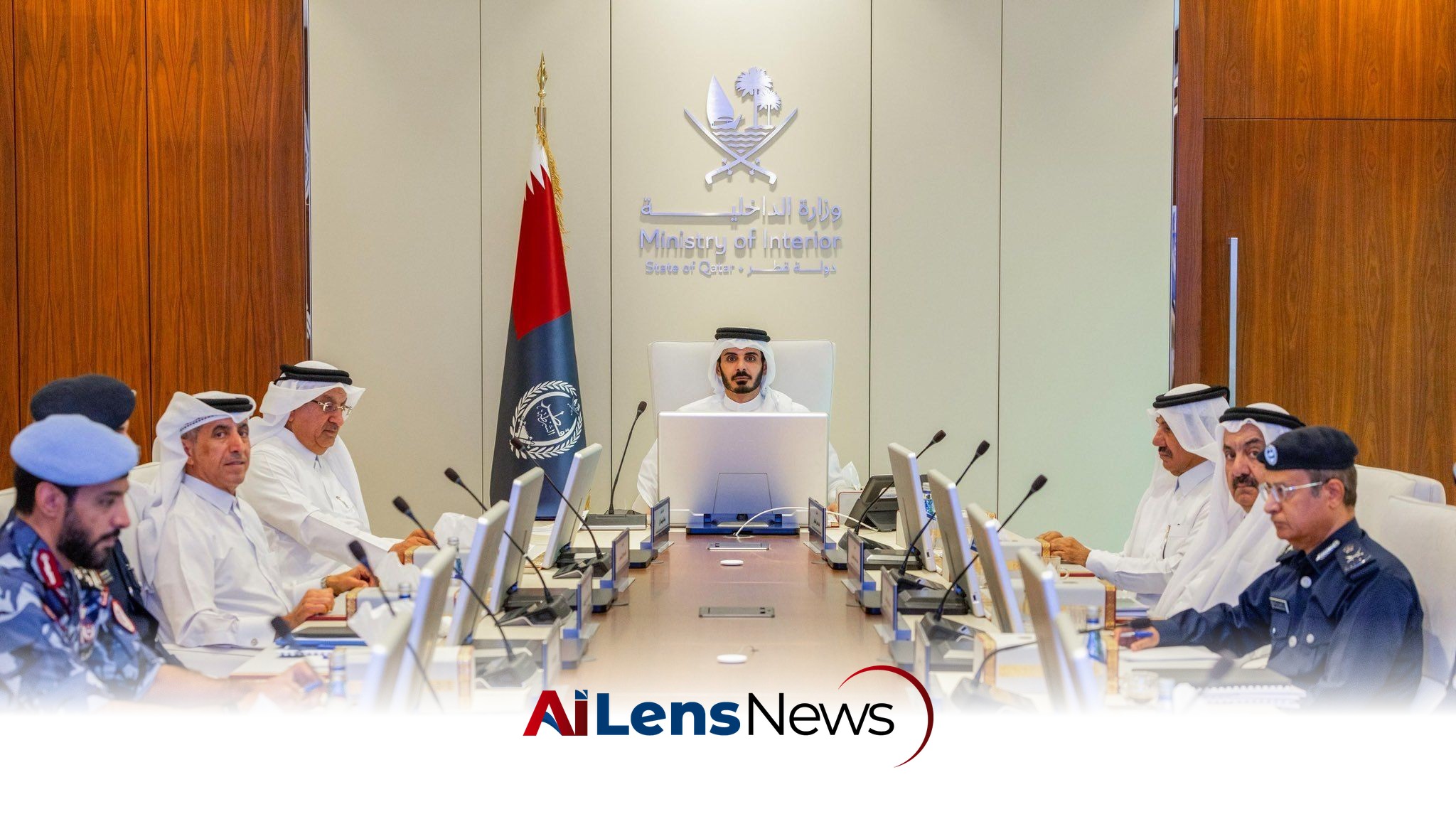


The Supreme Council of the Police Academy convenes under the leadership of Qatar's Minister of Interior to enhance police education and training.
Doha, Qatar Jul 19, 2026 ALN: Qatar is making significant strides in enhancing police education and security training as the Supreme Council of the Police Academy convened for its first meeting of 2026. This meeting comes at a time when global security challenges are evolving rapidly, necessitating a robust and well-trained police force capable of responding to a myriad of situations effectively. The need for such advancements is underscored by the complexity of contemporary security threats, which range from organized crime to cyber threats and terrorism. In this context, the role of law enforcement agencies has expanded beyond traditional policing to encompass a broader spectrum of responsibilities that require sophisticated training and knowledge.
HE Sheikh Khalifa bin Hamad bin Khalifa Al Thani, the Minister of Interior and Chairman of the Supreme Council of the Police Academy, presided over the meeting held at the Ministry of Interior’s headquarters. The presence of high-ranking officials underlines the importance that the Qatari government places on law enforcement education and the professional development of its police officers. This emphasis on leadership involvement highlights a strategic vision for law enforcement in Qatar, where the integration of education, training, and operational excellence is seen as critical to maintaining public safety and security.
During this session, members of the Council discussed various academic and training matters pertinent to the Police Academy. These discussions are vital as they lay the groundwork for future training programs and academic offerings that align with both national and international standards in policing and security management. The Academy's curriculum is designed to not only meet the immediate needs of the Qatari context but also to reflect best practices from around the world, ensuring that graduates are well-equipped to handle diverse challenges.
The Council approved the academic degrees for students who have successfully completed their master’s degree requirements through the College of Graduate Studies. This approval is significant as it not only acknowledges the hard work and dedication of the students but also enhances the credibility of the Police Academy as an institution of higher learning. By offering advanced degrees, the Academy is positioning itself as a leader in police education in the region, which is crucial in a world where sophisticated training is essential for effective law enforcement. The introduction of master’s programs signals a commitment to academic rigor and a desire to develop a cadre of highly educated professionals who can contribute meaningfully to the field of policing.
Additionally, the meeting reviewed several issues within the Academy’s scope of responsibilities and made appropriate decisions to address them. This proactive approach indicates a commitment to continuous improvement and adaptation in the face of changing security landscapes. The discussions likely included topics such as curriculum development, partnerships with international law enforcement agencies, and the integration of new technologies in training programs. The incorporation of technology into training is particularly relevant in today’s digital age, where police forces must be adept at using advanced tools for surveillance, data analysis, and communication.
This meeting is part of Qatar’s ongoing commitment to strengthen the educational and training framework of the Academy, aiming to better prepare qualified security personnel for the future. The emphasis on education reflects a broader trend in law enforcement worldwide, where there is a growing recognition that effective policing requires not only physical training but also a strong foundation in ethics, community relations, and the legal framework governing police work. As societal expectations of police behavior evolve, so too must the training methodologies employed by police academies.
In conclusion, the Supreme Council's efforts reflect Qatar's dedication to advancing its police force's capabilities through enhanced education and training initiatives. As the global landscape continues to evolve, it is imperative for police forces to be equipped with the skills and knowledge necessary to address contemporary challenges, ranging from cybercrime to counter-terrorism. Qatar's investment in police education is a strategic move that aligns with its broader goals of ensuring national security and fostering a safe environment for its citizens. The proactive stance taken by the Supreme Council is indicative of a forward-thinking approach that prioritizes the development of a modern and effective law enforcement agency.
Moreover, the importance of such initiatives cannot be overstated, especially in the context of Qatar's ambitious goals for the future. With the country poised to host significant international events, including the FIFA World Cup, the need for a highly skilled police force becomes even more critical. The Academy's role in training officers who can manage large crowds, ensure public safety, and respond to emergencies is essential for maintaining order and security during such high-profile occasions. The ability to effectively manage large-scale events not only enhances public safety but also contributes to Qatar’s reputation on the international stage as a secure and welcoming destination.
The focus on academic rigor and professional standards at the Police Academy also serves to attract international students and faculty, fostering a more diverse learning environment. This diversity can enhance the quality of education and training, as different perspectives and experiences contribute to a more comprehensive understanding of global policing practices. By welcoming international participants, the Academy can benefit from a wider range of insights and methodologies, thereby enriching the educational experience for all students.
Furthermore, the Supreme Council's meeting is indicative of a larger trend within the Gulf region, where countries are increasingly recognizing the importance of investing in human capital as a means to enhance security and stability. As security challenges become more complex and interconnected, the ability to collaborate and share knowledge across borders will be paramount. Qatar's initiatives in police education could serve as a model for other nations in the region looking to strengthen their law enforcement capabilities. This regional cooperation could lead to shared training programs, joint exercises, and a unified approach to tackling common security threats.
In summary, the first meeting of the Supreme Council of the Police Academy in 2026 marks a significant step forward in Qatar's commitment to enhancing police education and training. By focusing on academic excellence and practical training, Qatar is not only preparing its police force for the challenges of today but also for the uncertainties of tomorrow. The outcomes of this meeting will likely have lasting implications for the future of policing in Qatar and beyond, as the nation continues to position itself as a leader in security and law enforcement education. The strategic direction set forth by the Council will undoubtedly influence the development of policing standards and practices in the region, contributing to a safer and more secure environment for all.
To learn more about the latest developments in Education News, stay updated with our exclusive reports and analyses on AiLensNews.

