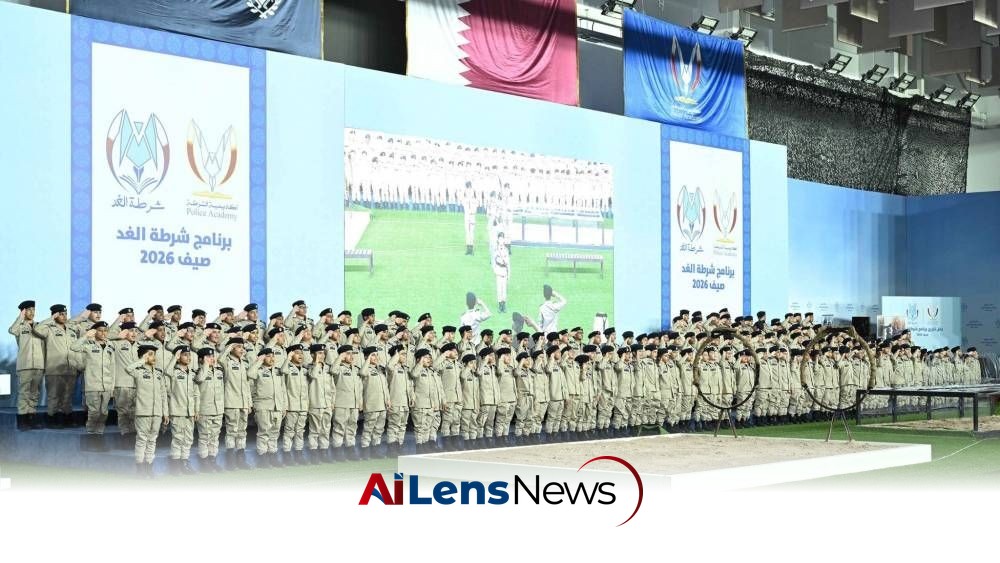


The Police Academy in Doha has graduated 400 students from its Future Police Program, emphasizing national identity and leadership development.
Doha, Qatar Jul 26, 2026 ALN: The Police Academy celebrated the graduation of 400 students from the third and fourth cohorts of the seventh edition of its Future Police Program (Summer 2026). This program, designed to cultivate the next generation of law enforcement professionals, has become a significant initiative in Qatar's ongoing efforts to enhance its policing capabilities and community engagement. The Future Police Program is part of a broader strategy by the Qatari government to modernize its law enforcement agencies and ensure that they are equipped to handle the challenges of contemporary society.
The graduation ceremony was attended by Major General Abdullah bin Mohammed Al Suwaidi, Assistant Undersecretary of the Ministry of Interior for Technical and Specialized Affairs; Major General Abdulrahman Majed Al Sulaiti, President of the Police Academy; Colonel Dr Fahd Saeed Al Subaie, Vice President of the Police Academy and Dean of the Police College, along with several Ministry of Interior officers and the students' parents and guardians. The presence of high-ranking officials underscores the importance of this event and the commitment of the Qatari government to developing a well-trained police force. Such ceremonies not only celebrate the achievements of the graduates but also serve to reinforce the relationship between law enforcement and the community it serves.
The Future Police Program itself is a comprehensive initiative aimed at young individuals who aspire to pursue careers in law enforcement. It encompasses a variety of components that are essential for modern policing, including physical training, leadership development, and educational workshops. The program not only focuses on the technical skills required for police work but also emphasizes the importance of ethical conduct, community service, and the upholding of national values. This dual focus on skills and ethics is crucial in today’s policing environment, where public trust is paramount.
The program's curriculum is designed to strengthen national identity, foster the values of loyalty and belonging, develop leadership abilities, and instill a sense of responsibility through a combination of sports, military, and educational activities. This holistic approach is essential in preparing students to face the challenges of modern-day policing, which requires not only physical strength but also mental resilience and a deep understanding of community dynamics. By integrating these elements, the Future Police Program aims to produce officers who are not only competent in their duties but also empathetic to the needs of the citizens they serve.
During the graduation ceremony, attendees were treated to a series of performances that showcased the skills and knowledge acquired by participants throughout the program. These performances served as a demonstration of the students' readiness to step into their roles as future police officers, highlighting their training in areas such as teamwork, discipline, and the application of law enforcement techniques. Such demonstrations are vital in displaying the practical applications of the training received, reinforcing the graduates' preparedness to enter the workforce.
The Future Police Program reflects a broader trend in law enforcement education, where there is a growing recognition of the importance of community-oriented policing. By instilling values of loyalty and responsibility in young recruits, the program aims to create a police force that is not only effective in maintaining public safety but also deeply connected to the communities they serve. This approach aligns with global shifts towards community policing models, which prioritize building relationships between police and citizens as a means to enhance public safety.
Moreover, the graduation of these 400 students marks a significant milestone for the Police Academy, which has been actively working to enhance its training programs and facilities in recent years. The academy has invested in modern training methodologies and technologies to ensure that its graduates are well-equipped to handle the complexities of contemporary policing. This investment in training infrastructure is crucial, as it directly impacts the quality of education and preparation that future officers receive.
The implications of this program extend beyond the individual graduates; they resonate throughout the community and the nation. As Qatar continues to grow and develop, the need for a capable and well-trained police force becomes increasingly critical. The Future Police Program aims to address this need by ensuring that young individuals are not only prepared for the demands of police work but are also committed to serving their communities with integrity and respect. This commitment is essential in fostering a safe and secure environment for all citizens.
In addition to the immediate benefits of training future police officers, the program also plays a role in shaping public perception of law enforcement. By engaging young people in positive and constructive activities, the program seeks to build trust between the police and the community. This trust is crucial for effective policing, as it encourages cooperation and communication between law enforcement and citizens. The ability of police to work collaboratively with community members is increasingly recognized as a vital component of effective crime prevention and resolution.
As these graduates embark on their journeys into the law enforcement field, they carry with them the values and skills instilled in them by the Future Police Program. Their success will not only reflect their individual efforts but also the effectiveness of the training they received at the Police Academy. The academy's commitment to producing well-rounded, community-oriented police officers is a step towards a safer and more harmonious society. The long-term success of these graduates will be monitored closely, as their experiences will provide valuable insights into the effectiveness of the program.
Looking ahead, it will be interesting to observe the long-term impacts of the Future Police Program on the Qatari police force and its relationship with the community. As these graduates begin their careers, their experiences and the values they uphold will undoubtedly influence the future of policing in Qatar. The ongoing support from the Ministry of Interior and the dedication of the Police Academy will be crucial in ensuring that these young officers continue to grow and adapt to the evolving landscape of law enforcement. Continuous professional development and training will be essential as policing strategies and community needs evolve over time.
In conclusion, the graduation of 400 students from the Future Police Program signifies a crucial investment in the future of policing in Qatar. It highlights the importance of nurturing young talent and fostering a strong sense of duty and responsibility among future law enforcement professionals. As these graduates step into their roles, they carry with them the hopes and expectations of a nation that values safety, security, and community engagement. The success of the Future Police Program may serve as a model for similar initiatives in other countries, showcasing the importance of comprehensive training and community involvement in law enforcement education.
To learn more about the latest developments in Education News, stay updated with our exclusive reports and analyses on AiLensNews.

