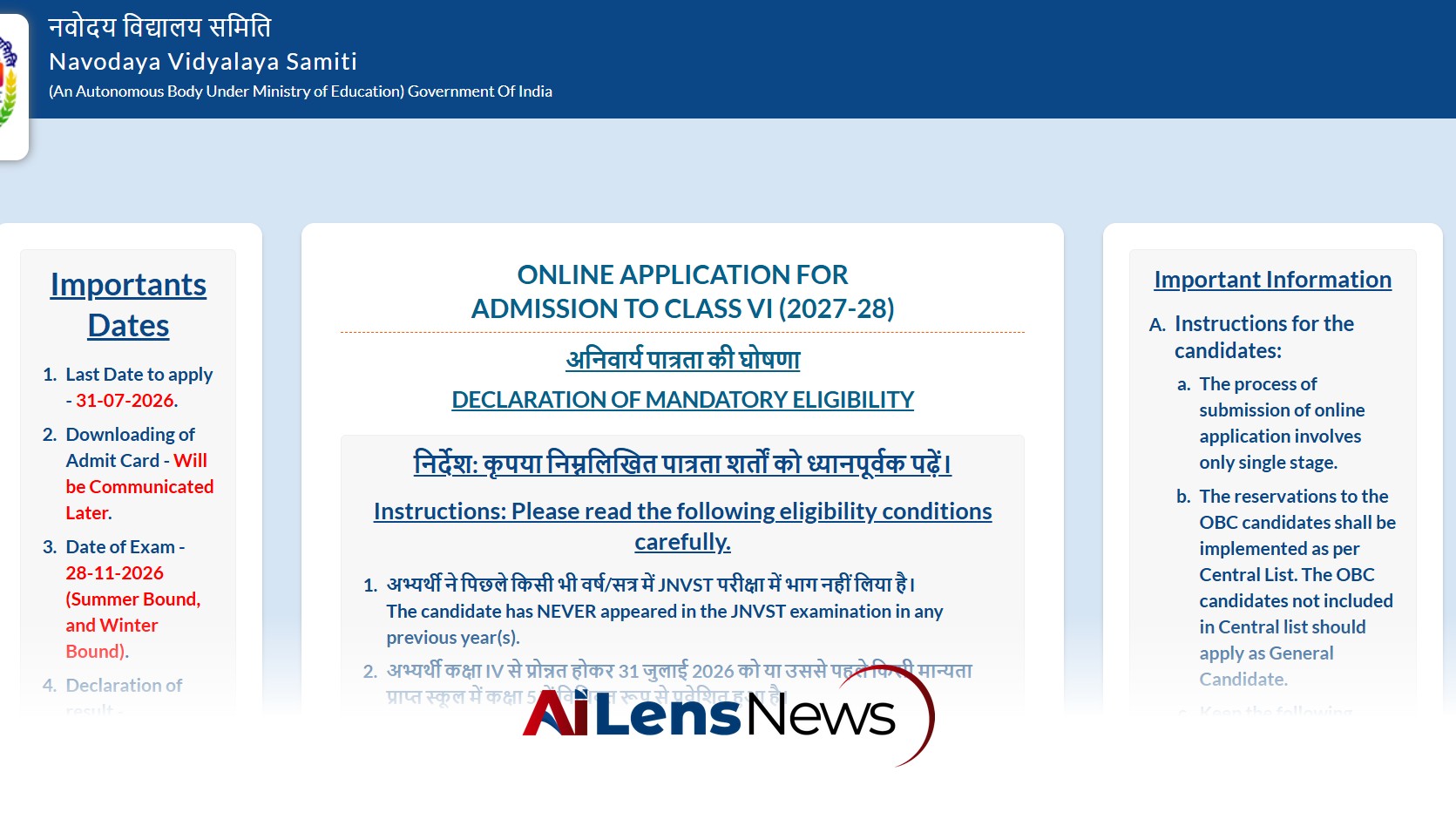


Navodaya Vidyalaya Samiti has opened applications for JNVST 2027 admissions. Eligible students must apply by July 31, 2026, for Class 6.
New Delhi, India Jul 7, 2026 ALN: Navodaya Vidyalaya Samiti has officially opened the applications for the JNVST 2027 admissions. This is an important opportunity for students seeking admission to Class 6 in Navodaya Vidyalayas across the country. The Navodaya Vidyalayas, established in 1986, aim to provide quality to talented children from rural areas, and they have gained a reputation for their rigorous academic programs and holistic development approach. The primary objective of these schools is to ensure that children from less privileged backgrounds receive an that is on par with their urban counterparts, thereby promoting al equity.
Eligible students are required to submit their applications by July 31, 2026. It is crucial for applicants to adhere to this deadline to ensure their participation in the admission process. The JNVST (Jawahar Navodaya Vidyalaya Selection Test) has become a gateway for many students looking to secure a place in these prestigious institutions, which are known for their commitment to excellence in . The selection process through JNVST is highly competitive, and it has been designed to identify students who demonstrate the potential for academic success, regardless of their socio-economic background.
The entrance examination for JNVST is scheduled to take place on November 28, 2026. Following the examination, results are expected to be announced by March/April 2027. This timeline allows students and their families to plan accordingly, as the results will play a significant role in determining the next steps for the students who wish to pursue their at a Navodaya Vidyalaya. The announcement of results is a crucial period for students, as it often shapes their academic trajectories and future al opportunities. The anticipation surrounding the results can be a source of anxiety for many students, but it also serves as a motivational factor, encouraging them to perform to the best of their abilities during the exam.
A significant change in the admission process is the introduction of a new district-specific rule. Under this rule, students must apply for admission locally within their respective districts. This adjustment aims to streamline the application process and ensure that local students have better access to al opportunities in their vicinity. The rationale behind this change is to promote inclusivity and ensure that children from various backgrounds, especially those in rural areas, are not disadvantaged in the selection process. By focusing on local admissions, the Navodaya Vidyalaya Samiti hopes to foster a sense of community and ensure that students are educated in an environment that is familiar to them. This approach also addresses the logistical challenges that students from distant areas may face in accessing , thereby making the admission process more equitable.
The JNVST examination will be conducted in an offline format using an OMR sheet. The test will encompass various sections, including:
This diverse range of topics is designed to evaluate the overall aptitude and skills of the candidates. The Mental Ability section assesses logical reasoning and problem-solving skills, which are essential for academic success. The Arithmetic section tests mathematical proficiency, while the Language section evaluates comprehension and language skills. Together, these components provide a comprehensive overview of a student's capabilities, allowing for a fair assessment of their potential. The inclusion of various subjects in the examination is indicative of a holistic al approach, aiming to nurture well-rounded individuals who are not only academically competent but also possess critical thinking and communication skills.
The admission process for JNVST not only impacts the students who gain entry into the Navodaya Vidyalayas but also has broader implications for the system in . By providing quality to students from rural backgrounds, Navodaya Vidyalayas play a crucial role in bridging the al divide between urban and rural areas. The focus on local admissions is expected to enhance access for students who may have previously faced barriers in applying to these prestigious institutions. This move is particularly significant in a country like , where al disparities often correlate with socio-economic status and geographic location.
Moreover, the emphasis on a diverse examination pattern reflects a growing recognition of the need to evaluate students holistically, rather than solely based on rote memorization or traditional academic metrics. This shift could inspire other al institutions to adopt similar practices, leading to a more equitable system. The holistic assessment model not only benefits students by providing them multiple avenues to showcase their abilities but also encourages educators to adopt innovative teaching methodologies that promote critical thinking and creativity.
Furthermore, the introduction of the district-specific rule is likely to have a positive impact on the overall al landscape. It may encourage local governments and communities to invest in and support initiatives that uplift students in their areas. As more students gain access to quality , the long-term benefits could include increased literacy rates, improved employment opportunities, and enhanced socio-economic development within rural communities.
In summary, the opening of applications for JNVST 2027 marks an important milestone for students aiming for admission to Navodaya Vidyalayas. With the new district-specific rule and a clear examination schedule, eligible students are encouraged to prepare thoroughly for the upcoming entrance test. The JNVST not only serves as a selection mechanism but also as a beacon of hope for many students aspiring to achieve academic excellence and secure a better future. As the examination date approaches, students and their families are urged to stay informed, prepare diligently, and make the most of this opportunity to advance their al journeys. The focus on inclusivity, holistic assessment, and local admissions could set a precedent for future al reforms, ultimately contributing to a more equitable and accessible system in .
To learn more about the latest developments in Board Exams, stay updated with our exclusive reports and analyses on AiLensNews.

