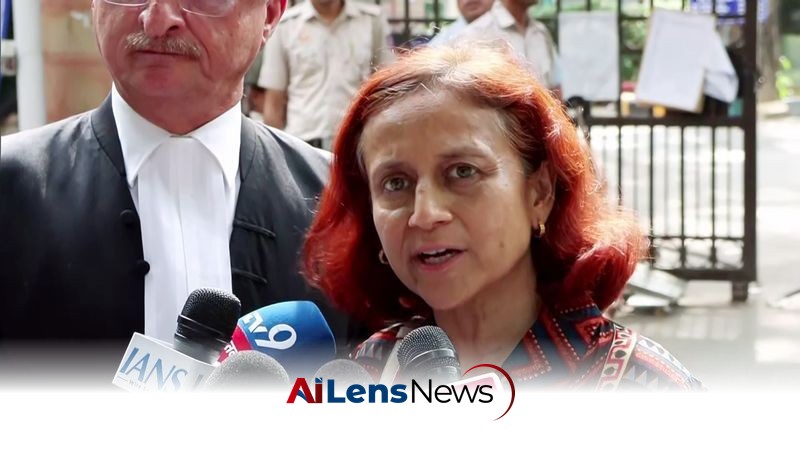


Wangchuk's wife expresses readiness to end the protest, demanding assurance from leaders regarding education accountability in Parliament.
New Delhi, India Jul 20, 2026 ALN: In a significant development, Wangchuk's wife has announced her willingness to conclude the ongoing protest, but with specific conditions. She emphasized the need for leaders to provide concrete assurances regarding their commitment to education accountability within Parliament. This statement comes at a time when the education sector in the country is facing heightened scrutiny and public concern, making the call for accountability particularly pressing.
The protest, which has drawn considerable attention from various sectors of society, aims to highlight the pressing issues faced by the education sector, including inadequate funding, poor infrastructure, and the urgent need for policy reforms. The situation has reached a critical point, prompting stakeholders to demand immediate action from their leaders.
The protest initiated by Wangchuk has been a rallying point for various stakeholders in the education sector, including students, educators, parents, and community leaders. It seeks to bring to light the challenges that students and educators face daily, such as overcrowded classrooms, outdated learning materials, and a lack of qualified teachers. Wangchuk's wife, who has been a vocal supporter of the movement, believes that without accountability from leaders, meaningful change is unlikely to occur.
The backdrop to this protest is a long-standing concern about the state of education in the country. Over the years, there have been numerous reports highlighting the deficiencies within the educational system, ranging from inadequate funding to poor infrastructure. Many schools, particularly in rural and underserved areas, struggle to provide basic educational services, let alone the quality education that every child deserves. Wangchuk's wife has taken it upon herself to ensure that these issues do not go unaddressed.
In recent years, the education system has faced increasing challenges due to budget cuts, political instability, and shifting priorities that have often sidelined educational needs. Reports from various educational authorities have indicated a decline in student performance and an increase in dropout rates, particularly in regions where resources are scarce. This alarming trend has prompted advocacy groups to call for a reassessment of educational funding and priorities.
Wangchuk's wife articulated her demands clearly, stating that leaders must take responsibility for their roles in shaping educational policies. She called for:
These demands reflect a broader desire for systemic change within the educational landscape. Advocates believe that without accountability and transparency, the cycle of underfunding and neglect will continue, ultimately harming the future of the nation’s youth. Wangchuk's wife has positioned these demands not merely as requests but as essential components for a thriving educational environment that can equip students with the skills necessary for the 21st century.
The public response to the protest has been overwhelmingly supportive, with many advocating for the need to prioritize education as a fundamental right. Various organizations, including teacher unions and parent associations, have joined the call for accountability, emphasizing that the future of the nation depends on a robust educational framework. Social media has also played a significant role in amplifying these voices, with hashtags and campaigns gaining traction as more individuals express their support for the movement.
Community leaders have echoed these sentiments, highlighting the crucial role that education plays in economic development and social cohesion. They argue that without a strong educational system, the country risks falling behind in a rapidly changing global landscape. This widespread support has put additional pressure on leaders to respond to the demands being made.
Moreover, the protest has attracted attention from various media outlets, which have begun to cover the stories of individuals affected by the current educational crisis. Personal narratives from students struggling with overcrowded classrooms or teachers facing burnout due to inadequate support have resonated with the public, further galvanizing support for the movement. As these stories circulate, they serve to humanize the statistics and policy discussions, making the need for change all the more urgent and relatable.
As Wangchuk's wife prepares to conclude the protest, the focus now shifts to how leaders will respond to these demands. There is a palpable sense of hope that this movement will catalyze significant discussions in Parliament regarding the future of education in the country. The expectation is that lawmakers will take the concerns raised during the protest seriously and work towards implementing the necessary reforms.
In the coming weeks, it will be crucial to monitor any legislative proposals or initiatives that emerge as a direct response to the protest. Stakeholders are keenly aware that the window for change may be limited, and any delays could further exacerbate the challenges faced by the education sector. Advocacy groups are preparing to engage with lawmakers, offering their expertise and insights to help shape effective educational policies.
In conclusion, while Wangchuk's wife is ready to end the protest, her conditions underscore the critical need for educational reform and accountability from those in power. The outcome of this situation will be closely monitored by all stakeholders involved, as it represents not just a moment of activism, but a potential turning point for the education system in the country. The implications of these discussions and decisions will resonate far beyond the immediate context of the protest, shaping the educational landscape for future generations. As the nation moves forward, the hope is that the commitment to education will be reflected in tangible actions that prioritize the needs of students and educators alike.
To learn more about the latest developments in Education News, stay updated with our exclusive reports and analyses on AiLensNews.

