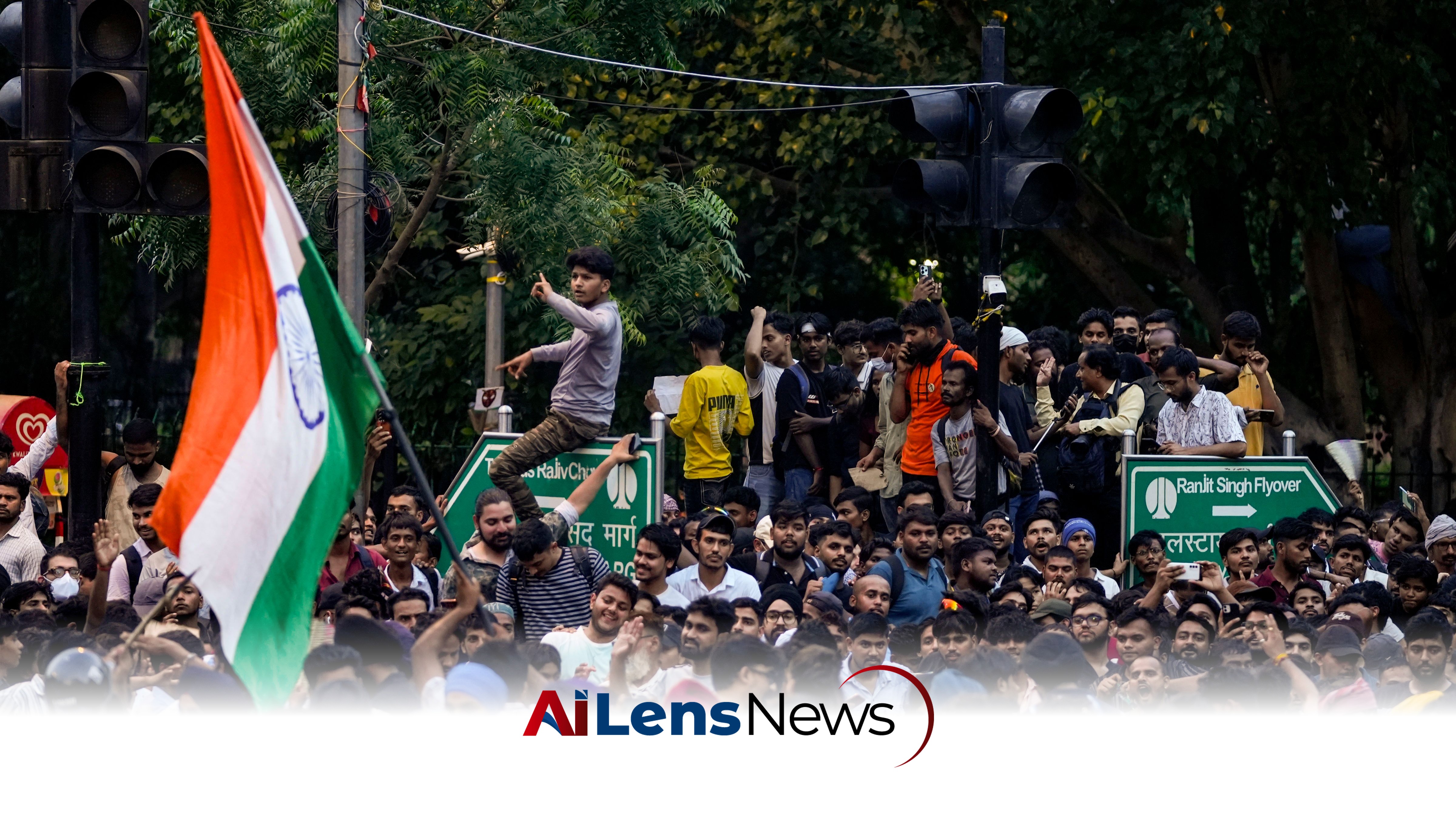


In response to a bandh called by student organizations, schools and universities in Hyderabad have declared a holiday, postponing exams amid protests against the education minister.
Hyderabad, India Jul 23, 2026 ALN: Hyderabad: Several schools, colleges, and universities have declared a holiday on Friday in view of the bandh called by student organizations demanding the resignation of Union education minister Dharmendra Pradhan, the abolition of the National Testing Agency (NTA), and action against those responsible for the alleged police assault on students protesting in Delhi.
This decision to suspend classes comes at a time when educational institutions are grappling with various challenges, including the ongoing debate about the effectiveness and transparency of national entrance examinations. The NTA, which was established in 2017, has been tasked with conducting entrance examinations for higher education in India, including the Joint Entrance Examination (JEE) and the National Eligibility cum Entrance Test (NEET). However, many students and educational organizations have raised concerns regarding the agency's management of these high-stakes tests, citing issues such as technical glitches, discrepancies in results, and a lack of adequate support for students during the examination process.
Schools informed parents through circulars and messages that classes would remain suspended on July 24. Many clarified that scheduled unit tests and periodic examinations would continue as per the existing timetable and advised students to utilize the day for preparation. This highlights a nuanced approach by educational institutions, as they attempt to balance the need for academic rigor with the recognition of the students' right to protest and voice their concerns.
Jawaharlal Nehru Technological University Hyderabad (JNTUH) postponed examinations scheduled for Friday in view of the bandh call. The university said both morning and afternoon examinations under all faculties have been deferred and that a revised examination schedule will be announced later. This postponement reflects the university's acknowledgment of the significant impact that the bandh could have on student participation and the overall examination environment.
The bandh has been called under the slogan “Save Education, Defend Democracy, Protect Students’ Rights” by a coalition of student organizations including the National Students’ Union of India (NSUI), Democratic Youth Federation of India (DYFI), Students’ Federation of India (SFI), All India Students’ Federation (AISF), Progressive Democratic Students Union (PDSU), All India Democratic Students’ Organisation (AIDSO), All India Federation of Democratic Students (AIFDS), All India Students Bloc (AISB), and All India Progressive Students Union (AIPSU). This diverse coalition underscores the widespread concern among students regarding educational policies and governance in India.
The organizations allege that irregularities in national entrance examinations and the lathicharge on students protesting in Delhi amounted to an attack on students’ rights. They demanded the immediate resignation of Dharmendra Pradhan over the alleged mismanagement of national examinations, the scrapping of the NTA, disciplinary action against those responsible for the alleged police excesses, and protection of students’ democratic right to hold peaceful protests. These demands reflect a broader sentiment among students who feel marginalized by current educational policies and practices that they believe do not adequately represent their interests.
NSUI Telangana urged educational institutions, students, and youth across the state to participate in the bandh. Sunny Emmanuel, NSUI JNTUH president, told Deccan Chronicle, “Education is a basic right, not a privilege,” and appealed to the teaching community to support the protest in defense of students’ rights and the future of education. This statement encapsulates the essence of the students' struggle, emphasizing that access to quality education should be universal and not contingent upon socio-economic status.
The implications of this bandh extend beyond the immediate concerns regarding examinations and educational governance. It highlights a growing trend of student activism in India, where young people are increasingly vocal about their rights and the policies that affect them. In recent years, there have been numerous instances of student-led movements addressing a range of issues, from caste-based discrimination to environmental concerns, and the current protests regarding educational policies are part of this larger narrative.
Furthermore, the call for action against police excesses during student protests raises questions about the relationship between law enforcement and student activism in India. Incidents of police violence against demonstrators have sparked outrage and condemnation from various quarters, leading to calls for accountability and reform within law enforcement agencies. The current protests may serve as a catalyst for broader discussions about civil liberties, the right to protest, and the role of government in safeguarding these rights.
As the situation develops, it will be essential to monitor the responses from the government and educational authorities regarding the students' demands. The outcome of this bandh may influence future policies related to education and student rights in India, potentially leading to reforms in the way national examinations are conducted and how student protests are managed. The students' mobilization and their ability to articulate their grievances could pave the way for more inclusive and transparent educational policies that prioritize the needs of the student body.
In conclusion, the bandh called by student organizations in Hyderabad represents a significant moment in the ongoing discourse surrounding education in India. It encapsulates the frustrations of students who feel that their voices are not being heard in the corridors of power and underscores the importance of student activism in shaping educational policies. As educational institutions navigate these challenges, the response from both the government and the academic community will be crucial in determining the future landscape of education in India.
To learn more about the latest developments in Education News, stay updated with our exclusive reports and analyses on AiLensNews.

