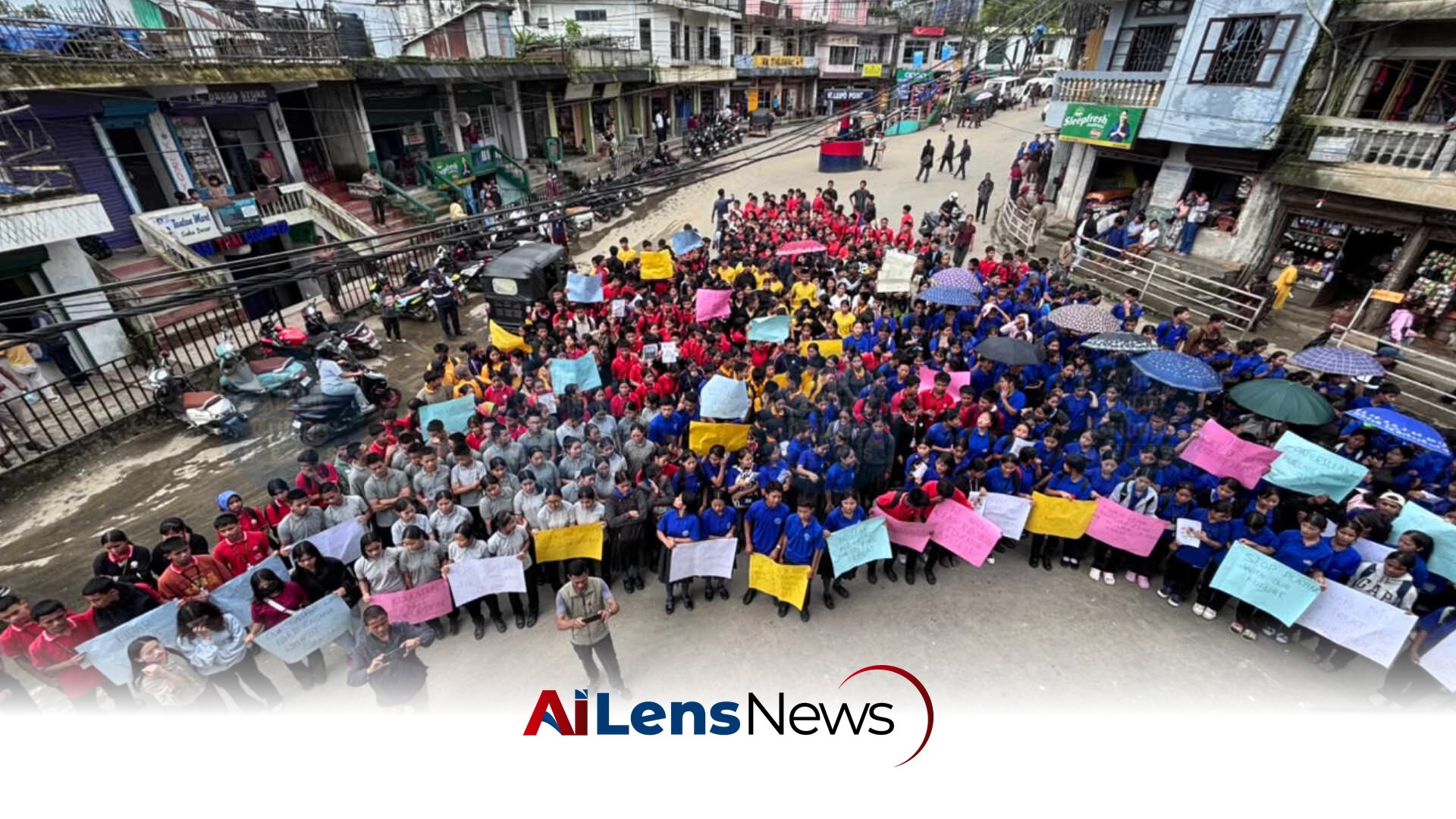


Over 800 students in Siaha staged a peaceful sit-in, demanding education reforms and the resignation of Union Education Minister Dharmendra Pradhan amid NEET-UG examination irregularities.
New Delhi, India Jul 24, 2026 ALN: More than 800 students from educational institutions across Siaha on Friday staged a peaceful sit-in demonstration in solidarity with the protest at Jantar Mantar in New Delhi, demanding reforms in the examination system and the resignation of Union Education Minister Dharmendra Pradhan over the alleged irregularities in this year's NEET-UG examination.
The demonstration, organised by the Mara Students Organisation (MSO), General Headquarters, was held at Siaha Bazar Traffic Point and witnessed participation from students representing schools and colleges across the town. This event marks a significant moment in the ongoing discourse surrounding the National Eligibility cum Entrance Test (NEET), which is a crucial examination for aspiring medical students in India.
NEET has been a focal point of contention in recent years, with various allegations surfacing about the integrity of the examination process. The examination is conducted by the National Testing Agency (NTA) and is considered a gateway for students to gain admission into medical colleges across the country. However, the recent controversy surrounding the NEET-UG examination has raised serious questions about the efficacy and transparency of the examination system. Allegations of paper leaks and irregularities have prompted students and educational stakeholders to call for systemic reforms.
Addressing the gathering, MSO President Judson KT Zephetha emphasized the need for greater transparency and reforms in the country's education system following the alleged NEET-UG paper leak. He highlighted the broader implications of these issues, stating that they not only affect the current cohort of students but also pose a threat to the integrity of the educational system as a whole. Zephetha remarked, "One of the key demands of the students is that the Union Education Minister accept responsibility and resign. The students and youth of Siaha stand in full solidarity with this movement." This statement underscores a growing sentiment among students who feel that their voices are not being adequately represented in discussions about their future.
Zephetha further articulated that students were no longer passive observers in the educational landscape. He urged the country's leaders to safeguard the future of the younger generation, indicating a shift in the mindset of students who are increasingly willing to advocate for their rights and interests. "The voices of students regarding their future must be heard and taken seriously," he added, reflecting a broader trend of youth activism that has gained momentum in various parts of India.
The sit-in demonstration was not just a local affair; it resonated with a nationwide movement calling for accountability and reform in the education sector. Speakers at the programme voiced support for the nationwide movement and called on the government to provide compensation to the families of those who allegedly lost their lives in connection with the NEET examination controversy. This aspect of the protest highlights the human cost associated with the examination system and the urgent need for reforms that prioritize student welfare.
Carrying banners and placards, participants raised slogans in support of the nationwide campaign. The use of visual symbols and slogans is a common tactic in protests, serving to unify participants and convey their message to a broader audience. A brief silence was also observed in memory of those who reportedly lost their lives in connection with the controversy, a solemn reminder of the stakes involved in the educational system and the profound impact it has on students' lives.
According to the organisers, more than 800 students from various educational institutions across Siaha town participated in the demonstration, making it one of the largest student solidarity gatherings in the district in support of the ongoing nationwide protest. This turnout reflects a significant mobilization of student voices, indicating a growing awareness and engagement among the youth regarding issues that directly affect their educational and professional futures.
The implications of this protest extend beyond the immediate demands for accountability and reform. It signals a potential shift in the landscape of student activism in India, where young people are increasingly asserting their rights and demanding a say in the policies that govern their education. As the protest movement gains traction, it may inspire similar actions in other regions, fostering a culture of activism that prioritizes transparency, accountability, and reform in the education sector.
In the broader context, the NEET controversy has sparked discussions about the need for comprehensive reforms in the examination system, including the introduction of more robust measures to prevent malpractice and ensure fairness in the evaluation process. Stakeholders, including educators, policymakers, and students, will need to engage in meaningful dialogue to address these issues and work towards a more equitable education system.
The Siaha protest serves as a microcosm of the larger challenges facing the Indian education system today. It reflects the frustrations of students who feel marginalized and unheard in the face of systemic issues that impact their lives. As the movement continues to evolve, it will be essential for government officials and educational authorities to listen to the concerns of students and take proactive steps to address the root causes of discontent within the education sector.
In conclusion, the sit-in demonstration in Siaha is not merely a local event; it is part of a larger narrative about student activism and the demand for accountability in the education system. The voices of the students, as articulated through their protest, underscore the urgent need for reforms that prioritize integrity, transparency, and the well-being of future generations. As the situation unfolds, it will be crucial for all stakeholders to engage constructively in addressing the challenges and opportunities that lie ahead in the realm of education in India.
To learn more about the latest developments in Education News, stay updated with our exclusive reports and analyses on AiLensNews.

