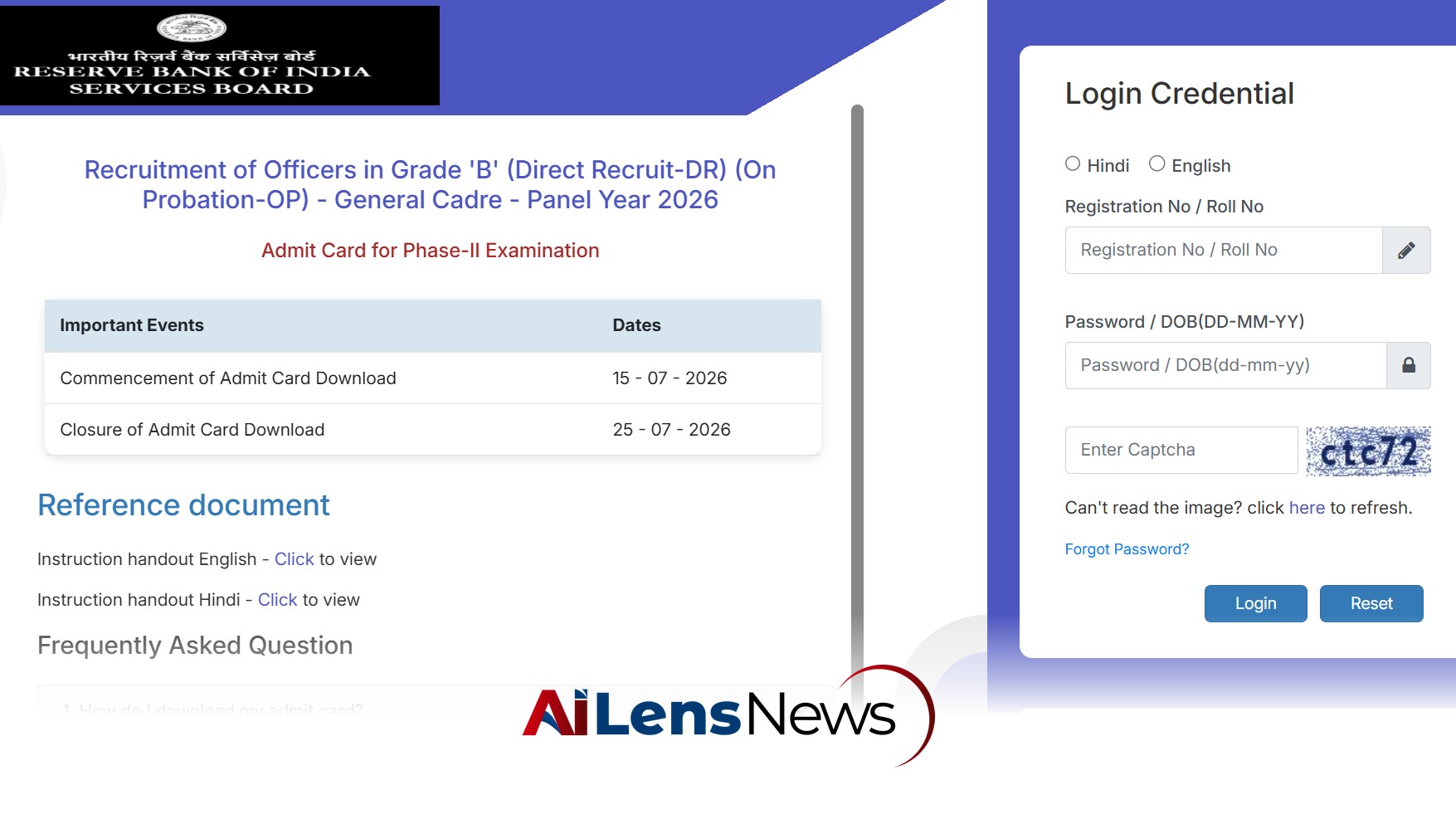


The RBI has released the admit card for the Grade B Phase 2 exam, scheduled for July 25 and 26, 2026. Candidates can download it from the official site.
New Delhi, India Jul 15, 2026 ALN: The Reserve Bank of (RBI), established in 1935, is the central banking institution of the country, tasked with regulating the monetary and financial system of . The RBI plays a crucial role in the country’s economy, overseeing the issuance of currency, managing foreign exchange, and formulating monetary policies that aim to maintain price stability while ensuring economic growth. One of its fundamental functions is the recruitment of qualified personnel who can contribute to the effective functioning of this vital institution. Among the various positions available within the RBI, the Grade B officer role stands out as one of the most prestigious and sought-after positions, attracting a large pool of aspirants each year.
The Grade B officer position is particularly significant as it involves substantial responsibilities, including the formulation and implementation of policies related to banking, financial regulation, and economic development. These officers are expected to possess a deep understanding of economic principles, financial systems, and banking regulations, making the recruitment process highly competitive. Every year, thousands of candidates prepare rigorously for the RBI Grade B examination, which is divided into multiple phases, namely Phase 1 and Phase 2, followed by an interview round for selected candidates.
Recently, the RBI has officially released the admit card for the Grade B Phase 2 examination, a crucial step in the recruitment process. Candidates who have successfully cleared the Phase 1 examination can now download their hall tickets from the RBI's official website. The release of the admit card is a significant milestone for candidates as it brings them one step closer to their goal of securing a position within the RBI. It is a moment of anticipation and excitement, as candidates prepare to demonstrate their knowledge and skills in the upcoming examination.
The Phase 2 examination is scheduled to take place on July 25 and 26, 2026. This examination is particularly important as it assesses candidates' knowledge and understanding of various subjects, including economics, finance, and banking regulations. Unlike Phase 1, which primarily focuses on quantitative aptitude, reasoning, and English language skills, Phase 2 delves deeper into specialized subjects, requiring candidates to have a comprehensive grasp of theoretical concepts as well as their practical applications. The results from this phase will heavily influence the selection process, making it imperative for candidates to perform well.
It is crucial for candidates to carry a printed version of their admit card along with a valid photo identity for entry into the examination hall. The admit card serves as a verification tool, confirming the identity of the candidate and ensuring that only eligible individuals are allowed to take the examination. This measure is part of the RBI's efforts to maintain the integrity of the recruitment process and to prevent any form of malpractice. The admit card contains essential information such as the candidate's name, roll number, examination date, and venue, making it vital for candidates to keep this document safe and accessible.
Upon downloading the admit card, candidates are advised to carefully verify all details printed on it. This includes personal information, examination dates, and venue details to ensure there are no discrepancies. Any errors or inconsistencies should be reported to the RBI immediately to avoid any complications on the day of the examination. The importance of this verification cannot be overstated, as discrepancies could lead to disqualification or entry denial on the examination day. Candidates should also familiarize themselves with the examination center’s location and regulations to ensure a smooth experience on the day of the exam.
To download the admit card, candidates should visit the official RBI website and follow the instructions provided. Typically, the process involves navigating to the recruitment section, locating the link for the Grade B Phase 2 admit card, and entering the required credentials such as registration number and date of birth. This step is essential for ensuring a smooth examination process, as candidates must have their admit cards ready well in advance of the examination dates. Additionally, candidates are encouraged to keep a digital copy of their admit card for backup purposes.
In summary, the release of the admit card marks a significant step for candidates preparing for the Grade B Phase 2 exam. With the examination date approaching, it is important to stay informed and prepared. Candidates are encouraged to utilize the time leading up to the examination effectively by revising key topics, practicing mock tests, and ensuring they are well-rested before the exam days. Time management and a strategic approach to preparation can greatly enhance a candidate’s performance.
Furthermore, it is worth noting that the RBI Grade B examination is highly competitive, with thousands of candidates vying for a limited number of positions. The selection process is designed to identify the most capable individuals who can contribute to the RBI's mission of fostering monetary stability and ensuring a robust financial system. Candidates often invest significant time and resources into preparing for this examination, making it a critical juncture in their professional journeys. The stakes are high, as the successful candidates will not only secure a prestigious job but also embark on a career with substantial growth prospects.
The implications of succeeding in the RBI Grade B recruitment process are profound. A position as a Grade B officer can lead to a fulfilling career with numerous opportunities for growth and advancement within the RBI. The role not only offers competitive compensation but also provides a platform to influence banking policies and contribute to the economic development of the nation. The RBI plays a vital role in shaping the financial landscape of , and as such, Grade B officers are positioned to make significant contributions to the economy.
In addition to the responsibilities associated with the role, a Grade B officer is also expected to engage in continuous learning and professional development. The dynamic nature of the banking and financial sectors necessitates that these officers stay updated with the latest trends, regulations, and technological advancements. This commitment to lifelong learning is essential for personal growth and the overall effectiveness of the RBI as an institution.
In conclusion, the release of the admit card for the Grade B Phase 2 examination is an important development for all candidates involved. It serves as a reminder of the upcoming challenges they will face and the opportunities that lie ahead should they succeed. As the examination dates draw near, candidates must ensure they are prepared both mentally and physically to tackle the assessment and showcase their knowledge and skills effectively. The journey to becoming a Grade B officer is not just about passing an exam; it is about demonstrating commitment, resilience, and a deep understanding of the financial world, all of which are essential for contributing to the RBI's mission and the economic well-being of the nation.
To learn more about the latest developments in Education News, stay updated with our exclusive reports and analyses on AiLensNews.

